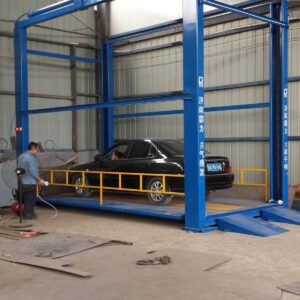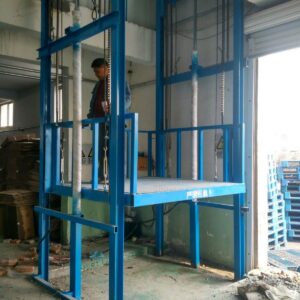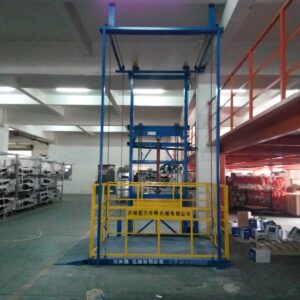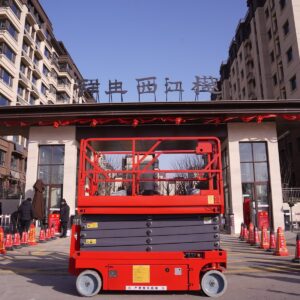
Hydraulics is the part of a lift that fails quietly. A chain or a wheel announces itself long before it breaks, but oil loses its properties, seals weep and valves drift while the machine still lifts every pallet you put on it. By the time the fault is obvious it is usually a cylinder being re-sealed rather than a filter being changed. This checklist covers a cargo lift, a scissor lift or a boom lift: what to look at, how often, and what each check prevents.
What the hydraulic system on a lift consists of
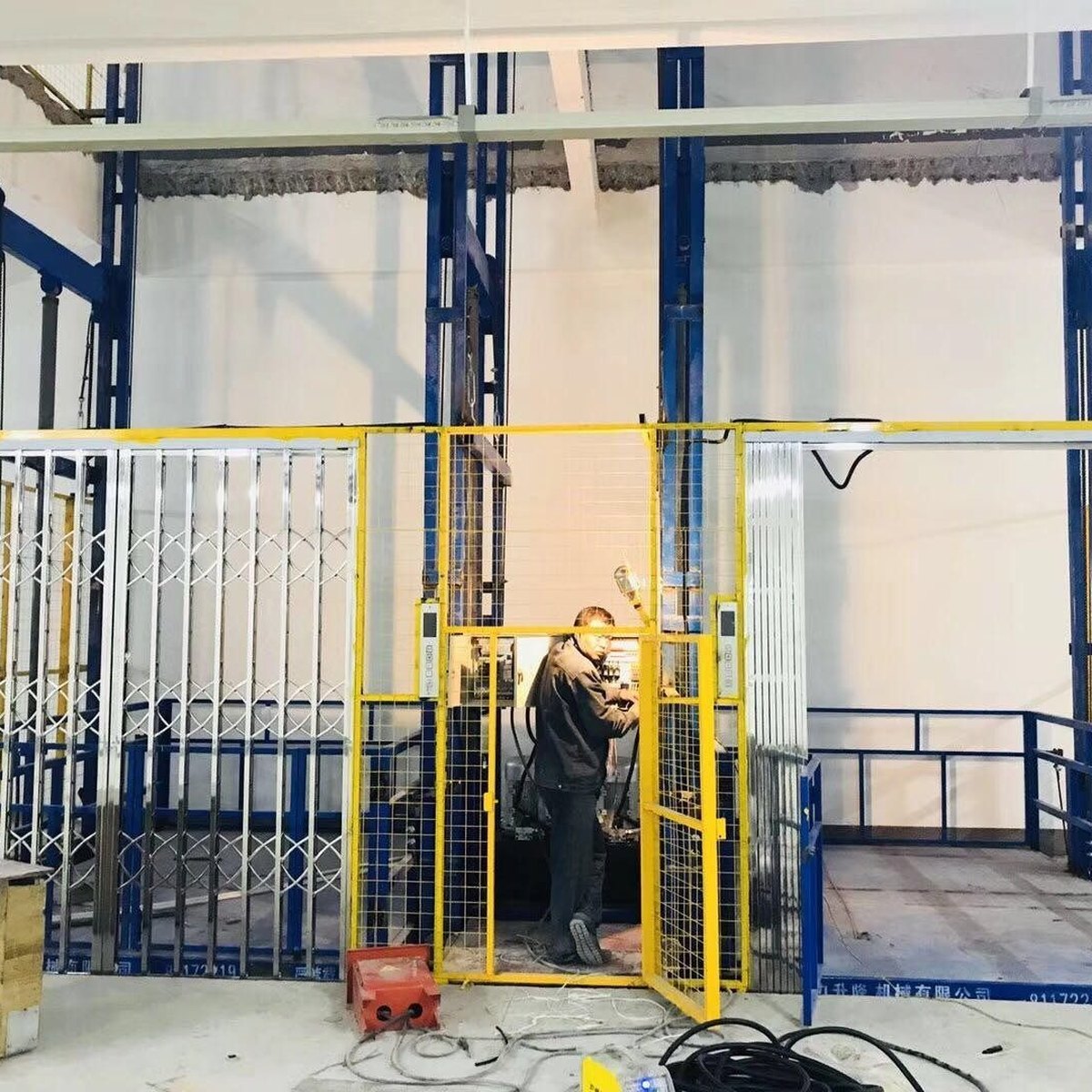
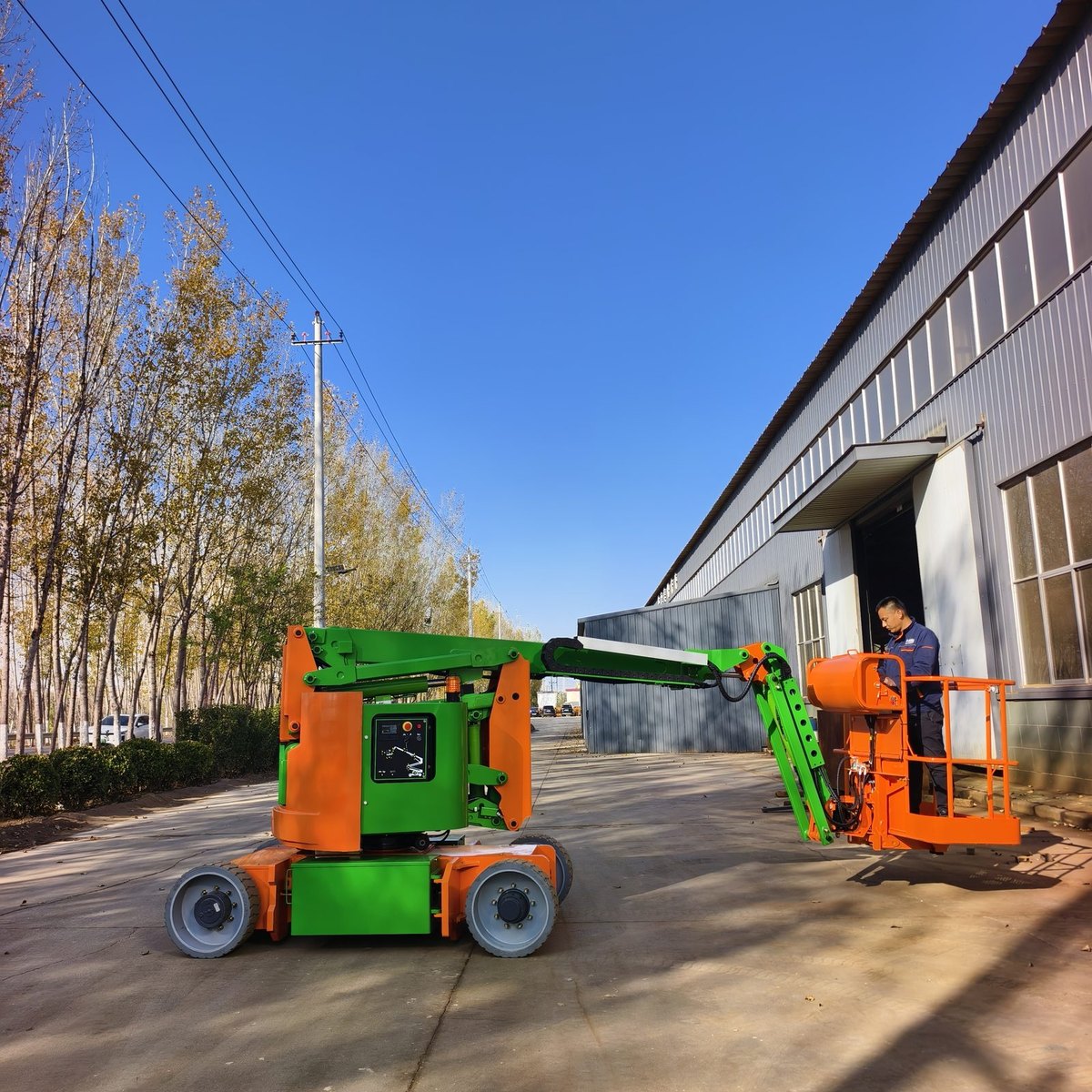
- The reservoir. 60 L on our 16 m and 18 m articulated booms, 100 L on the 20 m and 22 m models, and a smaller tank inside the pump cabinet on a cargo lift.
- The pump station. A 7.5 kW unit on our standard cargo lift, 1.5 kW to 2.2 kW on the mobile scissor lifts.
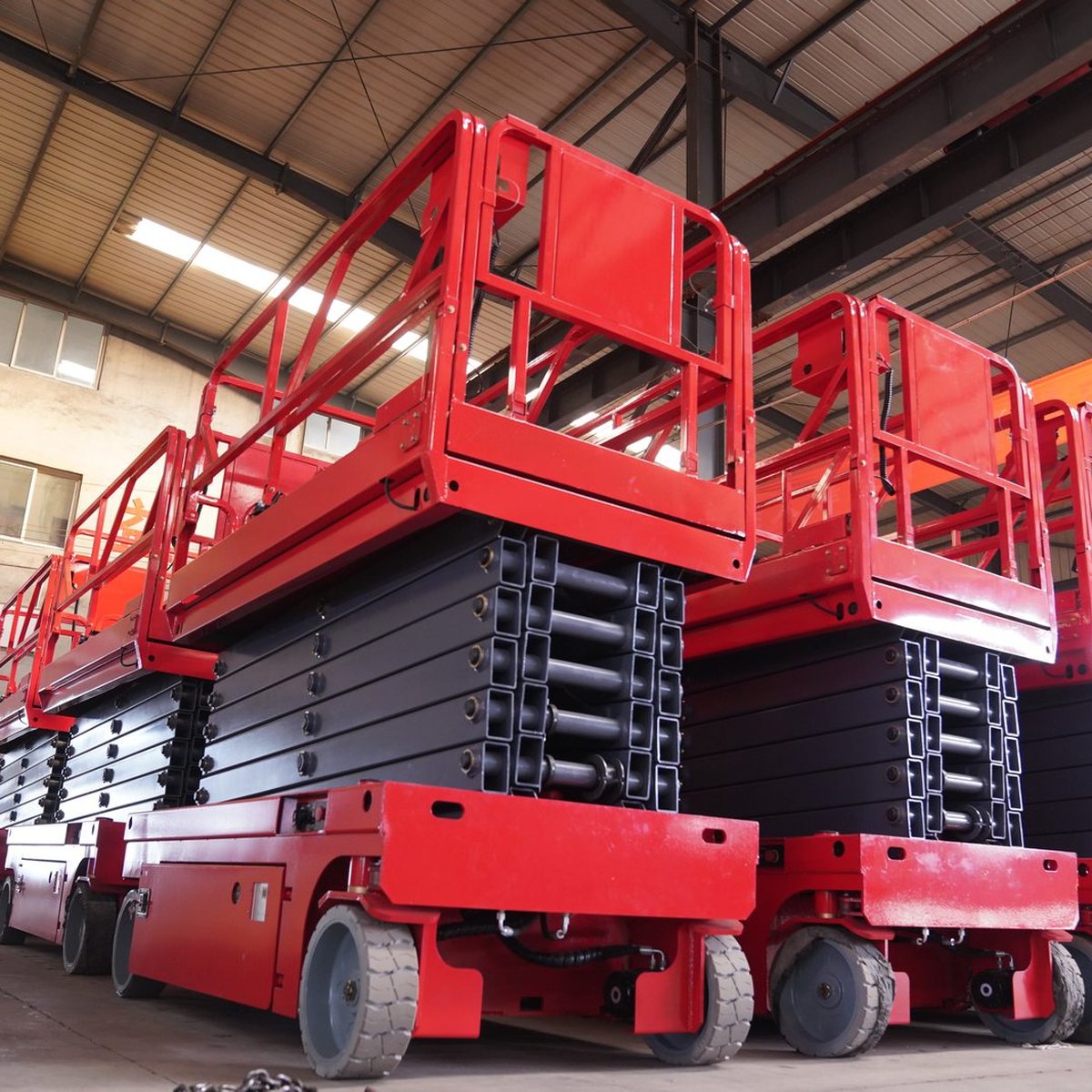
- The cylinders. Two 90 x 60 cylinders on the double guide rail cargo lift, or an HSG70/45 cylinder with a chrome plated rod on the mobile scissor lift.
- The oil. No. 46 anti-wear hydraulic oil in our scissor lifts, and the grade given in the manual for every other machine.
- The safety layer: a relief valve, an explosion-proof valve on the pipe, an emergency descent valve, travel or limit switches and an emergency stop.
The two minute check before every shift
- Look under the machine and in the pump cabinet for fresh oil. A new patch is a fault; an old patch is a fault that was ignored.
- Check the oil level, and that the oil is still the colour it should be rather than milky or black.
- Listen to the pump on the first cycle of the day. A change in pitch is the earliest hydraulic warning you will get.
- Run the platform up and down once and watch the cylinder rods: an oil film means a seal is going, score marks mean contamination has already been through it.
- Check the hoses where they bend rather than where they are easiest to see, and press the emergency stop to confirm the platform holds.
What belongs in the weekly and monthly service
Weekly, clean around the pump station and the breather, wipe the cylinder rods, and check every visible joint, adapter and hose end for weeping. On a cargo lift, add the chain and the four leveling ropes to the same visit, because the hydraulic and mechanical sides share the load.
Monthly, check the oil for contamination and top it up with the specified grade only, inspect the filter and breather, and test that the platform arrives level at each floor. Record the readings against the hour meter: writing them down turns a checklist into a maintenance history, and a maintenance history is what a future buyer or inspector will ask for.
The checklist at a glance
| Interval | Hydraulic tasks | Who | What it prevents |
|---|---|---|---|
| Every shift | Leaks, oil level and colour, pump noise, rod condition, hose bends, emergency stop | Operator | Small faults becoming breakdowns |
| Weekly | Clean pump station and breather, wipe the rods, inspect joints and hose ends, check chain and leveling ropes | Maintenance | Contamination and slow leaks |
| Monthly | Oil condition and top-up, filter and breather, level arrival at each floor, hour meter recorded | Maintenance | Oil that has finished its life unnoticed |
| Quarterly | Full hose and pipe check, cylinder rod and seal check, emergency descent test | Maintenance | A burst hose or a stuck descent valve |
| Annually | Relief valve setting checked against the specified pressure, oil analysis, examination of the safety devices | Competent person | A system quietly working outside its limits |
Hydraulic systems across our range
The routine above suits every machine, but the components differ, and those differences decide which spares belong on your shelf.
| Double guide rail cargo lift | Self-propelled scissor lift | Articulated boom lift | |
|---|---|---|---|
| Cylinders | 2 x 90 x 60 | HSG70/45, chrome plated rod | Rams on the boom and levelling circuit |
| Pump drive | 7.5 kW pump station | 24 V / 3.3 kW, and 24 V / 4.5 kW on the 12 m and 13.8 m models | 48 V lithium pack or Kubota 36 kW diesel |
| Oil | Grade specified for the machine | No. 46 anti-wear hydraulic oil | 60 L tank on the 16 m and 18 m models, 100 L on the 20 m and 22 m models |
| Control voltage | 24 V with PLC control | 24 V safe control voltage | 12 V DC |
| Safety devices | Relief valve, explosion-proof valve on the pipe, two travel switches | Relief valve overload protection, emergency descent valve, limit switch, emergency stop | Built to EN 280 and GB/T 25849 |
| Spares to keep | Oil seal set and travel switch ship with every unit | Seal kit, hose set | Seal kit, hose set |
Electric or hydraulic?
Buyers often ask for an electric lift because they assume it means a machine without oil. It does not: electric describes where the power comes from, hydraulic describes how the lift moves. Our self-propelled scissor lifts run a 24 V / 3.3 kW motor, with 24 V / 4.5 kW on the 12 m and 13.8 m models, and the booms use a 48 V lithium pack or a Kubota 36 kW diesel. The motor drives a hydraulic pump in every case, so battery care and hydraulic care are two separate routines.
What goes wrong when the checklist is skipped
- Contamination. Grit that reaches a cylinder scores the rod or damages the seal, and the repair costs far more than the oil that should have been changed.
- Water in the oil. It turns the oil milky and corrodes the system from the inside.
- Heat. A hot system oxidises its oil faster, and heat usually traces back to a restriction or an overload nobody reported.
- Ignored leaks and overloading. A weeping joint is cheap to fix until a season of top-ups leaves the reservoir full of the wrong mixture, and an overloaded lift still works while its chains, seals and rods pay for the habit.
Where this checklist comes from
The 2.5 t double guide rail cargo lift we built for a warehouse project in Bosnia (5 m of travel, a 1600 x 2200 mm platform, through loading on two floors) left the factory with an oil seal set and a travel switch in the crate, because those are the two components that stop a working lift fastest. Keeping that set with the machine and logging the checks against the hour meter is what keeps a two floor goods lift out of unplanned downtime.
Frequently asked questions
How often should the hydraulic oil be changed?
Follow the manual for your machine and its duty cycle, and let the monthly inspection decide the rest: oil that has darkened, thickened or turned milky has finished its useful life whatever the calendar says.
Why does the platform drift down or arrive unevenly?
Drift is usually a seal or a valve, while uneven arrival is often mechanical. On the double guide rail cargo lift, four leveling ropes and pulleys keep the platform level, and a stretched LH1244 leaf chain changes the level at every floor, so check the leveling system and the chain at the same time as the hydraulics.
Can our own team service the hydraulic system?
Daily and weekly checks, oil top-ups and cleaning are all work your own team can do. Anything inside the circuit, on the relief valve setting or on the travel limits should follow the manufacturer’s procedure with the correct pressure gauge, and the annual examination belongs to a competent person. We stay available online while your team works.
Next step
Tell us the model, age and duty cycle of the machine, and we will send the hydraulic service points that matter for it along with the spares worth keeping in stock. Start from the double guide rail cargo lift or the cargo lift range, compare the self-propelled scissor lifts and articulated boom lifts, and for the mechanical side of the same routine see the cargo lift maintenance and inspection checklist.