Choosing an articulated boom lift by working height alone can lead to the wrong chassis. The 16 m and 18 m models are lighter and shorter, while the 20 m and 22 m versions add reach, a larger platform and a wider chassis. Up-and-over clearance, working radius, capacity and the route into the building all change with them. This comparison uses the figures published for our MPA16E, MPA18E, MPA20E and MPA22E models.
What is an articulated boom lift?
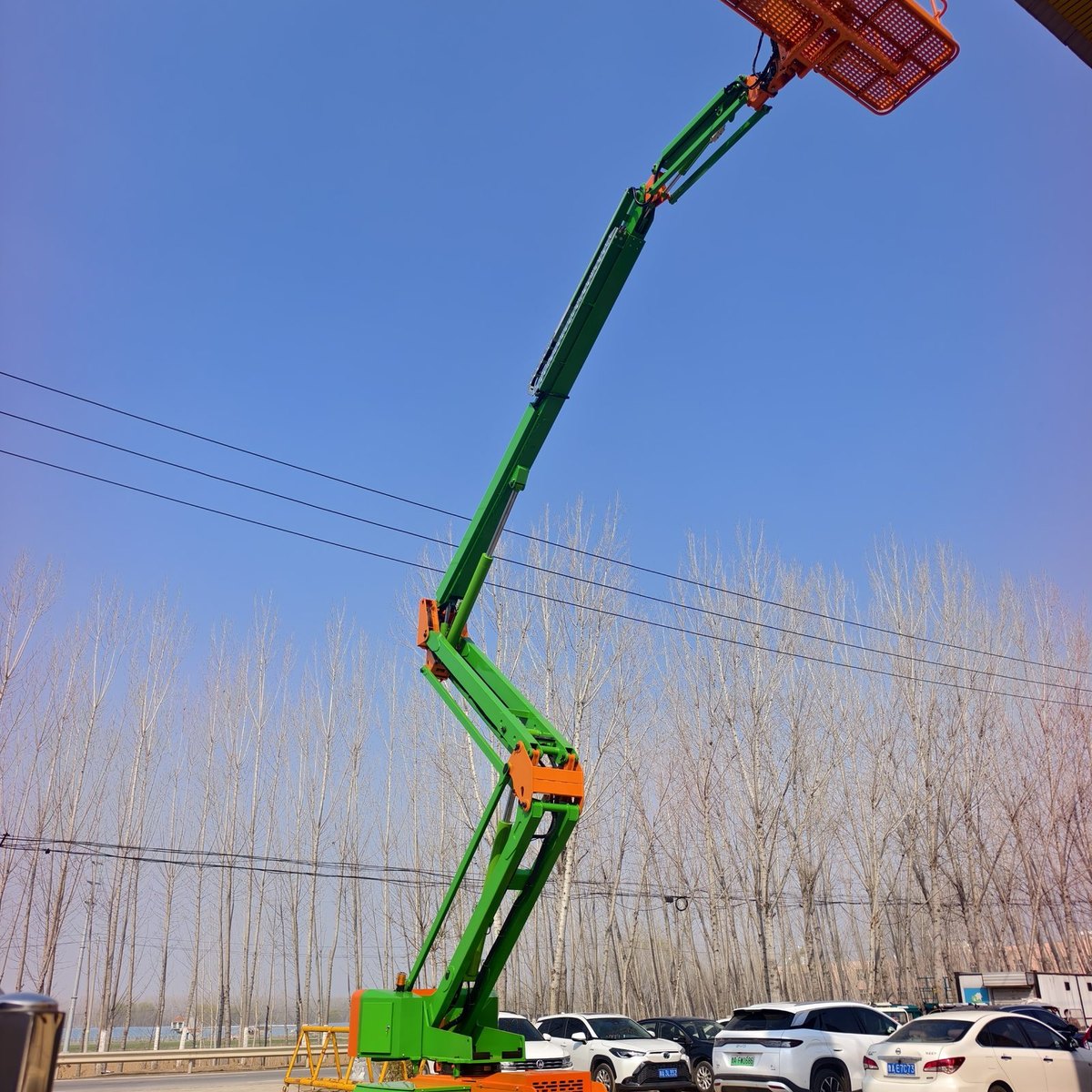
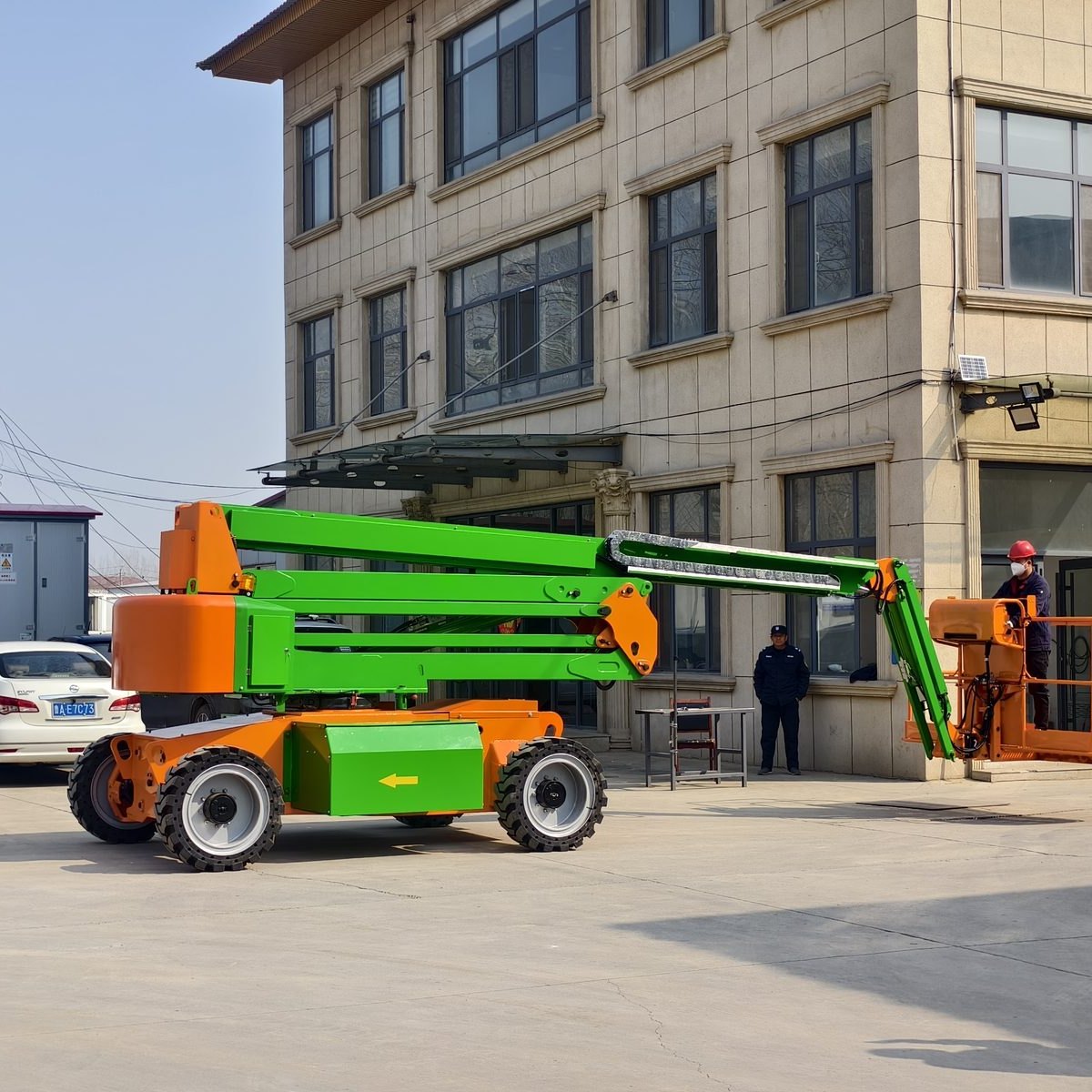
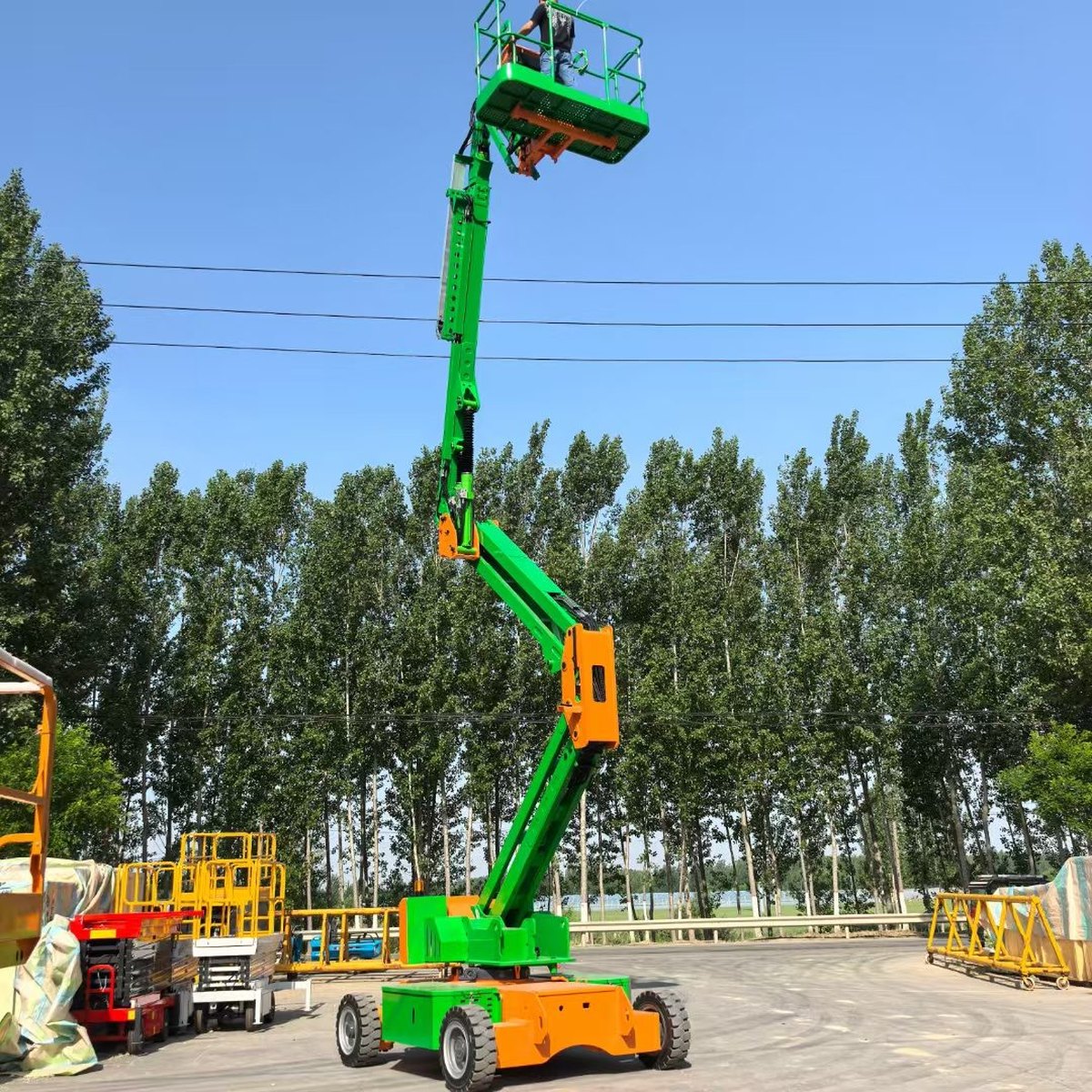
An articulated boom has a folding knuckle between boom sections. It can rise near the machine and then reach out and down behind an obstacle, rather than arriving in a straight line like a telescopic boom. That makes it useful for work above racking, pipework or machinery where the platform must pass over the obstruction before reaching the work point.
The working height and platform height are not the same measurement. The MPA16E has a 16.58 m working height and 14.58 m platform height. At the other end, the MPA22E has a 22 m working height and a 20 m platform height. Start with the height of the work, then use the radius and up-and-over clearance to confirm that the platform can reach the point from the available ground position.
How do the four model sizes compare?
The larger models provide more reach, but the 16 m and 18 m machines keep a smaller stowed footprint and lighter transport weight.
| Specification | MPA16E | MPA18E | MPA20E | MPA22E |
|---|---|---|---|---|
| Working height | 16.58 m | 18 m | 20 m | 22 m |
| Platform height | 14.58 m | 16 m | 18 m | 20 m |
| Working radius | 8.45 m | 10 m | 11.6 m | 12.9 m |
| Up-and-over clearance | 7.86 m | 7.86 m | 8.2 m | 8.54 m |
| Rated load | 256 / 350 kg | 256 / 350 kg | 250 kg | 250 kg |
| Platform size | 1.83 x 0.76 m | 1.83 x 0.76 m | 2.4 x 0.9 m | 2.4 x 0.9 m |
| Stowed size | 6.85 x 2.32 x 2.32 m | 7.68 x 2.32 x 2.32 m | 8.9 x 2.45 x 2.53 m | 8.9 x 2.45 x 2.53 m |
| Machine weight | 6,850 kg | 7,850 kg | 8,550 kg | 9,000 kg |
When is the 16 m or 18 m model enough?
The MPA16E offers 16.58 m working height, 14.58 m platform height, 8.45 m working radius and 7.86 m up-and-over clearance. It weighs 6,850 kg and stows at 6.85 x 2.32 x 2.32 m. The MPA18E raises the working height to 18 m and the platform height to 16 m, with a 10 m working radius and the same 7.86 m up-and-over clearance. Its stowed length grows to 7.68 m and its weight to 7,850 kg.
Both models use a 1.83 x 0.76 m platform and list a rated load of 256 / 350 kg. That platform size is one reason to inspect the actual work task: a compact origin close to the obstacle may be preferable to bringing in a longer machine. Confirm the load and the number of occupants for the chosen configuration from the model data rather than assuming the larger capacity is available in every position.
What changes on the 20 m and 22 m models?
The MPA20E reaches 20 m working height, 18 m platform height, 11.6 m horizontal radius and 8.2 m up-and-over clearance. It carries 250 kg on a 2.4 x 0.9 m platform and weighs 8,550 kg. The MPA22E extends the working height to 22 m, platform height to 20 m, radius to 12.9 m and up-and-over clearance to 8.54 m. Its weight is 9,000 kg.
Those two larger models share the same 8.9 x 2.45 x 2.53 m stowed dimensions. They also use 4 x 4 drive and steer, rough-terrain tyres, a 45% listed gradeability and turning radii of 3.4 m inside and 5.4 m outside. The 16 m and 18 m models use 2 x 2 drive, a 30% listed gradeability and 2.7 m / 4.7 m turning radii. The reach improvement therefore comes with a larger, heavier and differently driven machine.
Electric or diesel at the top of the range?
The MPA22E is the electric model. It runs from a 48 V / 360 Ah lithium pack. The ABL22D uses the same chassis and dimensions with a Kubota 36 kW diesel engine. The product information lists the same 22 m working height, 20 m platform height, 12.9 m radius, 8.54 m up-and-over clearance and 250 kg capacity for the two versions.
That gives a straightforward choice for the 22 m size: use the electric MPA22E where indoor working and no exhaust matter, or the diesel ABL22D for outdoor work requiring the same reach. Check the floor, access route and operating environment regardless of power type. The 9,000 kg machine weight and 2.53 m stowed height do not change between these two versions.
What determines the exact model?
Measure the highest work point, the obstacle the boom must clear and the horizontal distance from the available machine position to the platform. A high job close to a wall may not need the longest boom; a lower job behind a wide obstruction may need more forward radius. The up-and-over figure is especially important because the platform must clear the obstacle before it can descend behind it.
Then check the route. The 16 m and 18 m models need less stowed length and carry less weight than the 20 m and 22 m units, but all four are large machines. Confirm doorway width, floor loading, crane or ramp access and the space for the turntable and wheels. The product page lists a 355 degree non-continuous turntable rotation, so the chassis also needs room to reposition between working points.
How does this compare with a telescopic boom?
An articulated boom is the fit when the work point is behind an obstacle and the platform has to fold over and down. A telescopic boom is the direct choice for maximum height and horizontal distance over open ground. If there is no knuckle requirement, compare the telescopic range before selecting the largest articulated model. If the job involves racks, pipes or equipment below the work face, the up-and-over clearance is the feature to evaluate rather than reach alone.
A Brazil enquiry compared an 18 m articulated boom solution with a vertical mast option. That is a useful reminder that working height alone does not settle the machine type; access, obstacle clearance, footprint and task geometry decide whether an articulated boom, a mast lift or another platform is appropriate.
Frequently asked questions
What is the difference between working height and platform height?
Platform height is the height of the platform floor. Working height adds the reach available to a person on the platform. In this range the differences are stated directly: the MPA16E has 16.58 m working height and 14.58 m platform height, while the MPA22E has 22 m working height and 20 m platform height.
Which model has the greatest up-and-over clearance?
The MPA22E and ABL22D list 8.54 m, compared with 8.2 m on the MPA20E and 7.86 m on the 16 m and 18 m models. Confirm the obstacle height and the required position behind it, because horizontal radius also affects whether the platform can reach the work point.
Do the 16 m and 18 m models carry more than the 22 m model?
The product data lists 256 / 350 kg for the 16 m and 18 m models and 250 kg for the 20 m and 22 m models. Use the final configuration and operating position when checking the load, and never treat the higher headline figure as universal across the range.
Next step
Send the working height, obstacle height, required horizontal reach and site photographs. Start from the articulated boom lift product page, read how to read up-and-over clearance, and compare an articulated boom with a telescopic model in our boom lift buying guide.