Working height is the number every buyer checks. Up-and-over clearance is the one they find out about on site. It is the height the platform can work at on the far side of an obstruction – a wall, a parapet, a row of pipes, the edge of a roof – and it is the difference between a boom lift that does the job and a boom lift that reaches the right height in the wrong place. This is how to read it.
What up-and-over clearance actually means
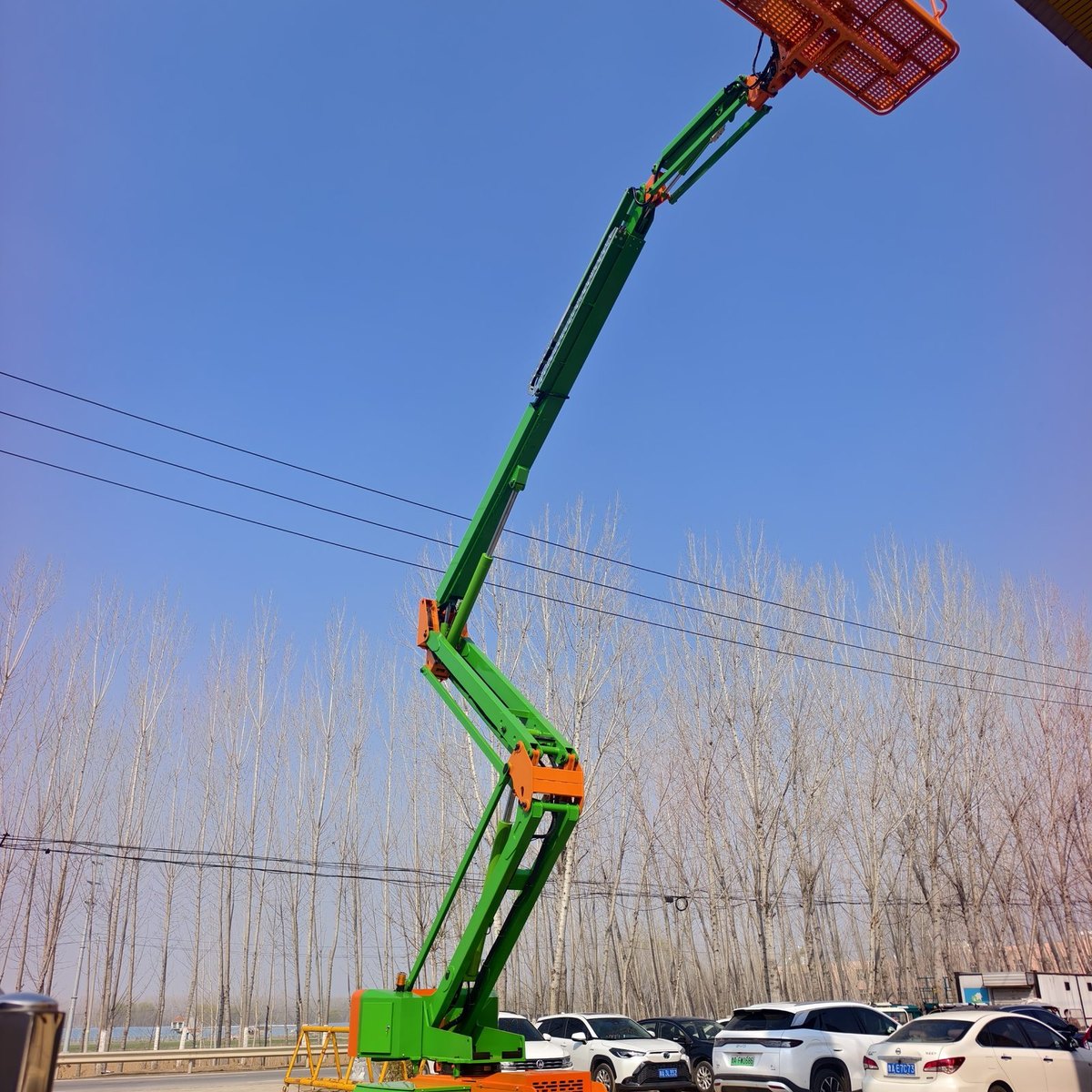
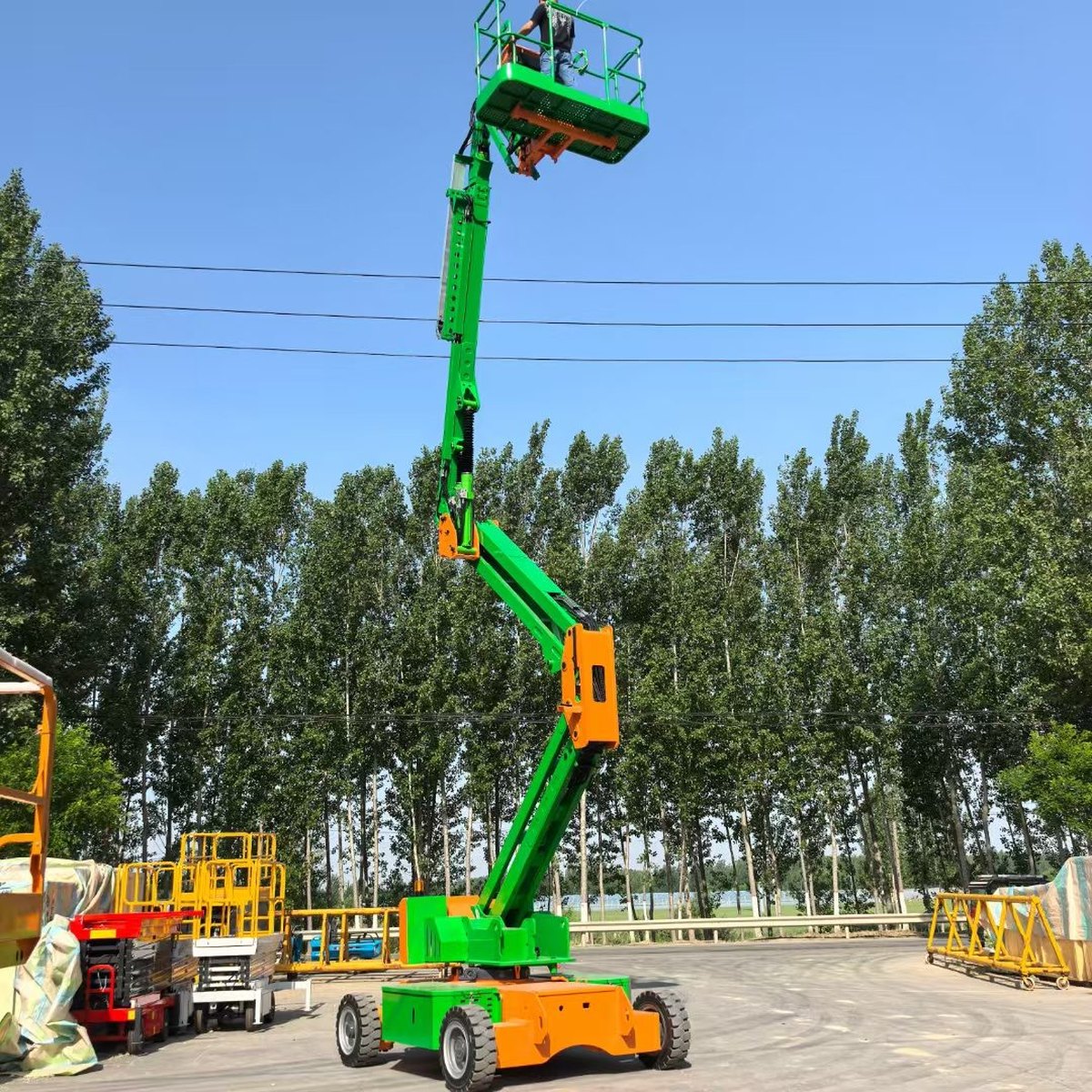
An articulated boom folds at the knuckle to reach over something. Up-and-over clearance is the height of the platform above the ground when the boom is fully raised and the platform is on the far side of an obstacle. It is measured from the ground, not from the top of the wall: a machine with 8 m of up-and-over clearance can put the platform 8 m above the floor on the far side of a wall that is lower than that.
How our articulated booms compare
The machines grow in height, radius and clearance together, and so does their weight and width, which matters more than most people expect.
| Model | Working height | Max radius | Up-and-over | Rated load | Weight |
|---|---|---|---|---|---|
| MPA16E | 16.58 m | 8.45 m | 7.86 m | 256 / 350 kg | 6,850 kg |
| MPA18E | 18 m | 10 m | 7.86 m | 256 / 350 kg | 7,850 kg |
| MPA20E | 20 m | 11.6 m | 8.2 m | 250 kg | 8,550 kg |
| MPA22E | 22 m | 12.9 m | 8.54 m | 250 kg | 9,000 kg |
| ABL22D | 22 m | 12.9 m | 8.54 m | 250 kg | 9,000 kg (Kubota 36 kW diesel) |
How to measure the obstacle
Stand on the side where the machine will be parked and measure the highest thing between you and the work: the wall itself, plus a parapet, plus any pipe or duct that runs along it. Add the clearance you need above that obstruction to work safely, and compare the total with the up-and-over figure. If the wall is 6 m and you need 1 m above it, a machine with 7.86 m of up-and-over clearance will do it; a machine with 6.5 m will not, whatever its working height says.
Why the biggest machine is not automatically the answer
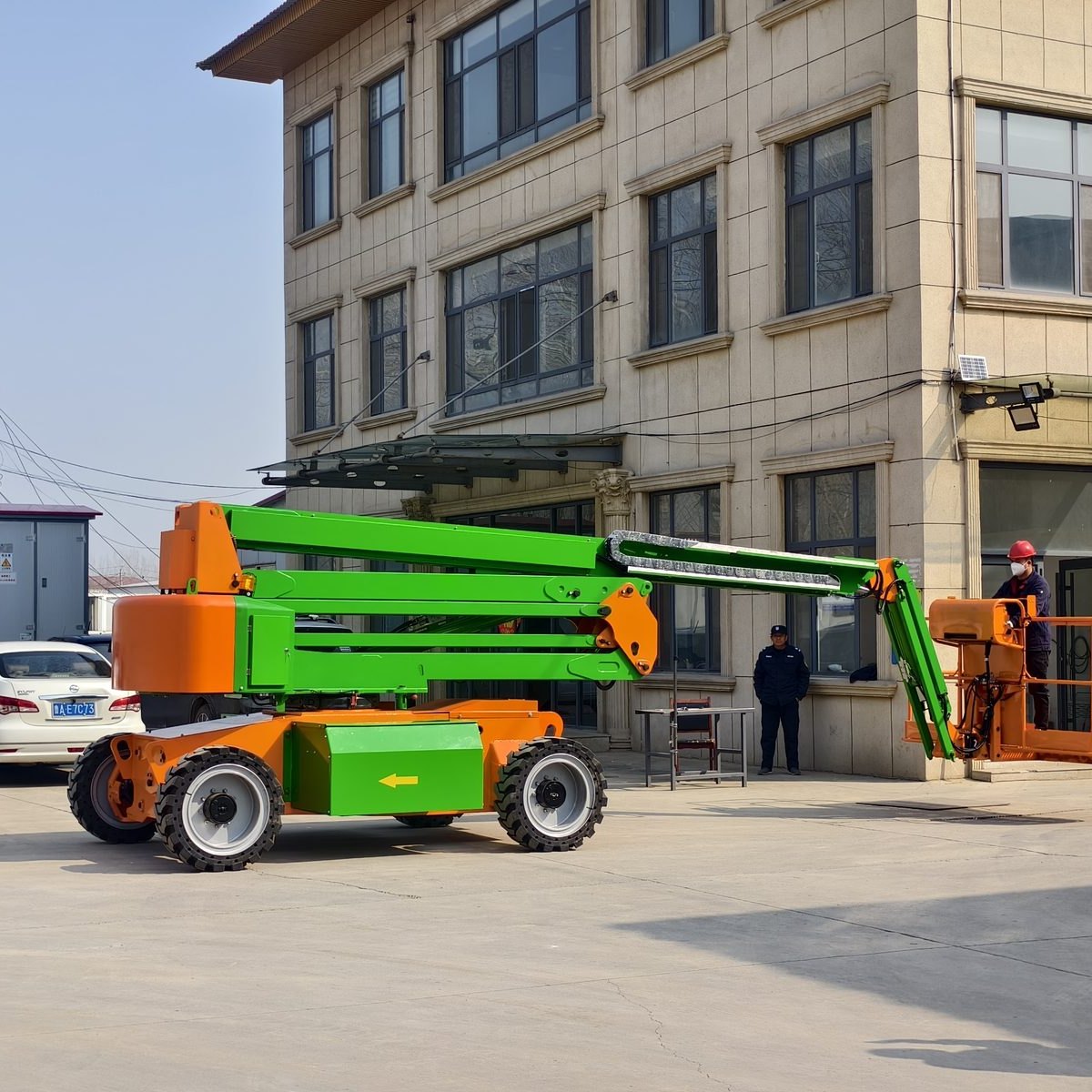
Our 22 m model has 8.54 m of up-and-over clearance, which is the best in the range, and it also weighs 9,000 kg and is 2.45 m wide. That is beyond the door opening of a standard shipping container and it needs a site that can take nine tonnes. The 16 m and 18 m machines give 7.86 m of clearance at 6,850 kg and 7,850 kg, and they are 2.32 m wide, which is the number that decides whether the machine can travel in a container at all. Choose the smallest machine that clears the obstacle, not the largest you can afford.
The numbers that travel with clearance
- Maximum working radius. 8.45 m on the 16 m machine, 10 m on the 18 m, 11.6 m on the 20 m and 12.9 m on the 22 m. Radius is how far out the platform can reach; clearance is how high it can be when it gets there.
- Platform rotation. 160 degrees on the 16 m to 20 m machines and 180 degrees on the 22 m, which lets the platform be squared to the work after the boom has reached over.
- Turntable rotation. 355 degrees, non-continuous, so the machine can work over a full circle without rotating the chassis.
- Capacity. 256 kg restricted and 350 kg unrestricted on the 16 m and 18 m machines; 250 kg on the 20 m and 22 m. The restricted rating applies when the platform is outside its safe working envelope, so plan for the lower figure when reaching over an obstacle.
- Standards. Our articulated booms are built to EN 280 and GB/T 25849.
How to read a boom lift specification
- Working height and platform height – the difference is about 2 m, which is the person.
- Maximum working radius, at the height you actually need.
- Up-and-over clearance, measured from the ground.
- Capacity, restricted and unrestricted.
- Stowed size and weight, for transport and for the floor.
- Drive speed and gradeability, for moving between jobs.
- Power: 48 V lithium on the electric models, or the Kubota 36 kW diesel.
Frequently asked questions
What is the difference between working height and platform height?
Platform height is where the deck is; working height is where a person’s hands reach, about 2 m higher. Our 16 m machine has a 14.58 m platform height and a 16.58 m working height, and the 22 m machine has a 20 m platform and a 22 m working height.
Can a boom lift work over a roof edge?
Yes, that is exactly what up-and-over clearance is for. Our machines clear 7.86 m on the 16 m and 18 m models and 8.2 to 8.54 m on the 20 m and 22 m models. Measure the roof edge or parapet, add the working space you need above it, and compare.
Why is the capacity lower on the taller machines?
Because the structure that reaches further out has to carry its own weight as well as the platform load. The 16 m and 18 m machines carry 350 kg unrestricted and 256 kg restricted; the 20 m and 22 m machines are rated at 250 kg. Plan the tools and materials against the restricted figure when you are working over an obstacle.
Next step
Send us a photograph of the obstacle, the height you need to work at and the distance out from the machine, and we will confirm the model that clears it. Start from the articulated boom lift range, read articulated or telescopic boom lift: a practical buyer guide, and check battery or diesel running costs before you choose the power source.