Choosing the machine is half of an aerial platform order. The other half is getting it to site without a bent guardrail, a cracked control box or a customs question about the batteries. Most of the cost and delay in a first shipment comes from details that were decided long before the container arrived: the stowed size, the door opening, the weight and the way the machine is tied down. Here is how that works in practice.
What decides whether an aerial platform fits in a container?
Four numbers. The stowed length, width and height of the machine, and its weight. Compare them with the container, and remember that the door is smaller than the inside of the box: a standard dry container is about 5.90 x 2.35 x 2.39 m inside on a 20 ft unit and 12.03 x 2.35 x 2.39 m on a 40 ft, while the door opening is about 2.34 m wide and 2.28 m high. A machine that is comfortable inside can still refuse to go through the door.
| Machine | Stowed size | Weight | How it travels |
|---|---|---|---|
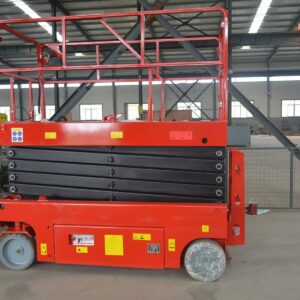
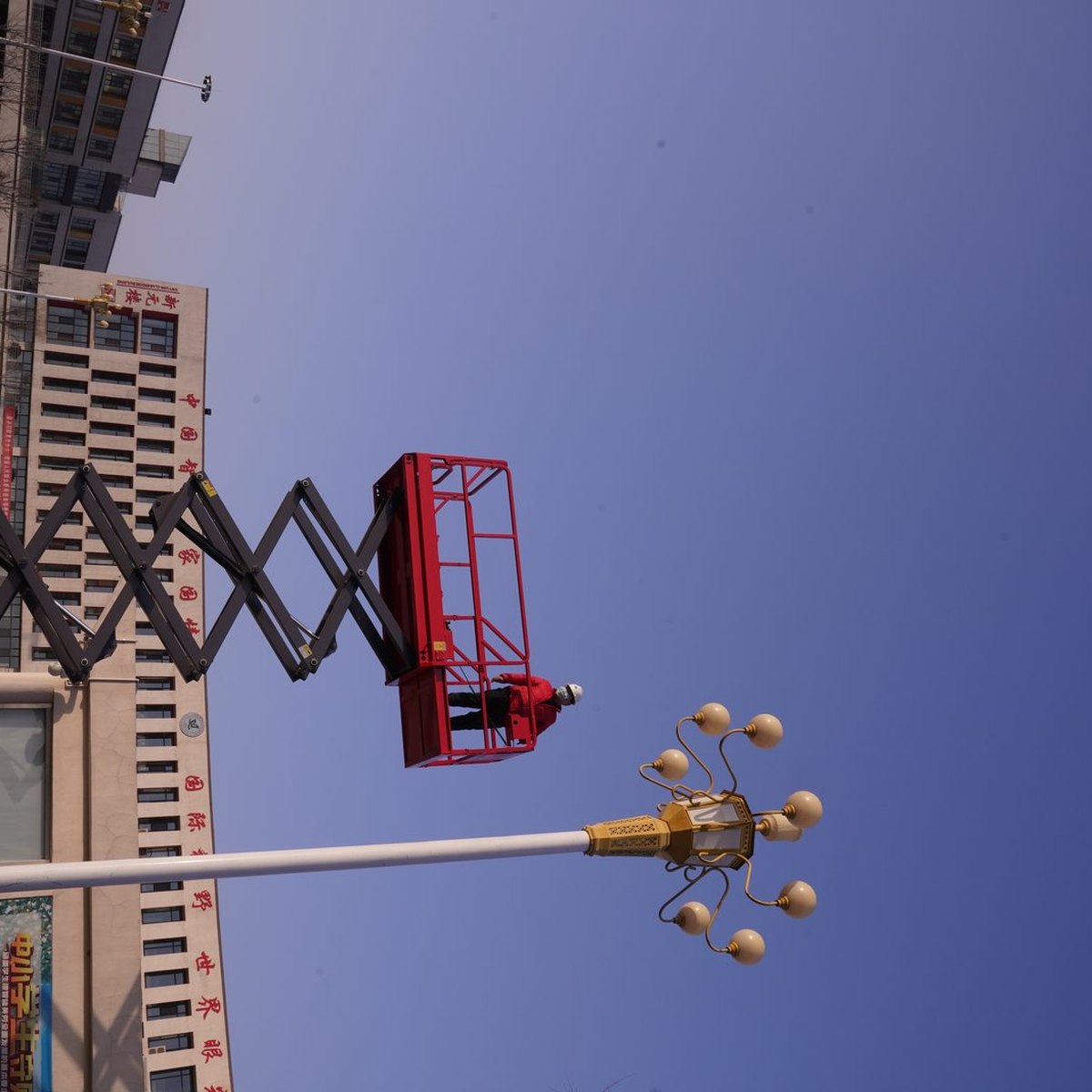
| Self-propelled scissor lift, 4.6 m | 1483 x 830 x 1740 mm | 870 kg | Drives into a 20 ft or 40 ft container |
| Self-propelled scissor lift, 6 m to 10 m | 2430 x 1220 x 1711 mm | 2,060 kg to 2,450 kg | One per row, chocked and lashed |
| Narrow scissor lift, 8 m | 2477 x 850 x 1956 mm | 2,208 kg | Two units side by side in a 20 ft container |
| Self-propelled scissor lift, 12 m to 13.8 m | 2390 x 1210 x 2050 mm | 3,000 kg to 3,570 kg | One per row, container |
| Mobile scissor lift, 10 m | 2016 x 1290 x 1540 mm | 1,280 kg | Forklifted or rolled in |
| Double mast aluminium lift, 8 m | 1310 mm overall length | 490 kg | Palletised and packed in a crate |
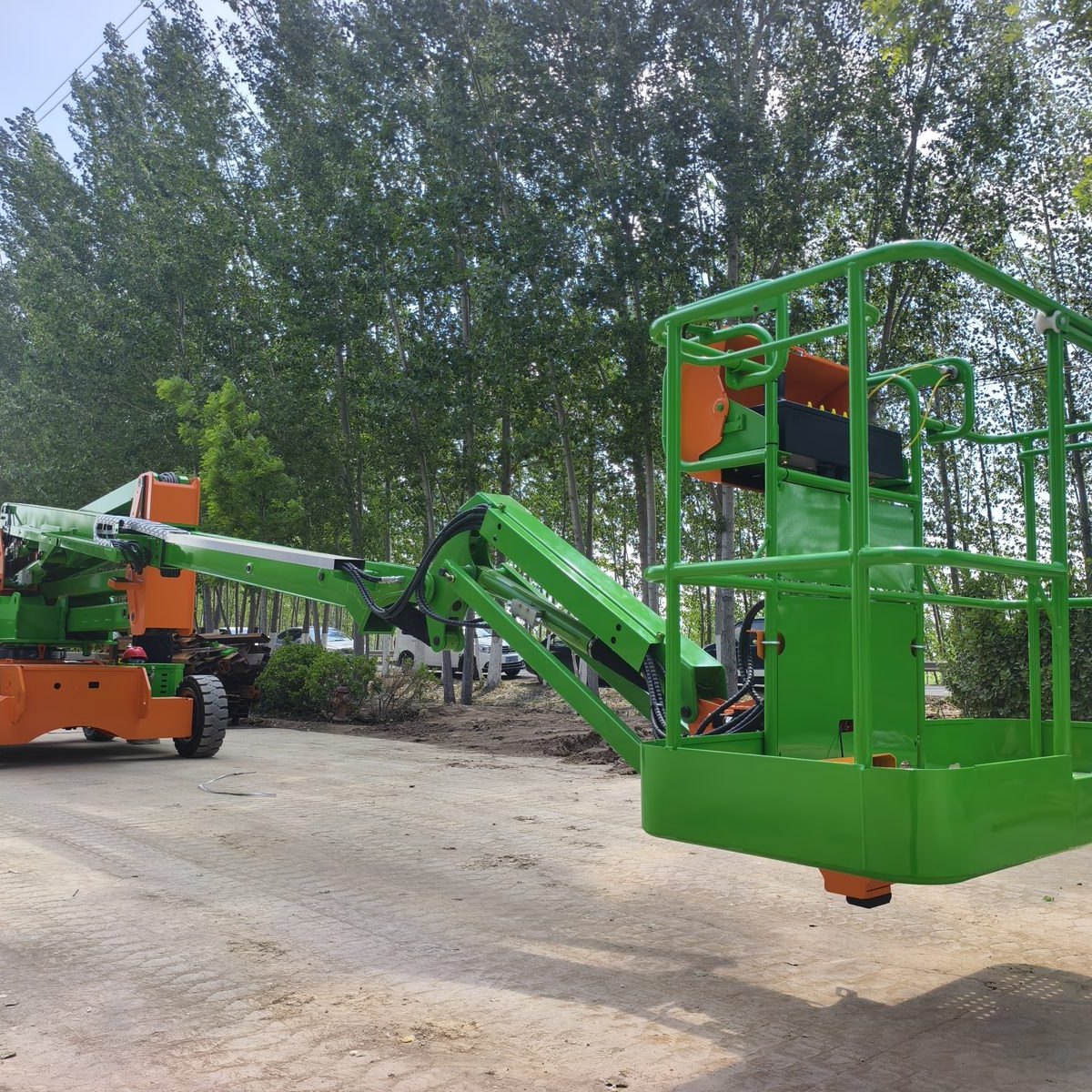
| Articulated boom lift, 16 m to 18 m | 6.85 x 2.32 x 2.32 m to 7.68 x 2.32 x 2.32 m | 6,850 kg to 7,850 kg | Craned; flat rack or container floor |
| Articulated boom lift, 20 m to 22 m | 8.90 x 2.45 x 2.53 m | 8,550 kg to 9,000 kg | Flat rack or break bulk, 2.45 m is wider than a container door |
How is a machine loaded – ramp, forklift or crane?
Self-propelled scissor lifts are the easiest case, because they drive themselves. With the platform stowed they travel at 3.8 km/h and climb a 25% grade, so a container spotted on a yard ramp is normally all that is needed. The operator drives the machine in, sets the wheels straight, applies the parking brake and shuts down.
Mobile scissor lifts and the mast lifts are usually rolled or forklifted into place, because they are lighter and narrower: the 10 m mobile scissor lift weighs 1,280 kg and stows to 2016 x 1290 x 1540 mm, which is well inside a forklift’s capacity. Boom lifts are the machines that need a plan. A 6.85 m long, 6,850 kg articulated boom is craned, either into a flat rack or onto the container floor through the doors, with four lifting slings on the designated points and nobody under the load.
What has to be done to the machine before it is loaded?
- Batteries. Electric models use maintenance-free lead-acid batteries, charged by a 24 V / 30 A charger (24 V / 15 A on the smallest model). They ship secured in their trays with the terminals disconnected as the manual requires, and the charger stays with the machine.
- Fuel. Diesel models travel with the fuel level the carrier accepts, with the cap sealed and the tank marked. We confirm the limit with the forwarder before loading rather than after.
- Lashing. Four points on the chassis are lashed to the container ring bolts with ratchet straps, and the wheels are chocked and blocked with timber so the machine cannot walk on a rough sea.
- Stowing. Booms are brought down and locked, platforms folded, the extension deck retracted, the mast lowered into its transport position and the emergency stop engaged. An articulated boom stows to about 2.32 m high, which clears the container door with room to spare.
- Protection. Guardrails come wrapped, the control panel is padded, and the machine is covered where the loader will stand on it. Rust protection matters more than most buyers expect on a sea crossing.
- Paperwork. Weights, serial numbers, battery type and a loading photo of every unit, so the machine that arrives can be checked against the machine that left.
Container or flat rack?
Both are normal, and the choice follows the stowed size rather than the price of the machine.
| 20 ft dry container | 40 ft high cube | Flat rack | |
|---|---|---|---|
| Internal size | About 5.90 x 2.35 x 2.39 m | About 12.03 x 2.35 x 2.69 m | Deck only, ends fold down |
| Door opening | About 2.34 x 2.28 m | About 2.34 x 2.58 m | Not applicable, machine is craned |
| Best for | One or two compact scissor lifts or a mast lift | Two or three scissor lifts, or a small boom lift | Machines wider or taller than a door, and long booms |
| Weather protection | Closed and sealed | Closed and sealed | Machine needs wrapping and rust protection |
| Loading method | Ramp, forklift or winch | Ramp, forklift or winch | Crane with four point slings |
What we have shipped, and how
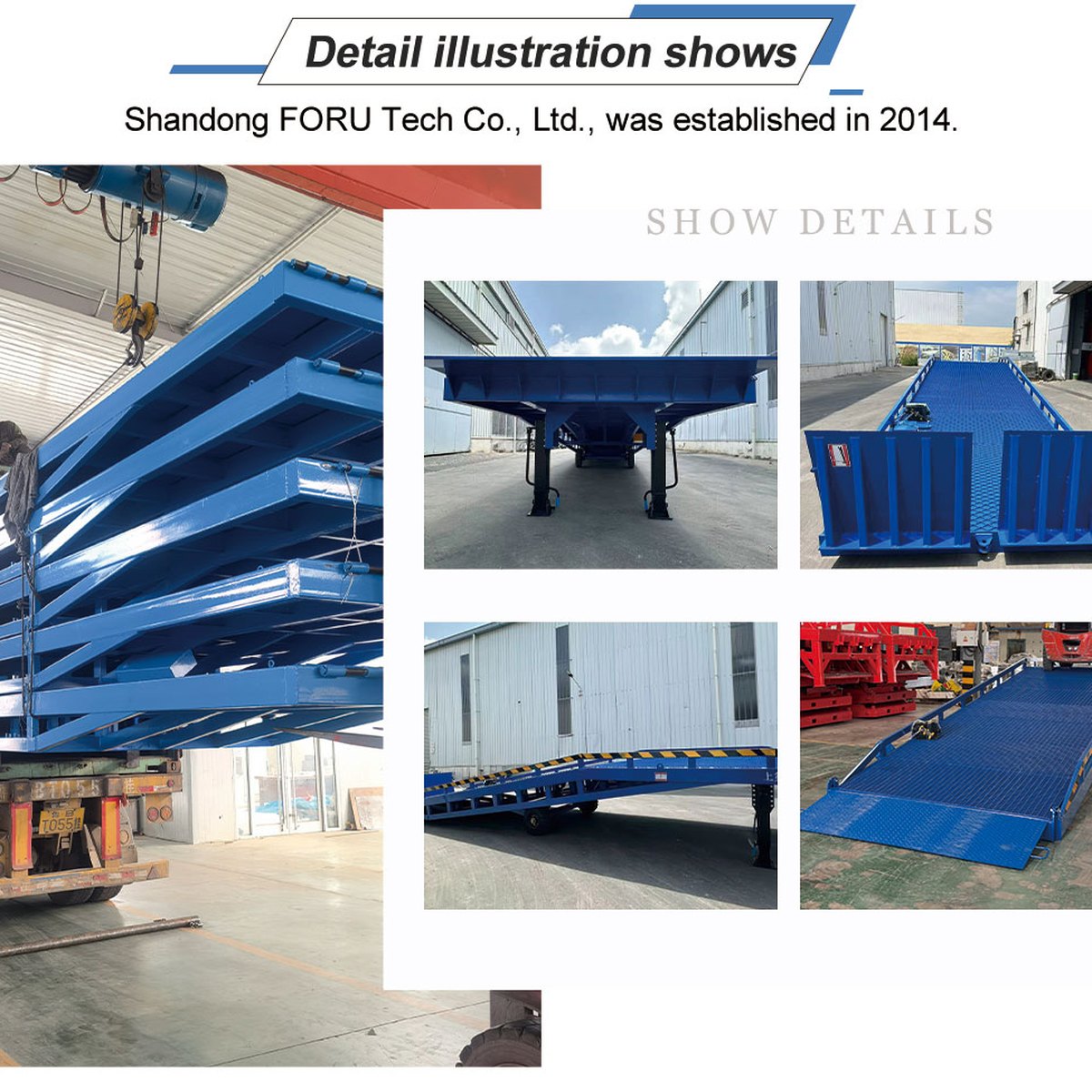
Not every shipment is a container of standard machines. A 15 t mobile loading ramp went to Argentina from Spain with four 10 m lifting slings in the crate, because a ramp that size is craned at both ends of the journey rather than driven. A 2.5 t double guide rail cargo lift left as a wooden case of about 4000 x 2300 x 1800 mm weighing about 1,800 kg, with the assembly drawing inside so the customer’s own fitters could install it without waiting for a technician. And a 20 t fixed scissor platform with a 13,000 x 3,000 mm deck is break-bulk by definition: it travels as a machine, not as a box.
Frequently asked questions
Can two scissor lifts fit in one 20 ft container?
It depends on the width. Our narrow 8 m self-propelled scissor lift is 850 mm wide when stowed, so two units stand side by side inside the 2.35 m internal width of a 20 ft container with room to lash them. The standard 1.22 m wide models are one per row, and the container is then packed with the second machine behind the first if the length allows.
Do the machines ship with fuel and batteries?
Electric models ship with their maintenance-free lead-acid batteries fitted, secured and disconnected, because they are part of the machine and cannot be sent separately. Diesel models travel with the fuel level the shipping line permits, which varies by carrier and route; we confirm it with your forwarder and prepare the machine accordingly.
Who arranges loading and shipping?
We are based in Jinan, Shandong and quote EXW, FOB Qingdao or CIF your port, so you can either collect the machine or leave the sea freight to us. Either way you receive the packing list, weights and loading photographs before the container leaves, and we answer questions from your forwarder directly while the booking is being made.
Next step
Tell us the model, the destination port and whether you want EXW, FOB or CIF, and we will confirm the stowed size against a 20 ft or 40 ft container, prepare the lashing plan and send photographs of the machine in the box before it sails. Start from the self-propelled scissor lift range, the articulated boom lifts, the mobile scissor lifts or the double mast aluminium lifts, and for the choice between drive types see battery or diesel aerial platform running cost compared.