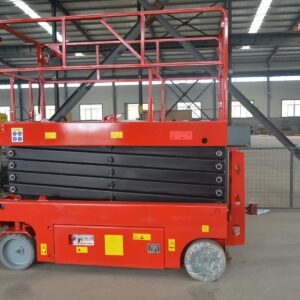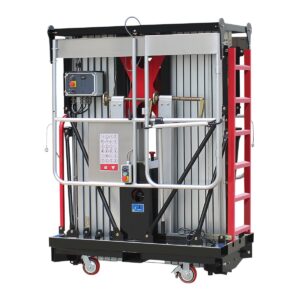
A cargo lift – often called a cargo lift elevator, a goods lift or a guide rail lift – is the practical answer when goods have to move between two or three levels and a passenger lift is either unnecessary or impossible to fit. This guide covers what the machine is, how it works, the three structures we build, the specification of the standard model, and what the building has to provide.
What a cargo lift is and how it works
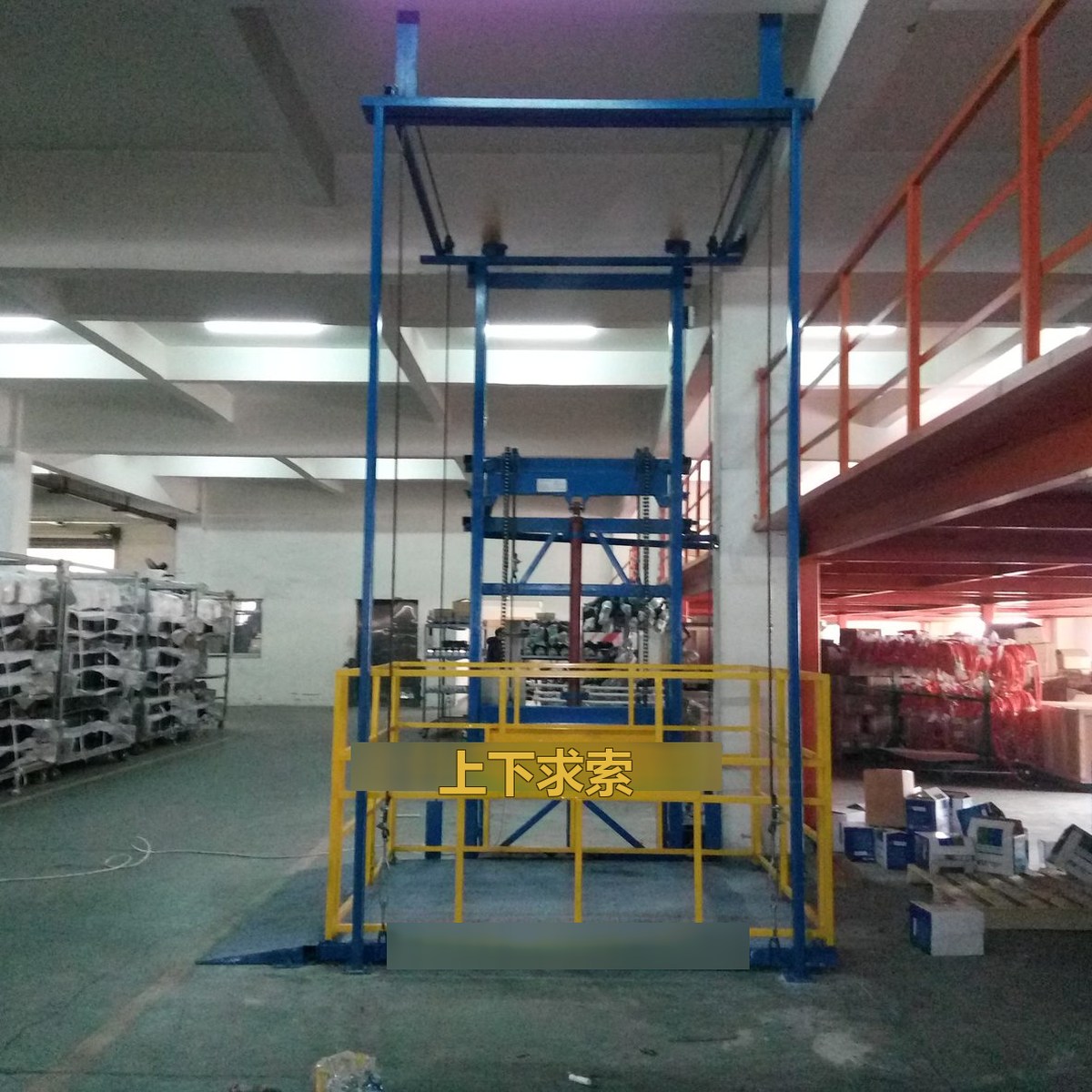
A cargo lift is a goods-only platform that travels on two vertical guide rails fixed to the wall or carried by a free-standing frame. The platform is bolted to a lifting frame that runs on guide wheels inside the rails, and two 90 x 60 hydraulic cylinders drive that frame through an LH1244 leaf chain. A 7.5 kW pump station in a cabinet at floor level supplies the cylinders, four leveling ropes and pulleys keep the platform square, and a PLC panel handles floor to floor calling and arrival levelling at 24 V control voltage.
The platform carries pallets, trolleys, drums, spare parts and machine components – not people. It is built to the goods and the floor to floor height rather than to a fixed catalogue, and it fits into buildings that were never designed with a lift shaft.
The three structures
The way the load is carried follows the space and the weight.
| Configuration | How the load is carried | Best for | Notes |
|---|---|---|---|
| Single guide rail, one cylinder | One rail | Narrow openings and light loads | Most compact footprint |
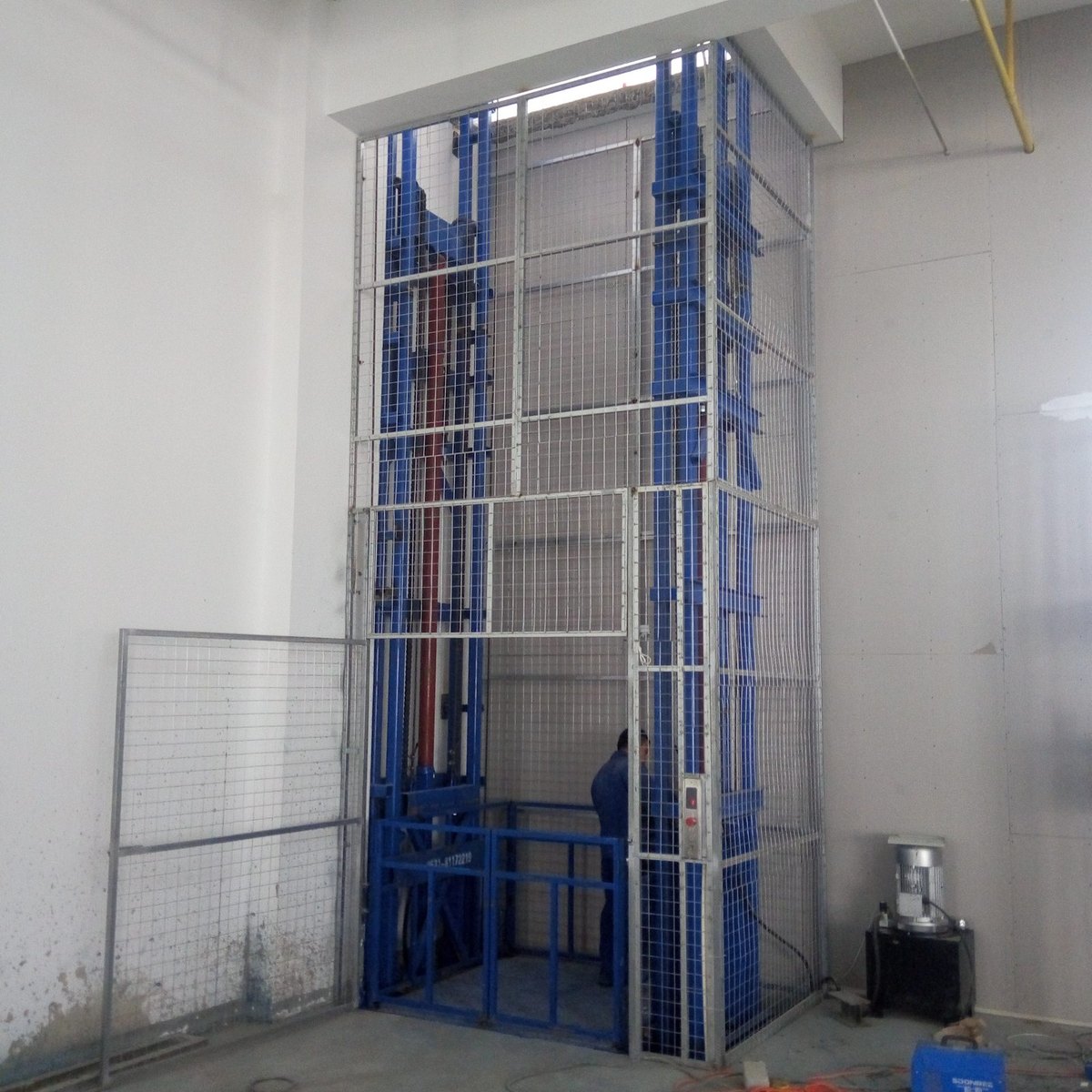
| Double guide rail, two cylinders | Two rails and two cylinders | Warehouse, workshop and food plant goods transfer | Holds level with off-centre loads; wider platforms |
| Four column | Independent four post frame | Heavy loads, large platforms, outdoor and yard use | Free standing, does not rely on the building wall |
The standard model, in numbers
Our CL5-2.5 is the build most customers start from, and everything below it is what ships unless the project needs something different.
| Specification | CL5-2.5 standard build |
|---|---|
| Load capacity | 2.5 t |
| Lifting height | 5 m |
| Platform | 1600 x 2200 mm, or 2000 x 2500 mm |
| Pit | 2200 x 2250 x 300 mm |
| Cylinders and chain | 2 x 90 x 60 cylinders, LH1244 leaf chain |
| Power unit | 7.5 kW pump station, 380 – 400 V, 50 Hz, three phase |
| Control | 24 V control voltage, PLC, floor by floor calling |
| Speed | 4 – 5 m/min |
| Loading direction | 180 degrees, through type |
| Deck and guard | 120 x 60 x 4 mm frame with 5 mm anti-skid plate; 70 x 70 x 5 mm guardrail, 1000 mm high |
Where cargo lifts are used
- Warehouses moving pallets between a ground floor and a mezzanine, usually with a pallet truck.
- Workshops moving machine parts and heavy components between production levels.
- Food plants where a stainless-friendly, washable layout matters and a shaft would be in the way.
- Retail and storage buildings where stock moves to a basement or an upper floor.
- Existing buildings where a shaft cannot be built but a floor opening can be cut.
What the building has to provide
- A floor opening for the platform and its 1000 mm guardrail, with a landing gate on each level.
- A sound wall for the rail anchors, or a free-standing four-column frame where no wall suits.
- The pit for the lower level: 2200 x 2250 x 300 mm for the 1600 x 2200 mm platform, or a pitless version with a ramp.
- A 380 to 400 V, 50 Hz three phase supply at the pump station.
- The loading direction: 180 degree through loading on the standard build, so the trolley can enter and leave on opposite sides.
Two projects that used this machine
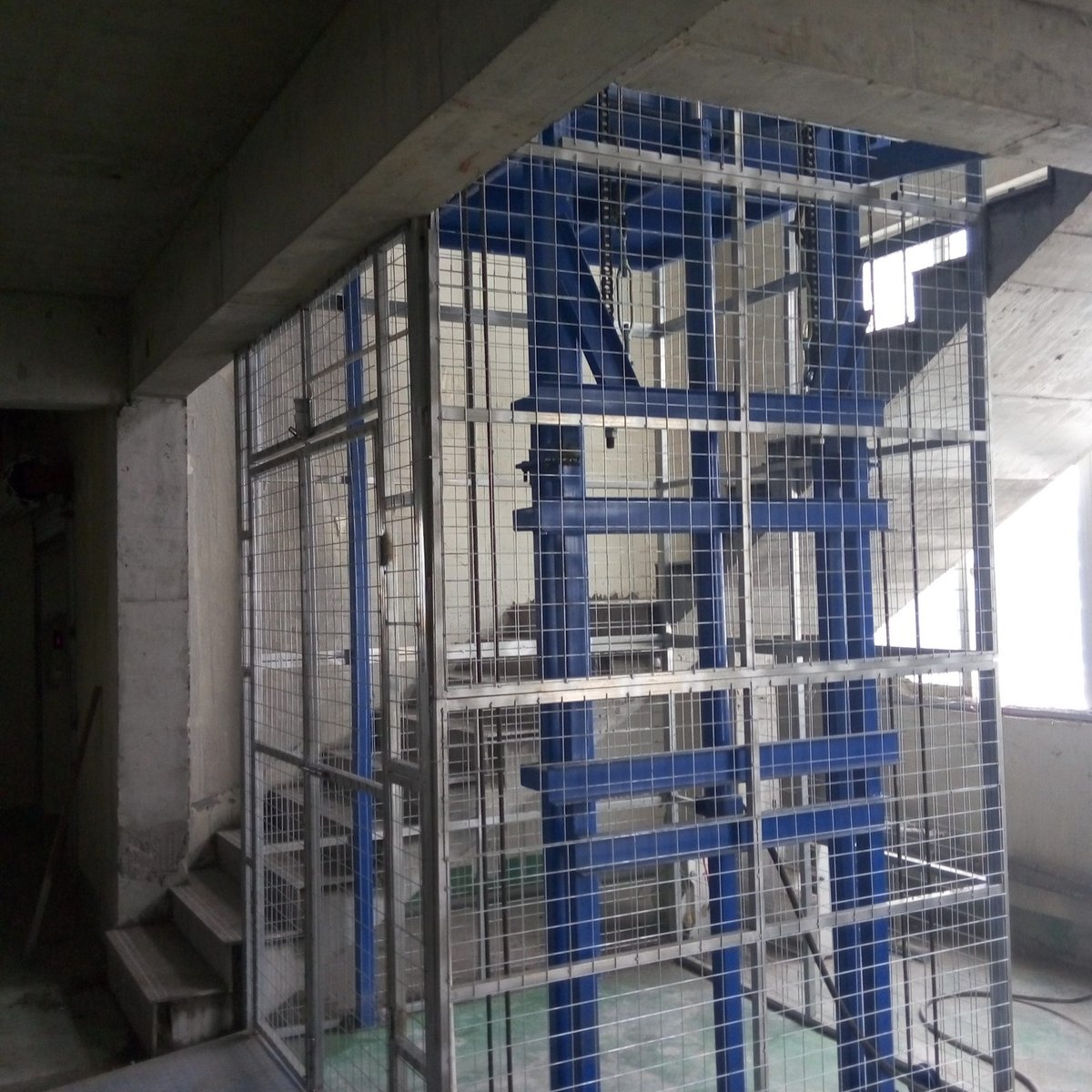
We built a 2.5 t double guide rail cargo lift for a warehouse project in Bosnia: 5 m of travel, a 1600 x 2200 mm platform, through loading on two floors and a 300 mm pit, installed by the customer’s own fitters from the assembly drawing. A project in Ningbo needed a smaller 1.3 x 1.3 m platform over three levels, through loading again, with additional protection mesh around the landings.
Delivery, installation and maintenance
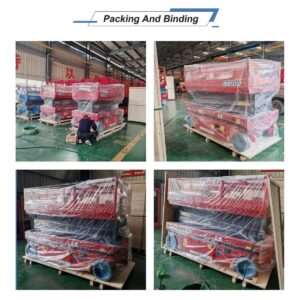
The standard build ships in about 25 working days, packed as a wooden case of roughly 4000 x 2300 x 1800 mm weighing about 1,800 kg, with an assembly drawing and an illustrated manual. The platform finishes in anti-corrosion enamel paint, and the machine carries a 12 month warranty excluding man-made faults. Maintenance is mostly inspection: the chain, the leveling ropes, the hydraulic oil, the pit and the landing door interlocks, with a thorough examination of the travel switches and valves once a year.
Frequently asked questions
What is the difference between a cargo lift and a freight elevator?
A cargo lift runs on guide rails fixed to the building and needs no shaft; a freight elevator travels inside a shaft and can be passenger-rated. A rail lift is a fraction of a shaft installation and can be fitted into an existing building, but it never carries people.
How much can a cargo lift carry?
Our standard CL5-2.5 carries 2.5 t on a 1600 x 2200 mm platform with 5 m of travel. Other capacities, platform sizes and heights are built to order, so the right figure is the heaviest single load plus the pallet truck that delivers it.
Does it need a deep pit?
No. The standard pit is 300 mm deep – 2200 x 2250 x 300 mm for the 1600 x 2200 mm platform – and a pitless version with a ramp is available where the floor cannot be cut.
Next step
Send us the floors, the load, the platform size you need and whether the building has a wall to fix the rails to. We will confirm the structure, the pit and the landing protection, and return a drawing for approval before manufacture. Start from the cargo lift range or the double guide rail cargo lift, and read cargo lift or freight elevator if you are still deciding between the two.