A fixed scissor lift table raises a load a short distance at one level: it brings a pallet up to a bench, levels a machine bed with a conveyor, or lifts a work platform to a comfortable height. The first decision is not the capacity – it is whether the table sits in a pit or on top of the floor, because that choice fixes the height, the ramp and the amount of building work before the machine is even ordered.
What a fixed lift table is
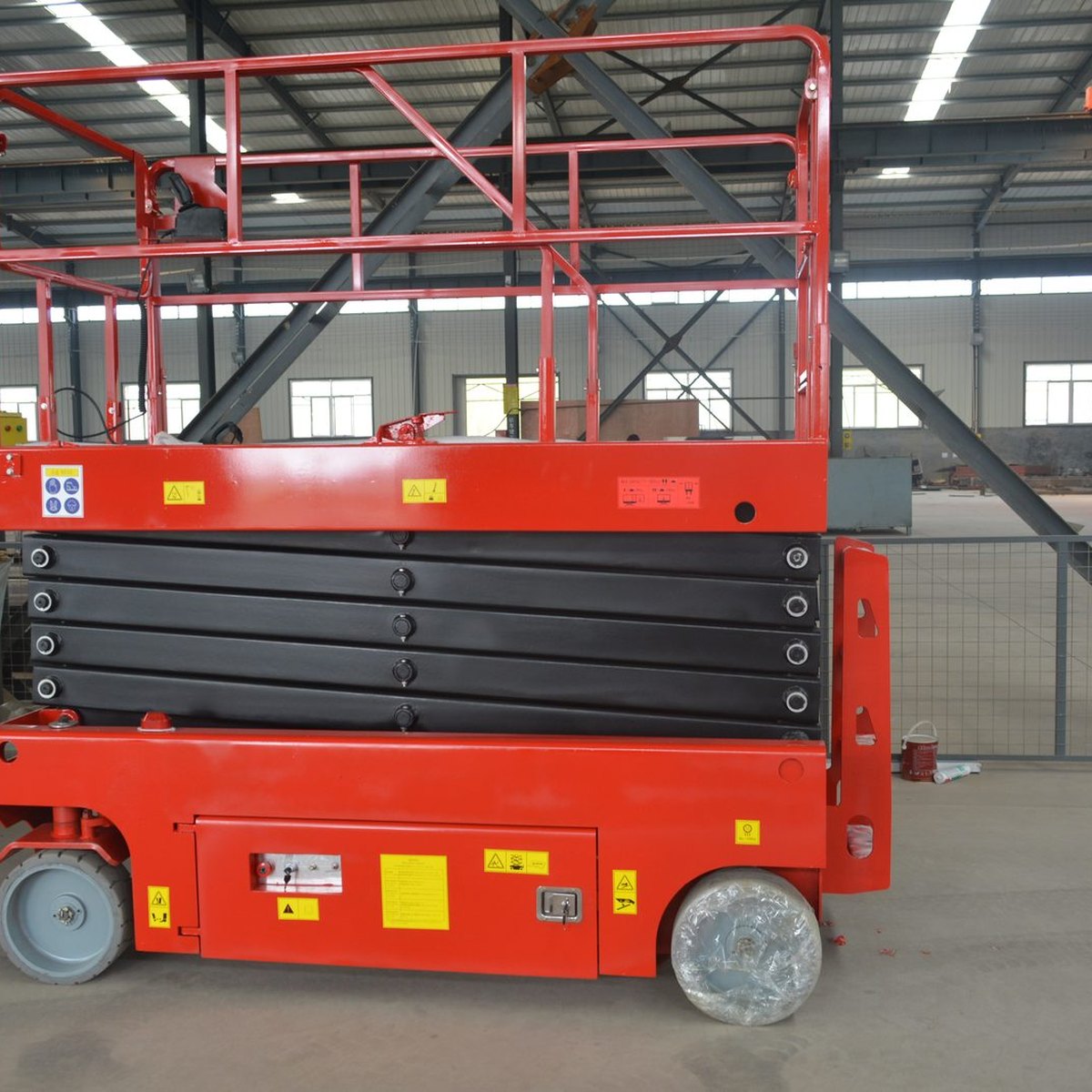
A stationary scissor table is a steel frame with a scissor mechanism, a hydraulic cylinder and a platform deck. It stays where it is installed, anchored to the floor, and raises the deck to a working height – not to another floor. That is the difference from a cargo lift: a lift table moves a load up and down at the same level, a cargo lift moves it between levels.
Pit mounted or surface mounted
A pit mounted table sits in a recess so that its deck is flush with the floor when it is lowered. A pallet truck rolls straight on and off, with no ramp and no step. A surface mounted table sits on top of the floor and needs a ramp at one or both sides, which takes floor space and adds an approach the truck has to climb.
| Pit mounted | Surface mounted | |
|---|---|---|
| Lowered deck | Flush with the floor | Raised above the floor by the table height |
| Loading | Pallet truck rolls straight on | Ramp needed at one or both sides |
| Building work | Excavation, base and drainage | None, but floor space for the ramp |
| Footprint | Only the deck at floor level | Deck plus ramp |
| Best for | Dispatch areas and pallet traffic | Single workstations and floors that cannot be cut |
The numbers that decide the model
Our BD series runs from 0.5 t to 4 t, with raised heights from 1,000 mm to 1,700 mm and a table plate of 4 mm to 8 mm depending on the capacity. Those three figures – capacity, raised height and deck – are all that is needed to start; the deck size then follows the load, and the frame follows the deck.
When a pit mounted table is the right choice
Choose a pit when the load arrives on a pallet truck and has to keep moving: a flush deck means the truck does not have to climb, and the operator does not have to lift anything by hand. The pit also keeps the table out of the way when it is lowered, which matters in a busy dispatch area. The cost is the excavation, the drainage and the fact that the pit has to be built to the table’s dimensions rather than adjusted later.
When a surface mounted table is the right choice
Choose a surface mounted table when the floor cannot be cut, when the table may have to move to another bay in future, or when the raised height is needed at a single workstation rather than in a traffic route. A ramp is then part of the layout: it needs to be wide enough for the truck and long enough to be climbable with the load.
How to choose the raised height
The raised height should put the load at the working height of the people who handle it, not at the highest point the table can reach. For a bench operation that is usually around waist height; for feeding a machine it is the height of the machine bed. Because our tables cover 1,000 mm to 1,700 mm, the same frame can serve either – the choice is made by the application, and getting it right is what stops operators lifting pallets by hand at the end of the stroke.
Safety and maintenance points
- Anchor the frame to the floor; a lift table is not a movable machine.
- Keep the scissor mechanism clear of debris and packaging, which is what most often stops a table reaching its lower limit.
- Check the hydraulic hoses and the relief valve as part of the routine, not only when the table fails.
- Keep the deck clean and the anti-slip surface intact, especially on a pit mounted table where the deck sits at floor level.
- Guard the pit edges and the ramp sides so that nobody steps into the opening when the table is up.
Frequently asked questions
Do I need a pit for a lift table?
No. A surface mounted table needs no excavation, but it needs a ramp and it adds height to the floor. A pit mounted table is flush and easier to load with a pallet truck, at the cost of the building work.
How high can a scissor lift table raise a load?
Our BD series covers raised heights from 1,000 mm to 1,700 mm, with capacities from 0.5 t to 4 t. If you need to move goods between floors, a cargo lift is the correct machine rather than a taller table.
Can the table be moved after installation?
A fixed table is anchored to the floor for stability and safety, so treat its position as permanent. If the table has to move between bays, say so at the quotation stage: the layout, the ramp and the anchoring all change.
Next step
Send us the load, the deck size, the raised height and whether the floor can be cut, and we will confirm the table and the pit or ramp. Read hydraulic lift table capacity: how to choose between 1,000 kg and 4,000 kg, and for work at height rather than at a bench see the mobile scissor lift range or the self-propelled scissor lifts.