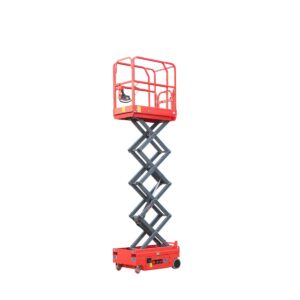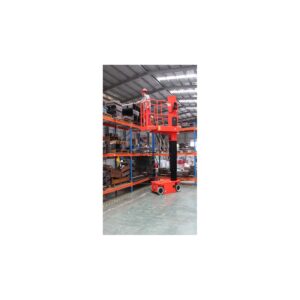
An electric order picker raises the operator to the item rather than requiring a ladder, stool or reach from floor level. In a narrow warehouse, that can make shelf access repeatable, but the machine still has to fit the aisle, door and floor. Width alone does not decide the model.
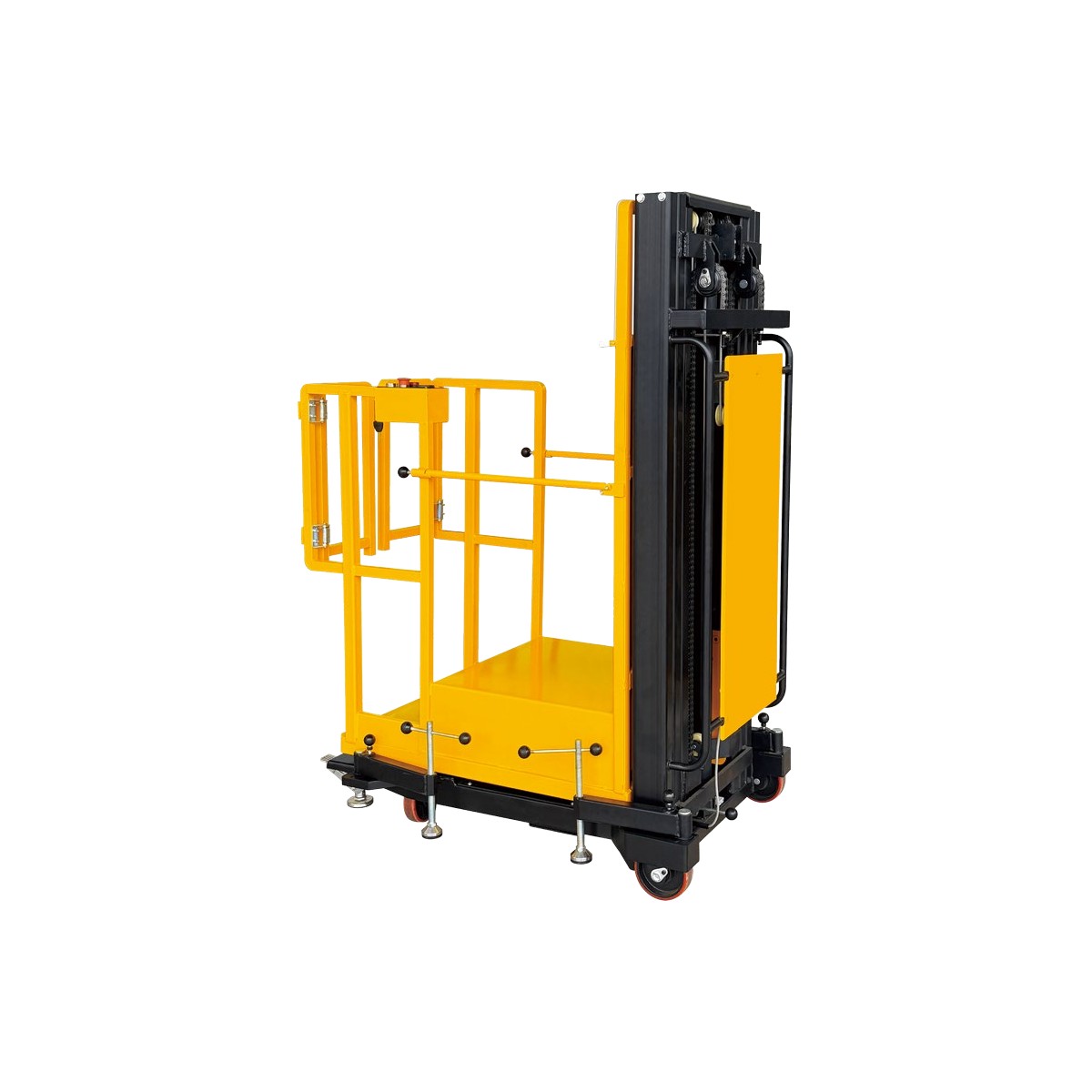
How does an order picker improve narrow-aisle stock access?
The SEP and FSEP electric order pickers use a compact platform to place a person at a shelf or picking position. Their 600 x 640 mm platform and 200 kg or 300 kg ratings are intended for the operator and the items being picked, not for transporting a loaded pallet.
This changes the work sequence. The operator brings the machine to the picking bay, raises the platform to the required shelf level and selects stock without climbing the racking. The correct aisle plan still has to leave room to enter, stop, raise and leave without striking shelving, goods or overhead services.
What is the difference between SEP and FSEP?
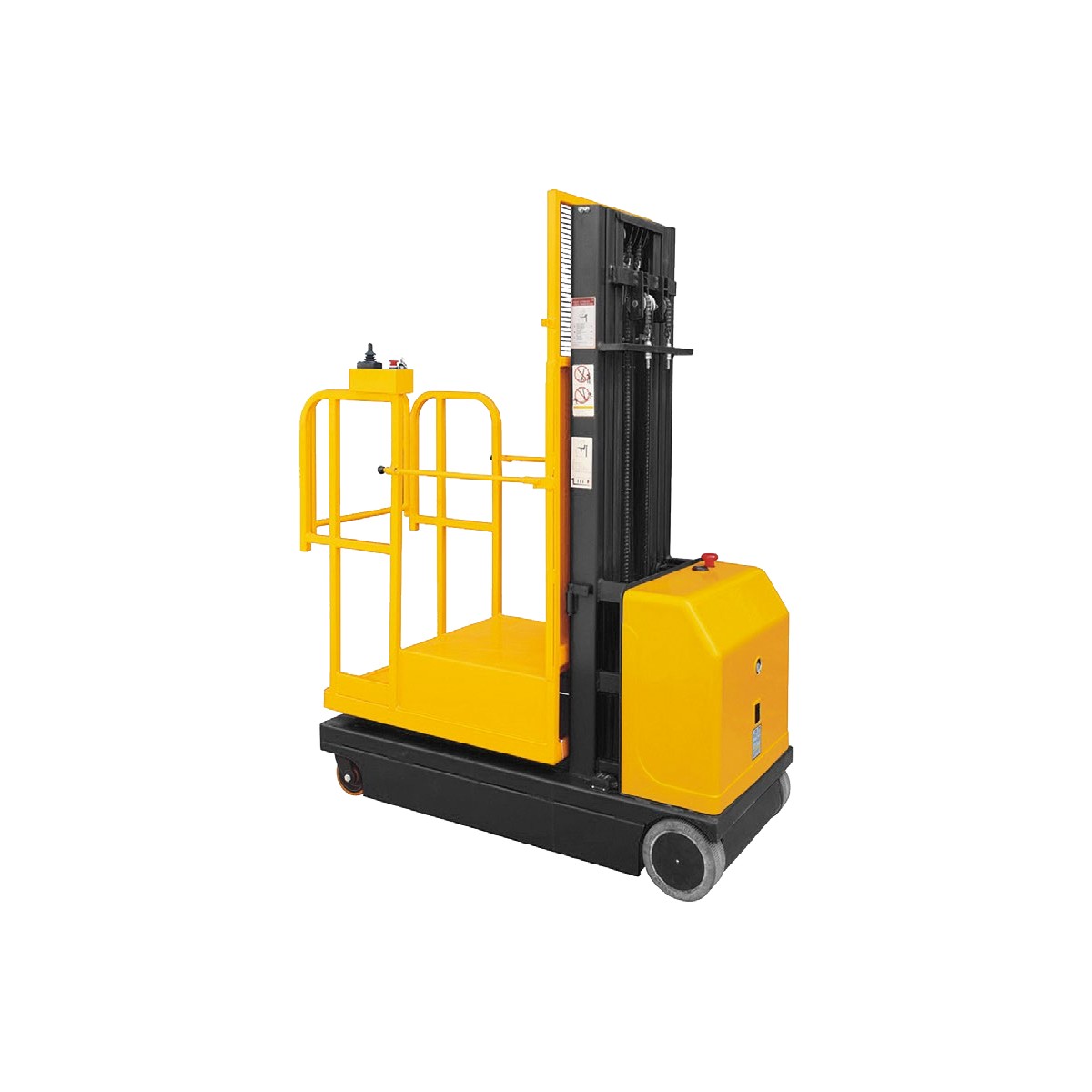
The SEP is semi-electric: lifting is powered, while travel is manual. The FSEP adds two 24 V / 0.4 kW drive motors for powered travel and steering. The FSEP also has a narrower listed overall width of 700 mm, compared with 840 mm for the SEP.
That width difference can matter where racking, a door frame or turning point is tight, but it is not the only fit check. The machine also needs clearance from the rack, room for the operator to enter the platform and a route clear of stock.
How do the SEP and FSEP specifications compare?
| Specification | SEP | FSEP |
|---|---|---|
| Rated load | 200 kg | 200 kg or 300 kg |
| Platform heights | 2,700 / 3,300 / 4,000 / 4,500 mm | 2,700 / 3,300 / 4,000 / 4,500 mm |
| Platform size | 600 x 640 mm | 600 x 640 mm |
| Lifting motor | 12 V / 1.6 kW | 24 V / 1.6 kW |
| Travel | Manual | Two 24 V / 0.4 kW drive motors |
| Battery | 12 V / 120 Ah | 2 x 12 V / 150 Ah |
| Overall width | 840 mm | 700 mm |
| Ground clearance | 35 mm | 40 mm |
Both families offer 2,700, 3,300, 4,000 and 4,500 mm platform heights. These are not working heights, so operator reach, item position and task geometry still need checking at the highest pick.
Which platform height should you choose?
Start with the highest shelf or picking position served regularly. The 2,700 mm model has the shortest platform range; the 4,500 mm model reaches the highest listed position. The tallest option can add machine height, weight and overhead-clearance requirements.
The FSEP’s overall height is listed from 1,830 to 2,130 mm across the four platform heights. Check the stowed machine against door openings, rack cross-bracing, lights and any overhead conveyor. For the SEP, confirm the complete overall dimensions for the selected model before planning the route; only its width and ground clearance should be taken from the summary table.
What must be measured in a narrow aisle?
- The narrowest clear gap between rack uprights, walls or stored goods.
- The doorway and turning-point clearances along every regular route.
- The height and position of the highest shelf to be picked.
- Overhead beams, lights, pipework and conveyor clearances.
- Floor joints, pits, ramps and the transition into each aisle.
- The space needed for the operator to enter and leave the platform.
- The charging position and cable route for the battery system.
A wide-looking aisle can still contain a narrow pinch point where a rack support, pallet corner or door frame reduces the usable route. Measure the narrowest point at operating height as well as at floor level.
When is the manual-travel SEP enough?
The SEP suits nearby bays where the operator can position the machine by hand and powered lifting is the main benefit. Its 12 V / 1.6 kW lifting motor and 12 V / 120 Ah battery support lifting; travel remains manual.
A short, level route with few turns may suit manual positioning. The operator still needs to control the machine before raising the platform and keep the route clear of people and stored goods. The machine should never be raised as a way to overcome a blocked or unsuitable travel route.
When does the self-propelled FSEP help?
The FSEP makes more sense when picking positions are spread along a longer route and the operator would otherwise push the machine repeatedly. Its two drive motors provide powered travel and steering at the same four platform heights.
The 300 kg FSEP version provides additional rated load. Its listed model weights range from 430 to 680 kg depending on platform height, so a heavier capacity version is not a simple software change to the smallest machine. Floor loading and route access should be checked for the exact model selected.
Which safety features are listed?
The product range lists overload limiting and CAN bus technology, safety brackets, two brakes with two brake pads, proportional controls, a low-voltage alarm, an emergency-lowering button, emergency stop, charge protection, overload protection and controller temperature protection.
These features support the operating routine but do not replace a route survey or operator training. Before every shift, follow the manufacturer’s operating and inspection instructions, check the controls, brakes and battery, and stay within the rated load.
How should picking work be planned around the machine?
Group picks by aisle and shelf height so the platform does not need unnecessary changes. Decide where picked items will be placed without obstructing movement. An order picker brings the operator to the shelf; it does not turn a congested aisle into a safe storage layout by itself.
In a smart-warehouse review completed for a Brazil project, our team mapped material flow and work positions before comparing equipment. The same principle applies here: record the picking route and the highest regular shelf first, then check SEP or FSEP width, platform height and power system against the actual work.
How do you make the final choice?
Choose the SEP when powered lifting is needed and manual travel fits the bay-to-bay route. Choose the FSEP when powered movement along the aisle is part of the picking cycle, or when its 700 mm listed width and 300 kg option suit the task. In both cases, confirm the platform height, route clearance and charging plan for the exact model.
Frequently asked questions
Can an order picker fit a narrow warehouse aisle?
The FSEP is listed at 700 mm overall width and the SEP at 840 mm. The aisle still needs clear space for entry, turning, the operator and any obstacles, so confirm the narrowest route measurement rather than relying on the headline width.
What can the platform carry?
The SEP is rated at 200 kg. The FSEP is available in 200 kg and 300 kg versions. The operator, picked items and any equipment on the platform must remain within the selected model’s rated load.
Does the SEP move under its own power?
No. The SEP has powered lifting but manual travel. Choose the FSEP when powered travel and steering are required for the picking route.
Next step
Send the highest picking height, rated load, narrowest aisle, doorway dimensions, floor route and number of moves per shift. We can compare the SEP and FSEP electric order pickers against the shelf layout and confirm the platform height and travel system for the task.