A self-propelled scissor lift can drive up a rated gradient, but that does not mean the platform can be raised and used as normal while the machine sits on it. Our product data lists gradeability and maximum working angle as separate specifications. The first concerns travel over a suitable surface; the second limits the machine’s working position. Confusing them is the dangerous part of using a scissor lift around ramps and uneven ground.
What do the slope figures on a scissor lift mean?
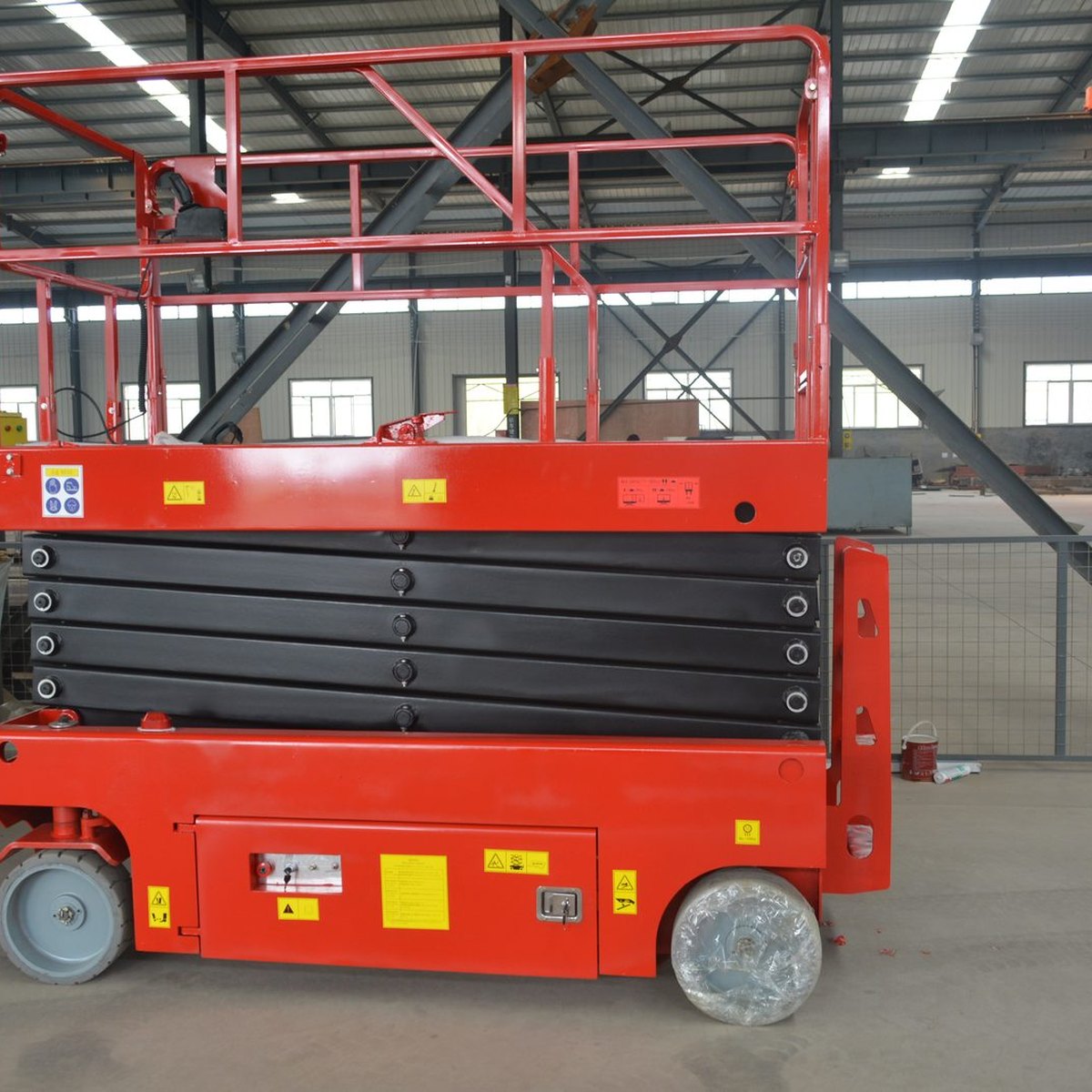
The self-propelled range lists maximum gradeability of 25%. It also lists a maximum working angle of 1.5 degrees / 3 degrees, and the product page describes the standard configuration with a tilt protection system, automatic braking and automatic pothole protection. These are distinct pieces of information, not interchangeable permissions.
A gradeability figure answers whether the machine can climb a defined slope during travel. The working-angle figure belongs to the process of raising and using the platform. The product also lists a travel speed while raised of 0.8 km/h, compared with up to 3.8 km/h in the stowed position on the GTJZ06 to GTJZ10 models. Slowing the chassis does not make an unsuitable floor suitable; it is one more specified operating limit.
Gradeability or working angle?
The specification table makes the distinction clearer than the word “slope” alone.
| Condition | Listed figure or feature | What it does not establish |
|---|---|---|
| Climbing a defined gradient | 25% maximum gradeability | Permission to raise the platform on that gradient |
| Working angle | 1.5 degrees / 3 degrees maximum | That the machine can be driven at the same angle |
| Travel with platform raised | 0 to 0.8 km/h | That any sloped floor is a suitable work position |
| Stowed travel | Up to 3.8 km/h on GTJZ06 to GTJZ10; 3.5 km/h on GTJZ4.6, GTJZ12 and GTJZ14 | A guaranteed safe speed for every surface |
| Slope protection | Tilt protection system | That operating beyond the stated angle is acceptable |
| Uneven ground | Automatic pothole protection and automatic braking | That holes, soft ground or missing covers may be ignored |
What happens when the platform is tilted beyond its working angle?
The machine has a tilt protection system, but the correct response is not to keep operating until a warning appears. Stop, lower the platform and move the machine to suitable ground. The exact response and reset procedure should come from the manual for the model. A protection system is a last line of control, not a way to work beyond the site conditions allowed for the lift.
A raised scissor lift becomes less forgiving when the chassis is leaning. The platform can drift toward a low side, the load can shift and the stabilising geometry changes. Keep the wheels on solid, level ground and make sure any temporary surface, plate or repair under a wheel is suitable for the wheel load. Loose gravel, soft asphalt and a slope across a doorway need to be assessed before the machine enters.
How should a ramp be approached at a doorway?
Inspect the transition at the top and bottom, not just the middle of the slope. A raised threshold, drain cover or broken edge can tilt one wheel suddenly even when the main ramp looks gentle. Use the route specified for the machine, keep the platform stowed and travel slowly. The 25% gradeability figure is a machine rating; it does not replace a survey of the actual surface and transitions.
If the work position is on or beside the slope, stop before raising. The working angle limit applies at the place where the platform becomes a work surface. Set the machine on a suitable floor position and keep the deck within the tilt condition described in the manual. If there is no level place to set up, change the access arrangement rather than relying on the lift’s suspension and tyres to compensate.
What role do pothole protection and braking play?
The self-propelled models include an automatic pothole protection system and an automatic braking system as standard. These features support operation over the surfaces the machine is designed for, but they do not turn a rough yard or loose ramp into level ground. Inspect the path for holes, soft patches and missing covers, and keep people clear while the chassis moves.
When leaving the platform, stop the machine on stable ground and follow the manufacturer’s procedure. Do not step onto an edge to correct a lean or place an object under a wheel while the platform is raised. If the floor changes during use, lower the platform before investigating.
What should be checked before the shift?
Walk the route and look at the surface at both ends. Confirm that access doors and ramps are clear, that the floor is not overloaded, and that any slope is within the instructions for the model. Check the tyres, pothole protection, braking system and tilt indicators at the pre-use stage. Look upward for obstructions that can be struck as the machine climbs or the platform rises.
The aircraft-grade phrase “all terrain” is not part of our self-propelled range specification. The tyres are non-marking solid tyres, and the machines have a stated gradeability. That makes them suited to defined industrial routes, not automatically to unimproved ground. When a site has a long or irregular ramp, ask for a route assessment before selecting the model.
What does the Kenyan GTJZ10 project show?
A Kenya project used the GTJZ10 with a 10 m platform height, 12 m working height, 320 kg rated load, 2,450 kg machine weight and 25% gradeability. The same project includes the 24 V / 3.3 kW motor and 6 to 9 m/min lifting speed. The gradeability figure is part of the machine specification, not proof that it is suitable for any particular ramp on a site.
That distinction is important in a quotation. Record the proposed route, gradient, surface and working position alongside the model capacity. Then the buyer can confirm that the machine has enough reach and load capacity without assuming every driving surface is within its operating limits.
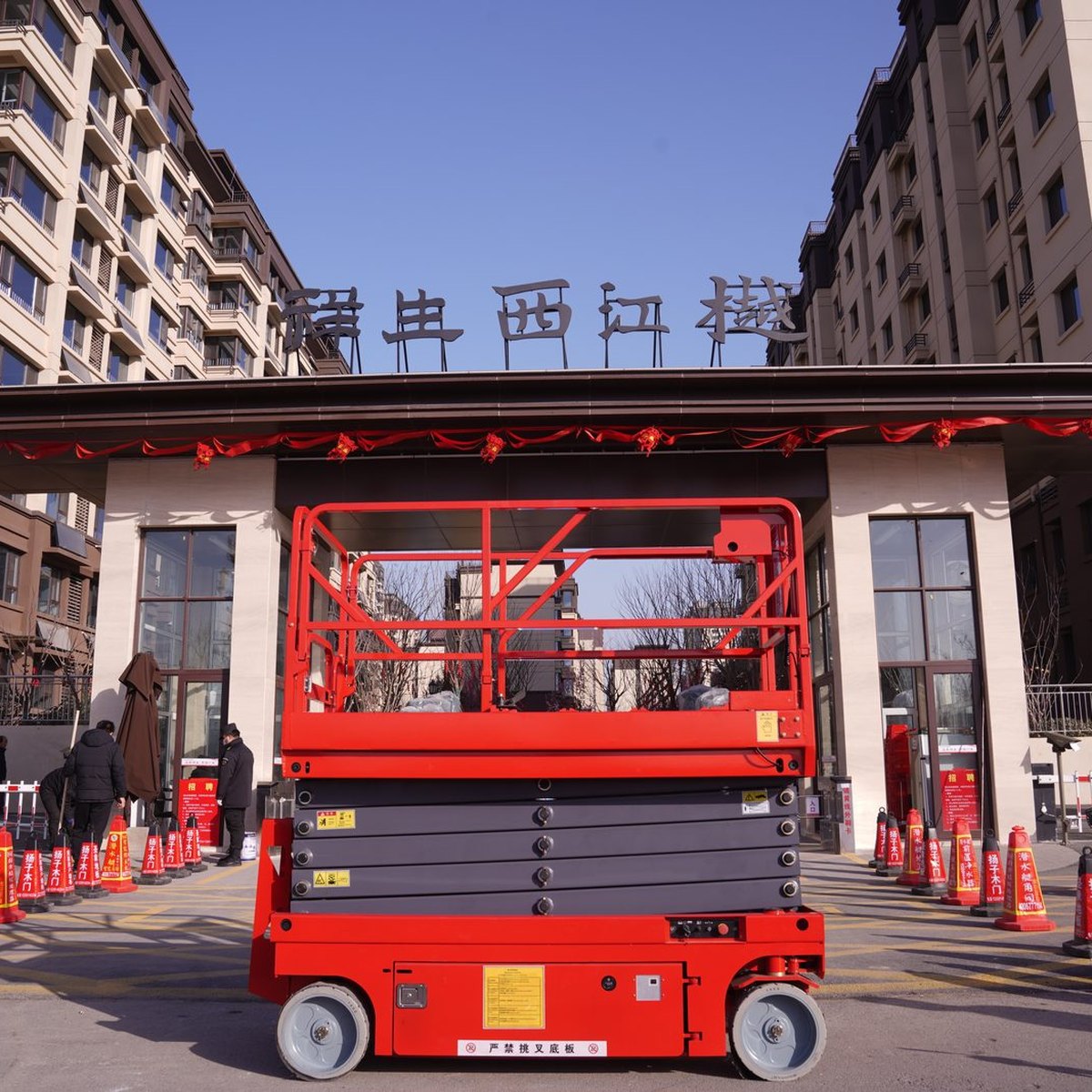
Frequently asked questions
Can a 25% gradeable scissor lift be operated while tilted 25%?
No. The product page lists 25% gradeability separately from a 1.5 degree / 3 degree maximum working angle. Gradeability concerns travel; working angle concerns the position from which the lift can be operated. Do not use one as the limit for the other.
Does the tilt protection system make a slope safe?
Tilt protection is a safety feature, not a permission to operate on unsuitable ground. Keep the chassis on a proper surface, follow the working-angle specification and lower the platform before moving it if conditions change. Use the model manual for warning responses.
Can I lower the scissor lift and drive across a sloping ramp?
The range lists 25% gradeability and a 0.8 km/h raised travel speed, but the route must still meet the model’s operating requirements. Inspect the slope, transitions and surface, keep the platform stowed for travel, and do not assume every ramp within the gradeability figure is acceptable at a real site.
Next step
Send photographs and measurements of the route, doorway and working floor before choosing a model. Start from the self-propelled electric scissor lift range, compare mobile and self-propelled scissor lifts, and review battery charging and care for the daily routine.