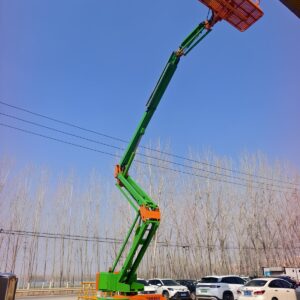
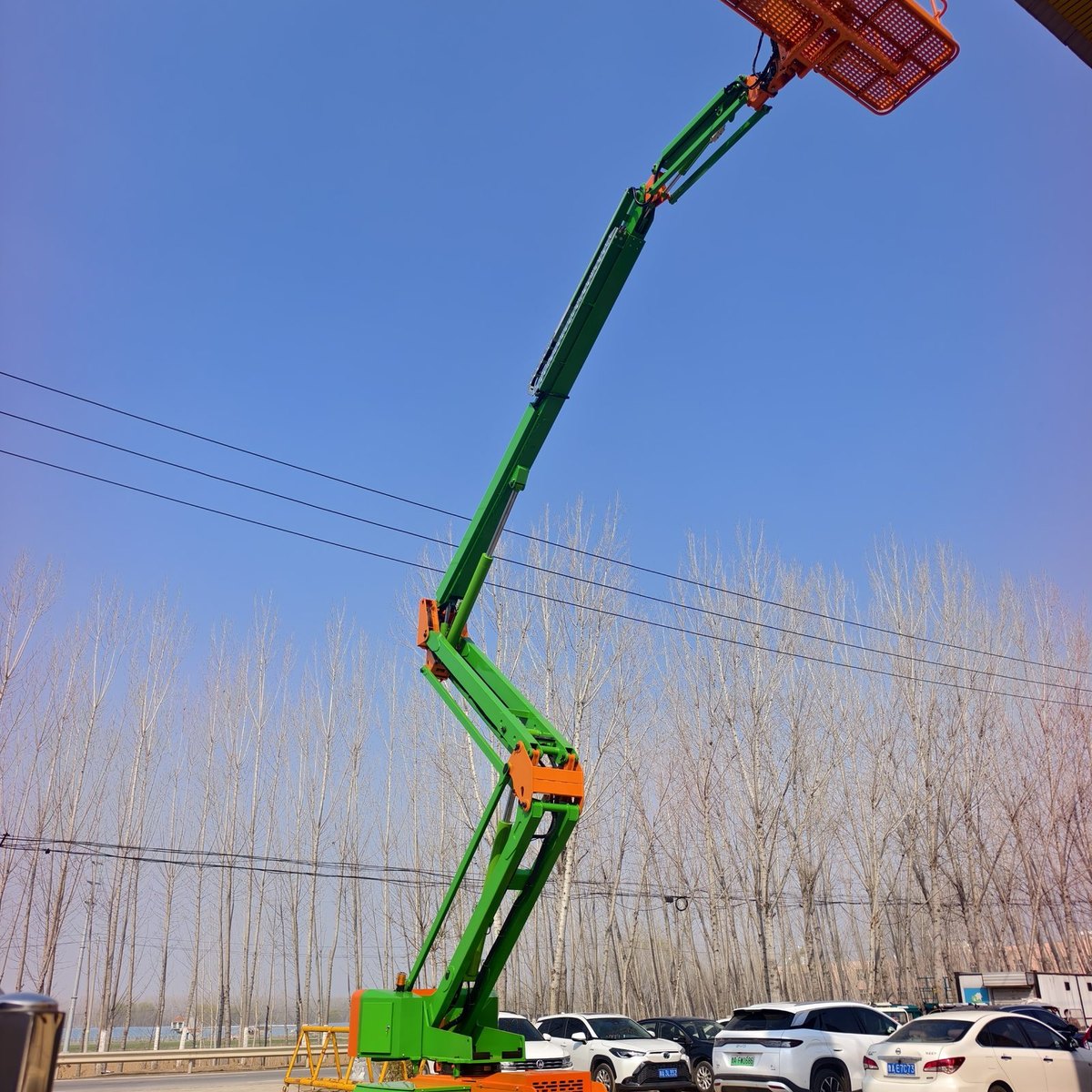
“45% gradeability” does not mean the platform can be used at a 45% angle. It is a chassis specification for moving the boom lift up a defined slope. The working angle is a separate limit. On the 22 m MPA22E and ABL22D, the range lists 45% gradeability and a maximum working angle of 5 degrees on the electric model, or 3 to 5 degrees on the diesel model. Those figures belong to different parts of the job.
What does 45% gradeability mean?
Gradeability compares vertical rise with horizontal distance over the specified test route. A 45% grade rises 45 units for every 100 units travelled horizontally. It is not an angle measured in degrees, so it should not be compared directly with a 5 degree working-angle figure.
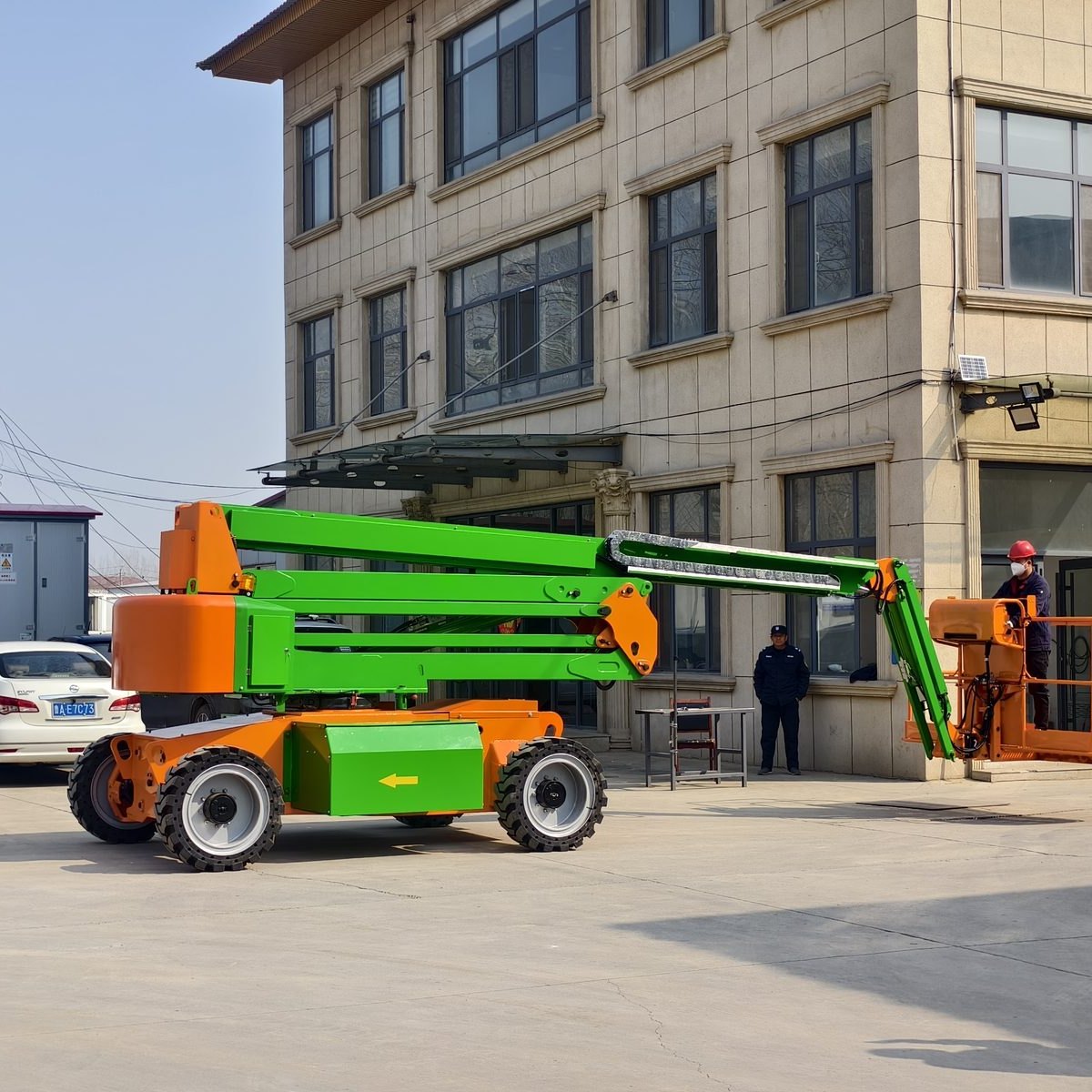
For a 22 m boom lift, high gradeability matters on ramps, site roads and yard surfaces. The 20 m and 22 m models list 45% gradeability, 4 x 4 drive and steer, rough-terrain tyres, 0.33 m ground clearance and a 2.5 m wheelbase. The 16 m and 18 m models list 30% gradeability, 2 x 2 drive and 0.3 m ground clearance. The larger machines carry more weight and reach, but also have a chassis specified for harder ground.
Why is working angle different from gradeability?
When the boom lift is set up for work, the question changes from “can the chassis climb?” to “may the platform be raised from this position?”. The product data lists a maximum working angle of 5 degrees for the electric models, with a 3 to 5 degree figure for the diesel ABL22D. The tilt sensor limits the working angle rather than treating the gradeability number as a setup angle.
In practice, the machine should be driven to a suitable work position and set up under the instructions for the model. A slope that the chassis can handle during travel is not automatically a place to raise the platform. Confirm the floor condition, the direction of the machine and the load with the site supervisor before the boom rises.
How do the two chassis groups compare?
The jump from the 18 m model to the 20 m and 22 m machines changes more than reach.
| Specification | MPA16E / MPA18E | MPA20E / MPA22E / ABL22D |
|---|---|---|
| Listed gradeability | 30% | 45% |
| Drive and steer | 2 x 2 | 4 x 4 |
| Tyres | 250-15/7 | 355/55D |
| Ground clearance | 0.3 m | 0.33 m |
| Wheelbase | 2.36 m | 2.5 m |
| Stowed travel speed | 0 to 5.2 km/h | 0 to 6 km/h |
| Raised travel speed | 0 to 0.8 km/h | 0 to 0.8 km/h |
| Maximum working angle | 5 degrees | 5 degrees electric; 3 to 5 degrees diesel |
What else supports a 45% machine?
The MPA20E, MPA22E and ABL22D use 4 x 4 drive and steer. They ride on 355/55D tyres and list a 3.4 m inner turning radius and 5.4 m outer turning radius. Their stowed travel speed is 0 to 6 km/h, while travel with the platform raised is limited to 0.8 km/h.
Those details describe a large rough-terrain chassis, not a licence to cross any surface. A steep slope can contain soft shoulders, damaged edges or transitions at the top and bottom. The operator still has to inspect the route and keep the platform lowered unless the manual permits otherwise. The machine’s listed gradeability should be matched with the actual site conditions before the route is approved.
How does the 22 m electric version compare with diesel?
The MPA22E uses a 48 V / 360 Ah lithium battery and the ABL22D uses a Kubota 36 kW diesel engine. They share the same stowed dimensions, 22 m working height, 20 m platform height, 12.9 m horizontal radius, 8.54 m up-and-over clearance, 250 kg rated load and 9,000 kg machine weight. The product data also lists 45% gradeability for both.
The working-angle listing is not identical in the published summary: 5 degrees on the electric model and 3 to 5 degrees on the diesel. That is one reason to read the final model specification rather than treating the two power types as interchangeable in every operating condition. Choose electric for quiet indoor work and diesel for remote outdoor work, then confirm the site and the appropriate model instructions.
What should be measured on the route?
Record the gradient over the full length of the ramp, not only the steepest portion. Note the surface, edges, transitions, wheel tracks and space to turn at the top. With an overall stowed length of 8.9 m and a width of 2.45 m, the MPA22E and ABL22D need a route sized for a large vehicle. Check the ground clearance and underslung parts along the approach.
Also consider which direction the vehicle will approach the working point and how the turntable and wheels will sit there. The machine has 355 degrees of non-continuous turntable rotation. Position it so that rotation and boom movement remain within the approved work area instead of relying on a narrow edge or temporary support.
What happens on soft or uneven ground?
Gradeability alone does not describe ground bearing capacity. A hard ramp and a soft edge can have very different consequences for a 9,000 kg machine. Check the route for newly filled trenches, cellar covers, drainage grates and unsupported slabs. The tyres may grip while the surface underneath is not designed for the wheel loads.
Keep the platform clear of overhead obstructions and allow for the boom’s movement rather than only the chassis footprint. If the route changes after rain or site work, inspect it again. A route that was suitable for a smaller machine may not support this one.
What about the Brazil project?
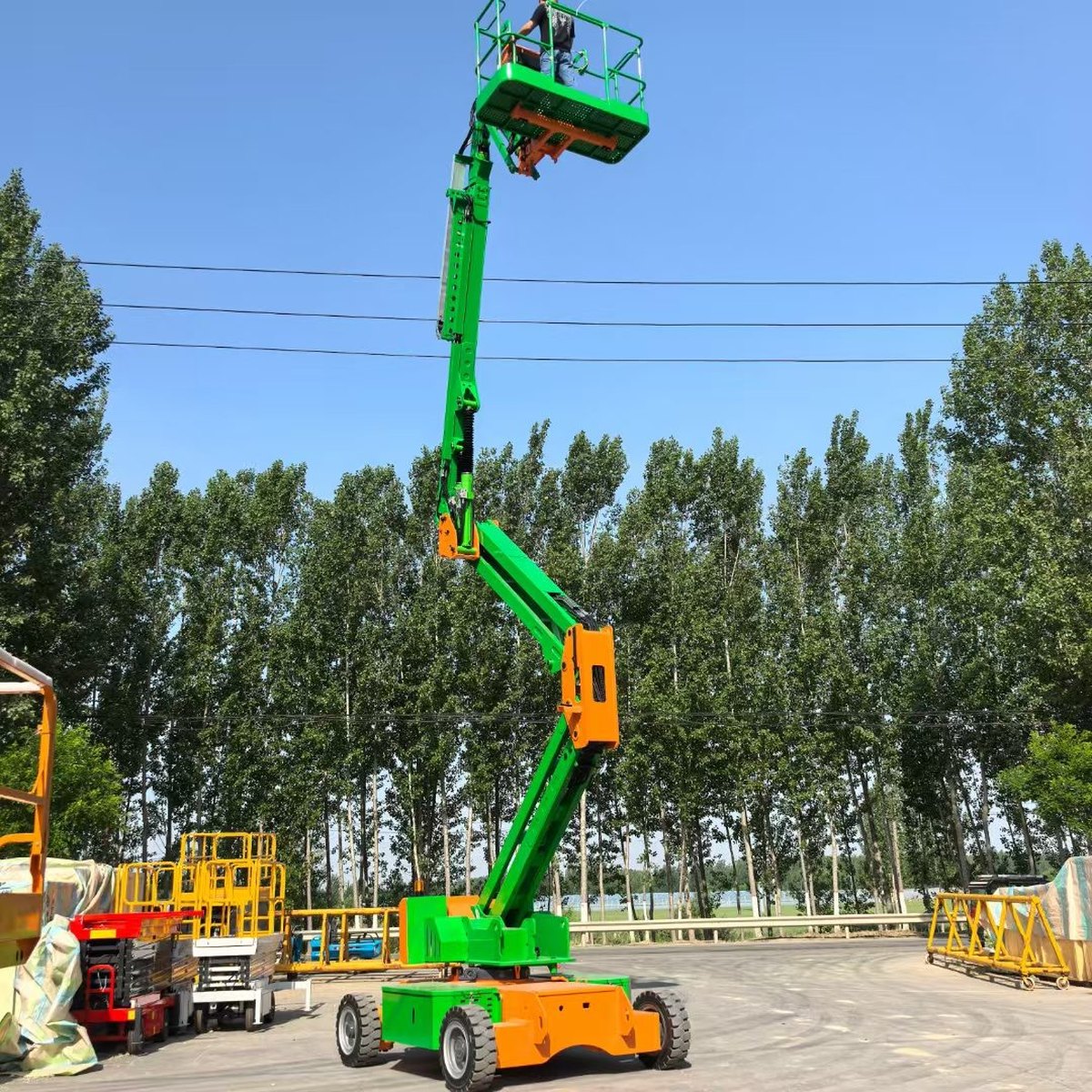
A Brazil enquiry compared an 18 m articulated boom solution with a vertical mast option. That case is a reminder that a lift is selected against the work envelope, access and ground conditions, not by a single performance number. Gradeability is useful for a boom lift route; up-and-over clearance and horizontal radius decide whether it can reach the actual work point.
Frequently asked questions
Can a 22 m boom lift operate at a 45% angle?
No. The 45% figure is gradeability for the chassis specification. The listed maximum working angle is 5 degrees on the electric model and 3 to 5 degrees on the diesel. Raise and operate the platform only in a position that meets the model’s working-angle and site requirements.
Is 45% gradeability the same as 45 degrees?
No. Gradeability is expressed as a percentage relationship between rise and horizontal distance. A 45% grade is not a 45 degree angle. More importantly, neither number authorises the platform to be worked at that angle.
Why do the 20 m and 22 m models have 45% gradeability?
The product data pairs it with 4 x 4 drive and steer, 355/55D tyres, 0.33 m ground clearance and a 2.5 m wheelbase. That chassis suits rougher outdoor access than the 16 m and 18 m models, which list 30% gradeability and 2 x 2 drive. The actual route still needs to be inspected.
Next step
Send the ramp profile, surface photographs and the position where the platform must work. Start from the articulated boom lift range, compare the 16 m to 22 m boom models, and review up-and-over clearance before the site visit.