A loading ramp is a simple piece of equipment until the forklift is halfway up it. Then the questions that matter are the capacity, the slope, the surface and the way the ramp is held in place – not the price per metre. This guide covers how to choose a ramp for a warehouse dock, a container or a yard where there is no dock at all.
What a loading ramp actually does
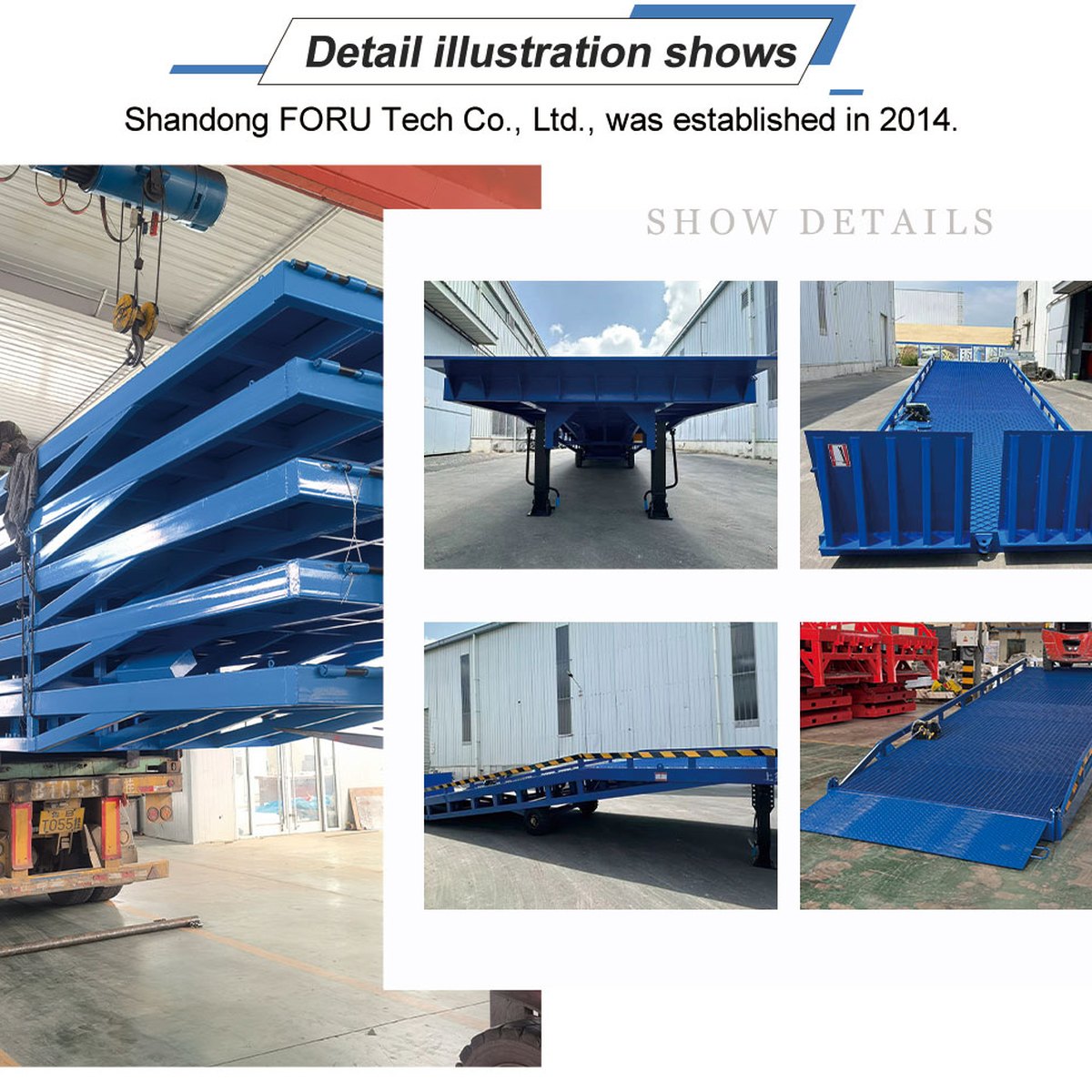
The ramp bridges the height difference between the loading point and the vehicle bed. On a fixed dock it removes the step between the dock edge and the truck floor; where there is no dock, it turns the ground into a ramp up to a container or a flatbed. Everything else – the capacity, the width, the anchoring – follows from that one job.
Mobile or fixed?
| Mobile container ramp | Fixed loading ramp | |
|---|---|---|
| Rated load | 8 t to 30 t, up to 50 t built to order | 5 t to 30 t, up to 50 t built to order |
| How it is held | Its own hydraulic supports | Expansion bolts through a reinforced base |
| Typical use | Containers, flatbeds, sites without a dock | A fixed dock or warehouse door |
| Movement | Moved between doors and yards | Permanent installation |
| Slope | Adjustable with a maximum tilt of 15 degrees | Set by the dock and vehicle heights |
| Surface | Serrated anti-slip plate, friction at least 0.9 | Serrated anti-slip plate, friction at least 0.9 |
Capacity: the number people get wrong
Our ramps are rated from 8 t to 30 t on the container loading models and 5 t to 30 t on the fixed models, with up to 50 t built to order. That rating is not just the weight of the forklift: it is the forklift plus its load plus the dynamic effect of driving up and braking. A 3 t forklift carrying 2 t is a 5 t moving load, and a ramp chosen at 5 t leaves nothing for the movement. Choose the ramp for the combination, and tell us the heaviest forklift and load rather than the average.
The details that decide whether it feels safe
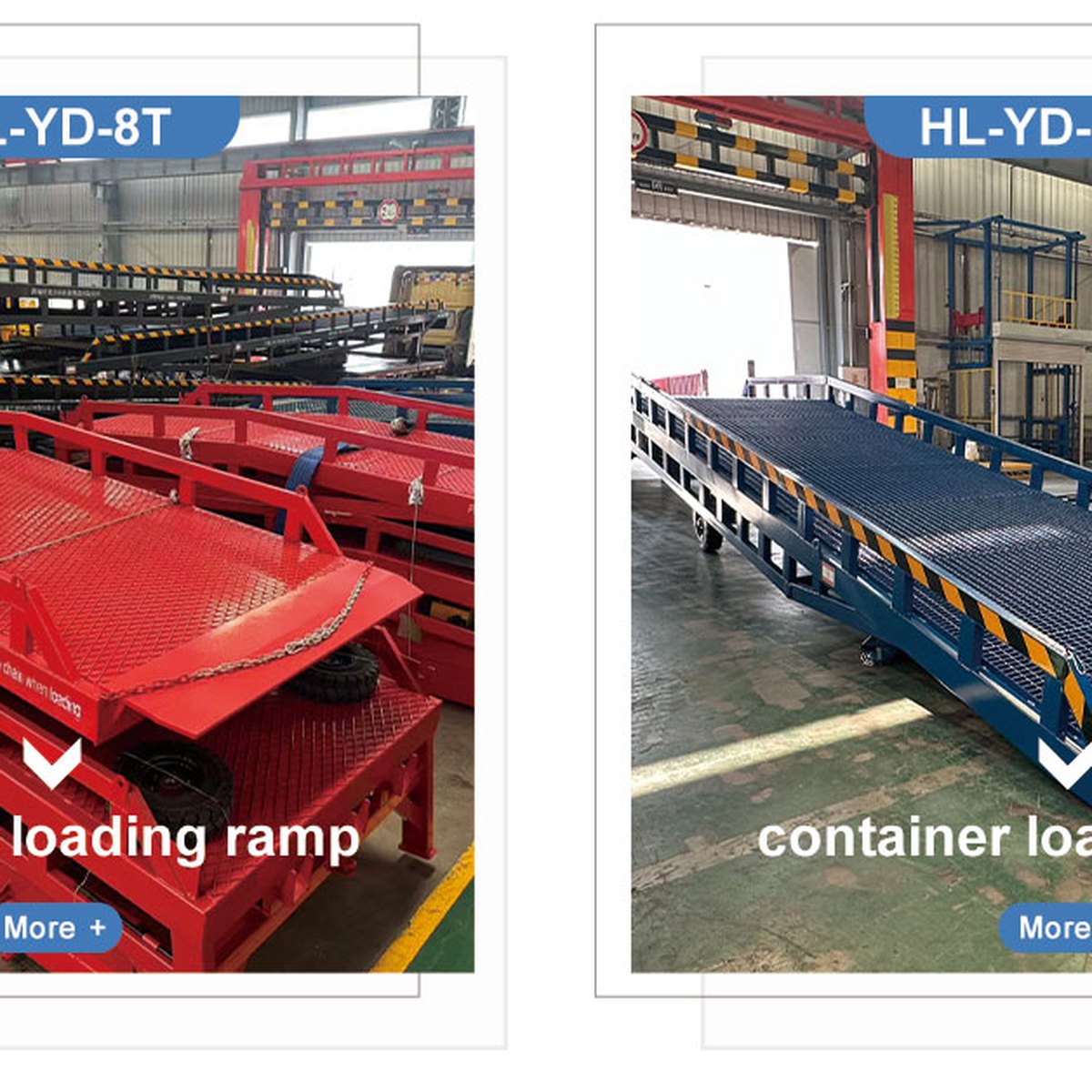
- Slope. The mobile container ramps use an integrated hydraulic support system with a maximum tilt angle of 15 degrees, which is enough to match different truck heights without making the climb unreasonable for a loaded forklift.
- Surface. The ramp surface is anti-slip serrated steel plate with a friction coefficient of at least 0.9, so a loaded forklift keeps grip in rain and snow.
- Steel. The main frame is Q355 or Q460 high-strength steel, precision welded and shot blasted rather than painted over mill scale.
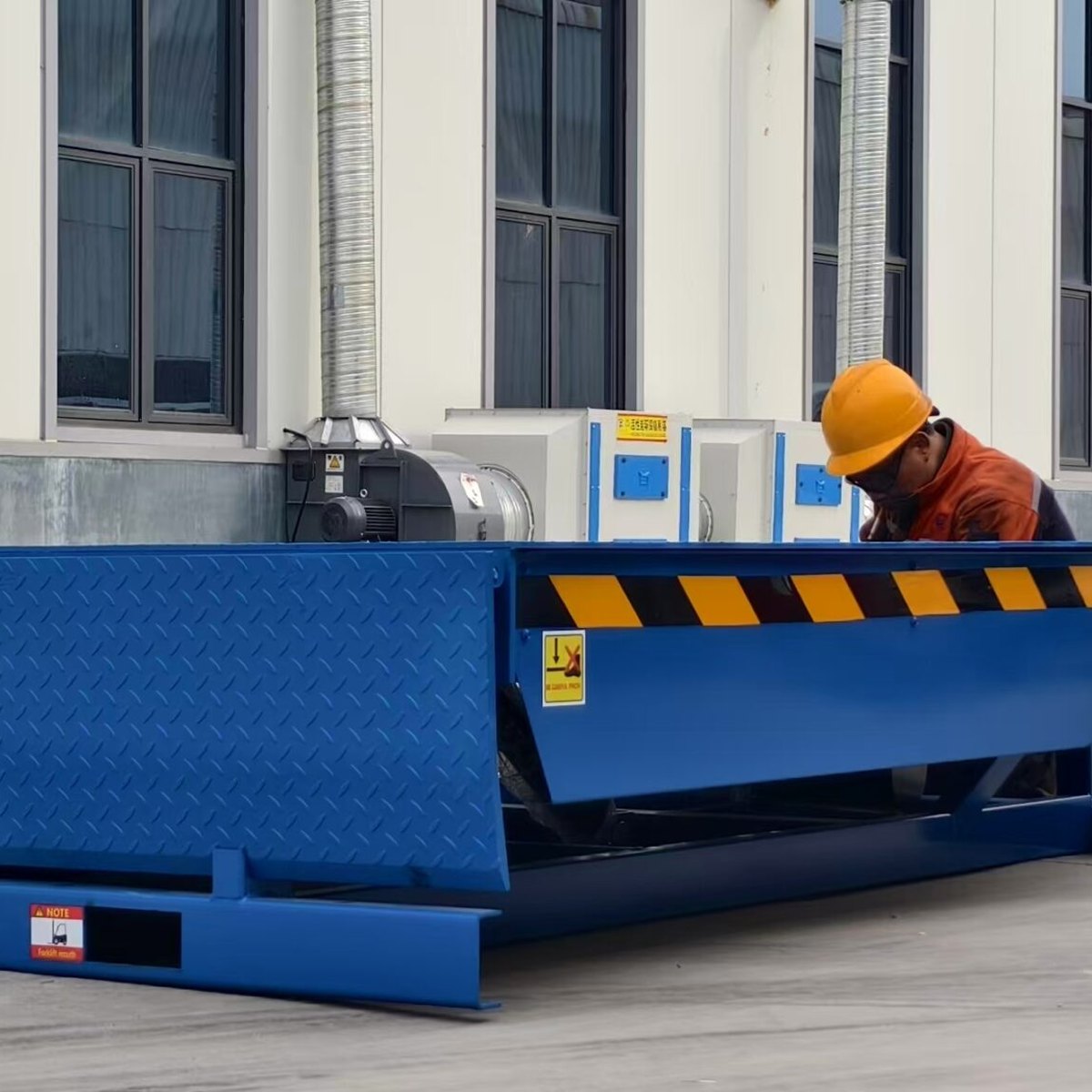
- Anchoring. A fixed ramp is held down with expansion bolts through a reinforced base; a mobile ramp stands on its own supports and is moved to the container.
- Width and length. The ramp has to be wide enough for the forklift and long enough that the slope is workable. Both follow the dock height and the vehicle bed height.
A real shipment
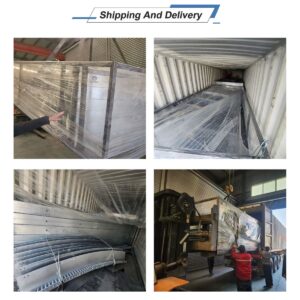
We built a 15 t mobile loading ramp for a customer in Argentina, shipped from Spain: about 4,000 kg of steel, shot blasted and powder coated, with four 10 m lifting slings in the crate because a ramp that size is craned at both ends of the journey rather than driven. A separate order of mobile ramps to Canada went out in export standard packing. Both were specified from the forklift and the vehicle height, not from a catalogue size.
What to measure before you order
- The height of the dock or the ground where the ramp starts.
- The height of the truck or container floor it has to reach.
- The width of the ramp the forklift needs, including its load.
- The heaviest forklift plus load, and whether the ramp has to move between doors.
- Whether the ramp sits outdoors, and where the rain goes.
Indoors, outdoors and the ground
Both ramp types are shot blasted before coating, so the finish holds on a ramp that sits in the weather, and the serrated deck keeps its grip when the ramp is wet. Outdoors, the ground under a mobile ramp has to be firm enough for its supports and the area should drain away from the ramp; indoors, check that the approach is clear of racking and that the forklift can line up straight before it starts to climb.
Frequently asked questions
What capacity ramp do I need for a 3 t forklift?
Add the load to the forklift first. A 3 t forklift carrying 2 t is a 5 t moving load, so the ramp should be rated above that – our fixed ramps start at 5 t and the container ramps at 8 t, and the final figure depends on the slope and the way the forklift is driven.
How steep can the ramp be?
The mobile container ramps adjust to a maximum tilt angle of 15 degrees with their hydraulic support system. Steeper than that is hard on the forklift and on the driver, and it is usually better to lengthen the ramp than to raise the angle.
Can a fixed ramp be moved later?
A fixed ramp is bolted down through a reinforced base, so it is a permanent installation. If the ramp has to move between doors or sites, choose a mobile model with its own supports.
Next step
Send us the forklift weight, the load, the dock and truck heights and whether the ramp stays in one place. We will confirm the capacity, the length and the anchoring. Start from the container loading ramp or the fixed loading ramp range.