A mobile scissor lift is the cheapest way to put a person at a ceiling, and the decision that decides the model is usually not the height. It is the socket on the wall. A workshop with a 220 V single-phase supply can run a machine up to 10 m; above that, the lift needs 380 V three phase. This guide explains what changes, what stays the same, and how to choose between the two.
Why the power supply decides the model
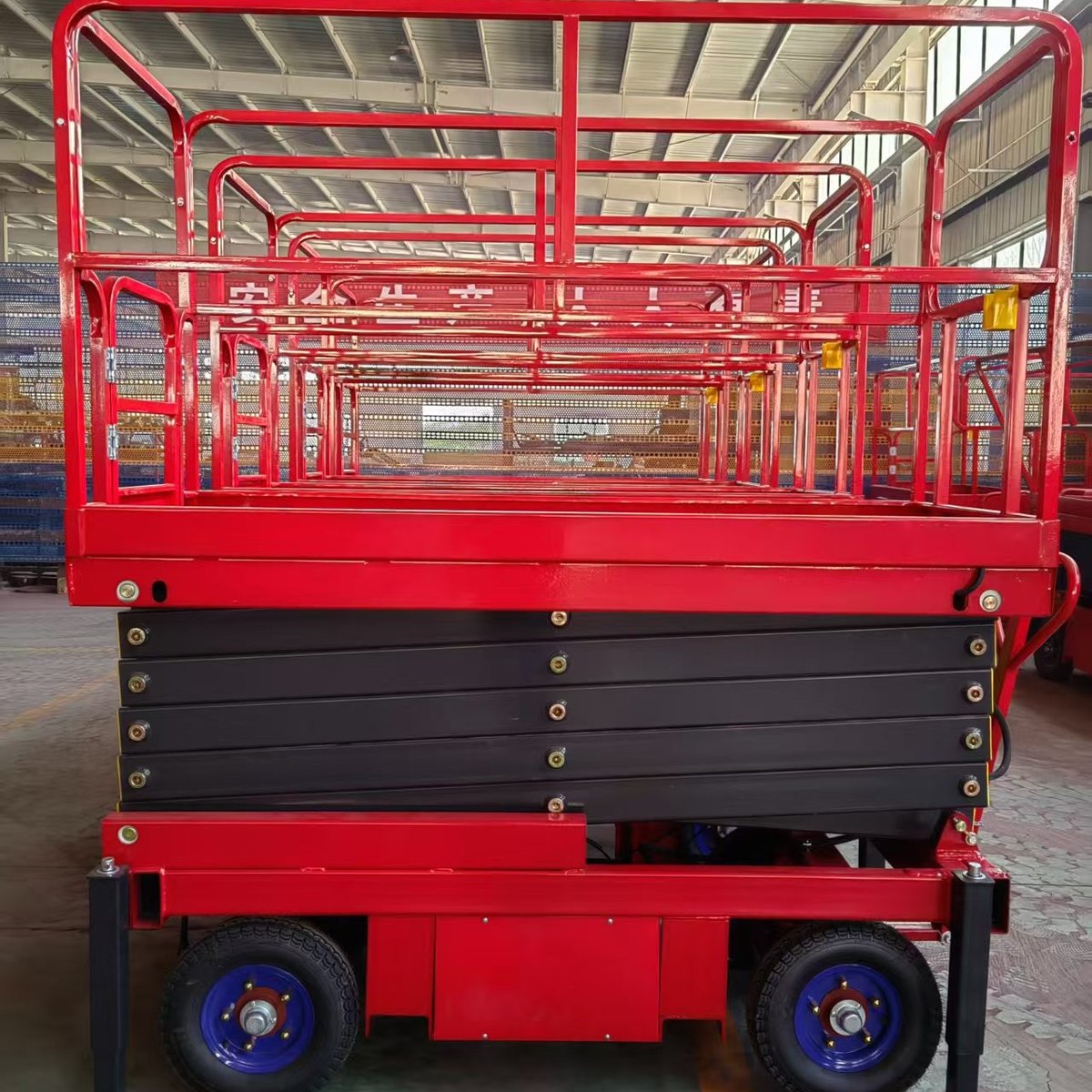
These machines are pushed into position by hand, the outriggers are pulled out, and the platform lifts on mains power. There is no battery and no engine, which is what makes them so cheap to own: nothing to charge, nothing to fuel, nothing to service beyond the hydraulics. The price of that simplicity is a cable, and the cable has to suit the supply you actually have where the work is.
What our mobile scissor lifts need
Every model from 4 m to 11 m runs on 220 V single phase, including the 10 m machine at 500 kg. From 12 m upward the power unit needs 380 V three phase. The power unit itself grows with the machine: 1.5 kW on the 4 m model and 2.2 kW on the 10 m model, which is why the taller machines are the ones that need the heavier supply.
| Model | Lift height | Capacity | Platform size | Power supply |
|---|---|---|---|---|
| MP-0.5-4AC220v | 4 m | 500 kg | 2010 x 830 mm | AC 220 V |
| MP-0.5-6.8AC220v | 6.8 m | 500 kg | 2010 x 830 mm | AC 220 V |
| MP-0.5-8-AC | 8 m | 500 kg | 2010 x 930 mm | AC 220 V |
| MP-0.5-9AC | 9 m | 500 kg | 2010 x 830 mm | AC 220 V |
| SJYC0.5-10AC | 10 m | 500 kg | 2010 x 1130 mm | AC 220 V |
| MP-0.3-11AC220V | 11 m | 300 kg | 2010 x 1130 mm | AC 220 V |
| SJY0.5-12-AC380V | 12 m | 500 kg | 2462 x 1210 mm | AC 380 V |
| SJYC0.5-14 | 14 m | 500 kg | 2845 x 1420 mm | AC 380 V |
| MP-0.3-16AC380V | 16 m | 300 kg | 2845 x 1420 mm | AC 380 V |
| MP-0.3-18AC380V | 18 m | 300 kg | 3060 x 1620 mm | AC 380 V |
What changes when you move to three phase
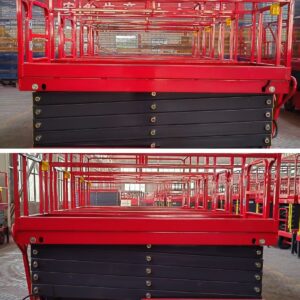
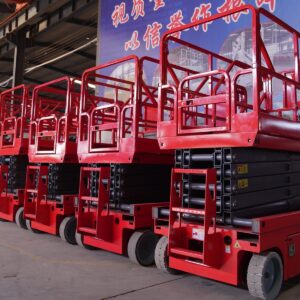
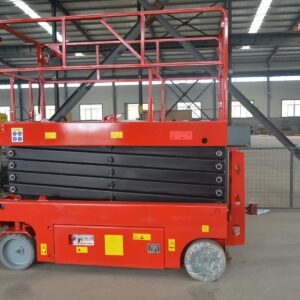
Three things, and only three. The supply at the wall, the power unit that drives the pump, and the cable that connects them. Everything the operator touches is identical: the same 24 V control voltage, the same outriggers, the same 1.1 m guardrail on a 30 x 30 mm frame, the same 4 to 6 m/min lifting speed with an adjustable descent, and the same safety set – an emergency descent valve, a relief valve for overload protection, a limit switch and an emergency stop.
What you gain above 10 m is reach: a 12 m, 14 m, 16 m or 18 m platform. What you should expect to give up is portability between buildings, because a three-phase machine only works where a three-phase supply exists. If the lift has to move between sites, a 220 V model that stops at 10 m is often the more useful machine.
What every model has in common
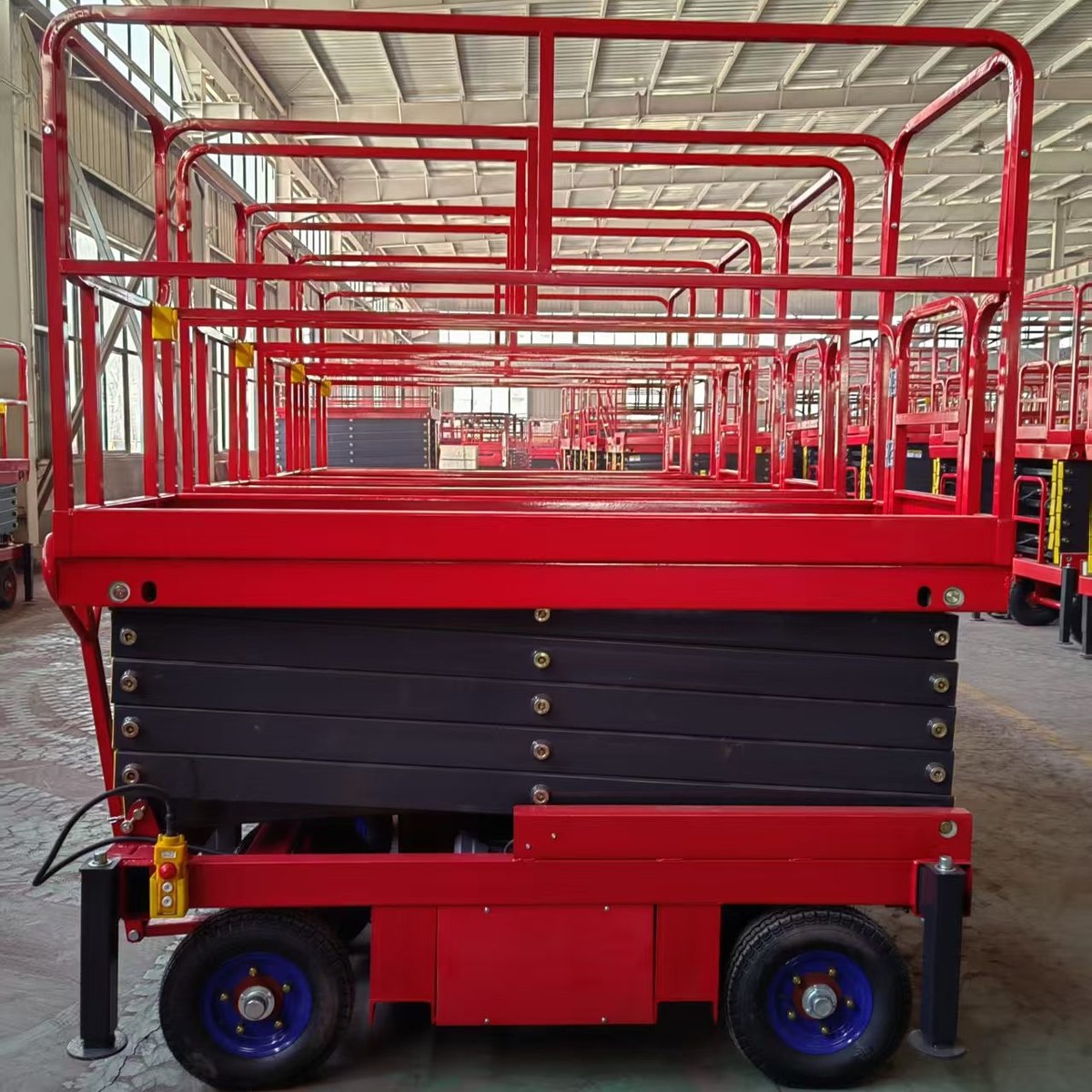
Whichever supply the machine uses, the mechanical package is the same. The platform rises on an HSG70/45 cylinder with a chrome plated rod, fed by No. 46 anti-wear hydraulic oil, and the scissor arms are built from 100 x 50 x 3.75 mm or 120 x 60 x 3.75 mm rectangular tube. The frame is shot blasted and powder coated, the guardrail is 1.1 m of 30 x 30 mm tube, and the four outriggers take the weight before the platform moves. That common build is why the choice between 220 V and 380 V is a choice about supply and height, not about quality.
How to choose between them
- Write down the socket you have. Single phase 220 V or three phase 380 V, and how far the socket is from where the machine will stand. A long run on a light cable is a voltage drop problem, so tell us the distance.
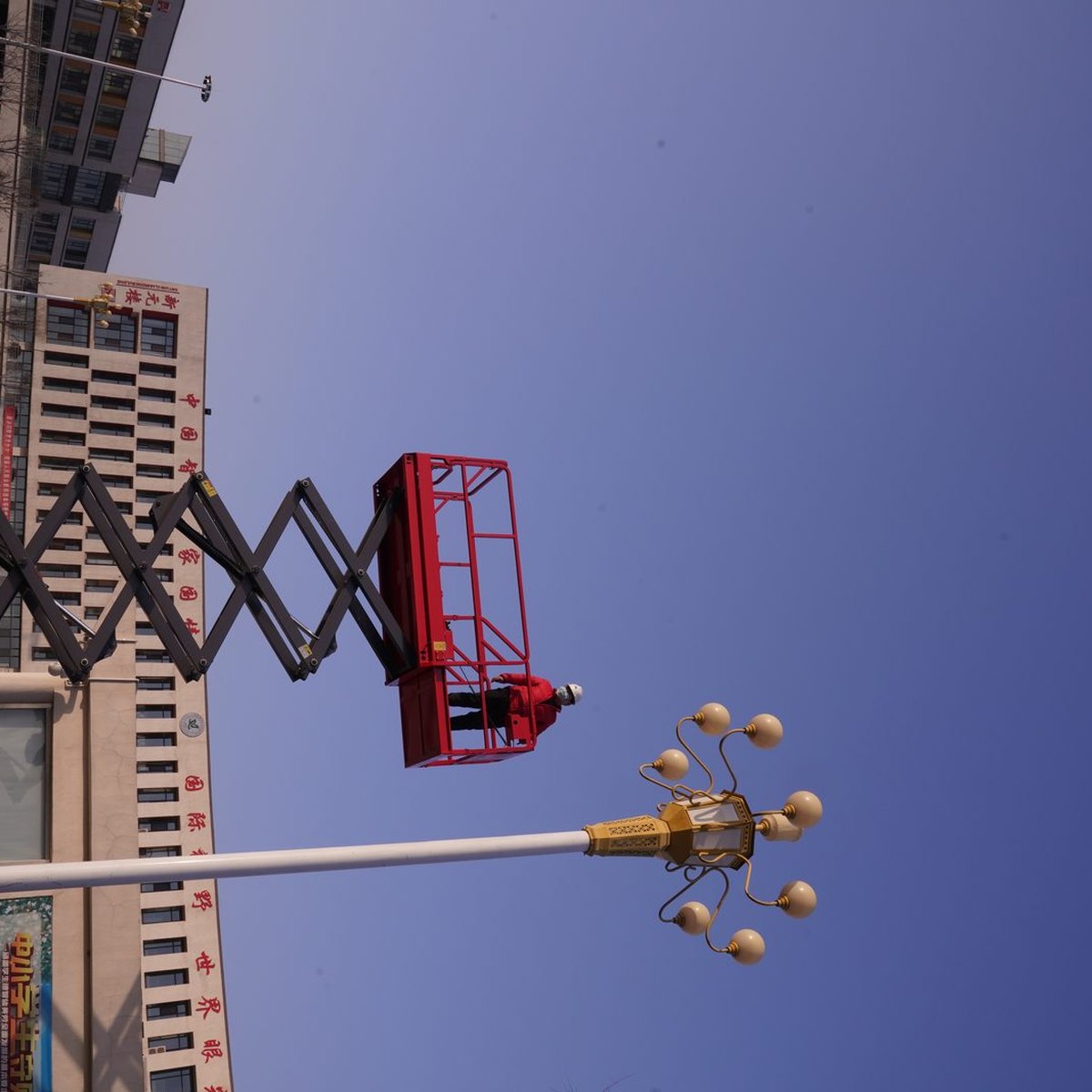
- Measure the working height, then add roughly 1.6 m for the person and their arms. A 10 m platform is a 12 m working height in practice.
- Check the load. The 500 kg models carry two people and their tools with room to spare; the 300 kg models at 11 m and above are two-person machines with light equipment.
- Check the route and the floor. These are hand-pushed machines on 400-8 to 500-8 tyres. They need a level, firm floor and a doorway wide enough for the stowed width.
- Think about where it will be stored. It has to live somewhere dry with access to its supply, not in the yard.
Frequently asked questions
Can a 220 V machine really reach 10 m?
Yes. Our SJYC0.5-10AC lifts 500 kg to 10 m on a single-phase 220 V supply, with a 2.2 kW power unit. It is the tallest model that runs on a domestic-style supply in our range.
Do I need 380 V above 10 m?
In our range, yes: the 12 m, 14 m, 16 m and 18 m models are built for 380 V three phase. If your site has no three-phase supply, the sensible answer is a 10 m single-phase machine rather than an improvised supply for a taller one.
Can the lift run from an extension lead?
It can run from an extension cable, but the cable has to be rated for the power unit and short enough that the voltage does not sag when the pump starts. Give the electrician the model and the distance, and let them size the cable; a lead that is too light is the usual reason a lift seems to lose power at height.
Next step
Tell us the working height, the load, the supply you have and the distance from the socket, and we will confirm the model and the cable requirement. Start from the mobile scissor lift range, compare it with the self-propelled electric scissor lifts if the machine has to move itself, and read how to measure doorways and access before you order.