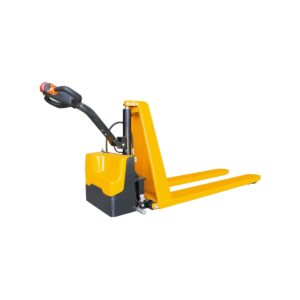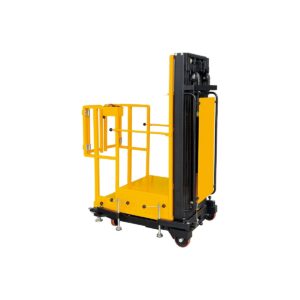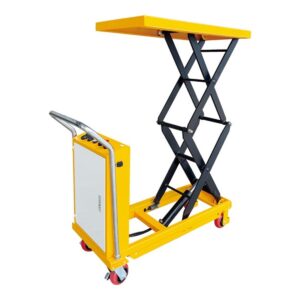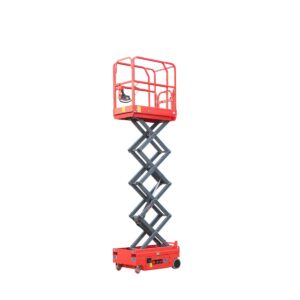
“Service lift” is used for different types of small goods-lifting equipment depending on the region and supplier. For a useful quotation, define the physical task rather than relying on the term alone: what will be lifted, how far, through which opening and between how many levels?
This guide covers the measurements needed to compare a rail-guided cargo lift, an electric freight elevator and other goods-lifting arrangements. It does not assume one product type before the building requirements are clear.
1. Platform or car size
Measure the length and width of the largest item that must fit on the platform or inside the car. Add working clearance for the operator, trolley handles, packaging and any load movement during entry.
Also record which direction the load enters and leaves:
- Single-side loading
- Through loading from opposite sides
- 90-degree corner loading
Two lifts with the same platform dimensions can require different landing arrangements if the loading directions differ.
2. Door opening and gate clearances
| Measurement | What to record |
|---|---|
| Clear opening width | With the gate or door fully open, not the frame width |
| Clear opening height | From finished floor to the lowest obstruction above the opening |
| Approach space | The area needed for the trolley, pallet truck or heavy item to turn before entering |
| Landing protection | Gate type, fixing points and whether the landing can accept an interlocked barrier |
Measure the clear opening, not the surrounding wall or frame. In an existing building, door height often becomes the first constraint on the usable platform and enclosure.
3. Floor-to-floor travel
Measure from finished floor to finished floor. Do this for every served level. Ceiling height alone is not a substitute.
For more than two levels, provide:
- Each floor level
- The travel between consecutive stops
- Whether the platform must stop level with the floor
- The structure available at each landing
4. Shaft or floor opening
A freight elevator normally requires a shaft or a dedicated structural enclosure. A guide-rail cargo lift can, in selected applications, operate without a conventional elevator shaft but still needs a suitable floor opening, structure and landing protection.
Record:
- Available opening length and width
- Whether the floor can be cut
- Walls available for rail fixing
- Any beams, cables or services passing through the proposed location
- The mounting condition at the base and upper landing
The product comparison in freight elevator dimensions and capacity explains how car size, door and shaft measurements interact.
5. Pit, ramp and floor construction
The lower landing determines whether the project needs a pit, a short ramp or another approach. Measure the available pit depth and confirm the base condition. For an existing building, ask whether a pit can be formed, whether a surface-mounted alternative is possible and what drainage is required.
Send photos of the floor structure and the proposed lower landing with the measured dimensions. A dimension without the surrounding structure can lead to an impractical quotation.
6. Rated load and loading method
Record the heaviest item, its weight and how it will enter the lift. Include the pallet truck, trolley, cart or operator if they remain on the platform.
| Load input | Example |
|---|---|
| Product weight | The heaviest packed item |
| Delivery equipment | Pallet truck or trolley that enters the platform |
| People | Whether a person must travel with goods |
| Dynamic handling | Impact or uneven loading during entry |
Goods lifts that carry material rather than people must be specified for that use. Do not infer passenger suitability from the load capacity alone.
7. Power and control position
Confirm the available electrical supply, the location of the control station and how each landing will call or control the lift. Include the distance from the proposed power point.
Measurement checklist
- Longest and widest item, including packaging
- Heaviest item plus delivery equipment
- Floor-to-floor travel at every stop
- Clear door and gate dimensions
- Available opening and shaft dimensions
- Headroom above the upper landing
- Pit or ramp constraints
- Loading direction at each level
- Power supply and control locations
- Photos and sketches of the proposed location
Request a service lift recommendation
Send the checklist above and identify whether the application is goods-only or intended to carry people. FORU can then advise whether a rail-guided cargo lift, a freight elevator or another system should be evaluated.
Use the contact form, email Michael@forulift.com, or send a WhatsApp message to +86 186 1519 9729.
Frequently asked questions
Is a service lift the same as a freight elevator?
Not necessarily. The term can describe small goods lifts, dumbwaiters or service elevators in different markets. Define the required load, building arrangement, travel and whether people will travel before comparing products.
Can a service lift be installed in an existing building?
Some rail-guided cargo lift designs can work within an existing building, but the floor opening, structural support, landing protection and pit or ramp still require review. The building conditions decide whether the project is practical.
Can the lift carry people?
Only where the selected product and installation are intended and approved for that use. A goods-only lift must remain goods-only even if its stated capacity appears sufficient.
Michael
WhatsApp / WeChat: +86 186 1519 9729
Email: Michael@forulift.com
Website: www.forulift.com