Accepting a cargo lift is not like signing for a parcel. The machine arrives packed with a drawing, manual and spare parts that must stay with the unit. The useful handover check begins before the crate is opened and continues after installation and testing.
What arrives in a standard cargo lift shipment?
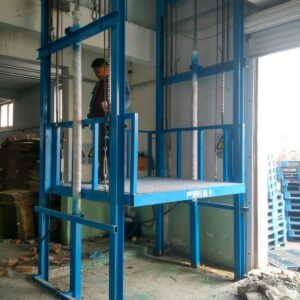
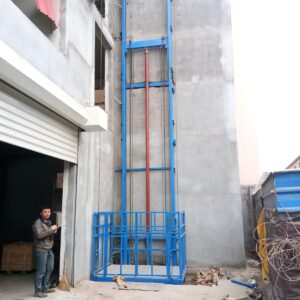
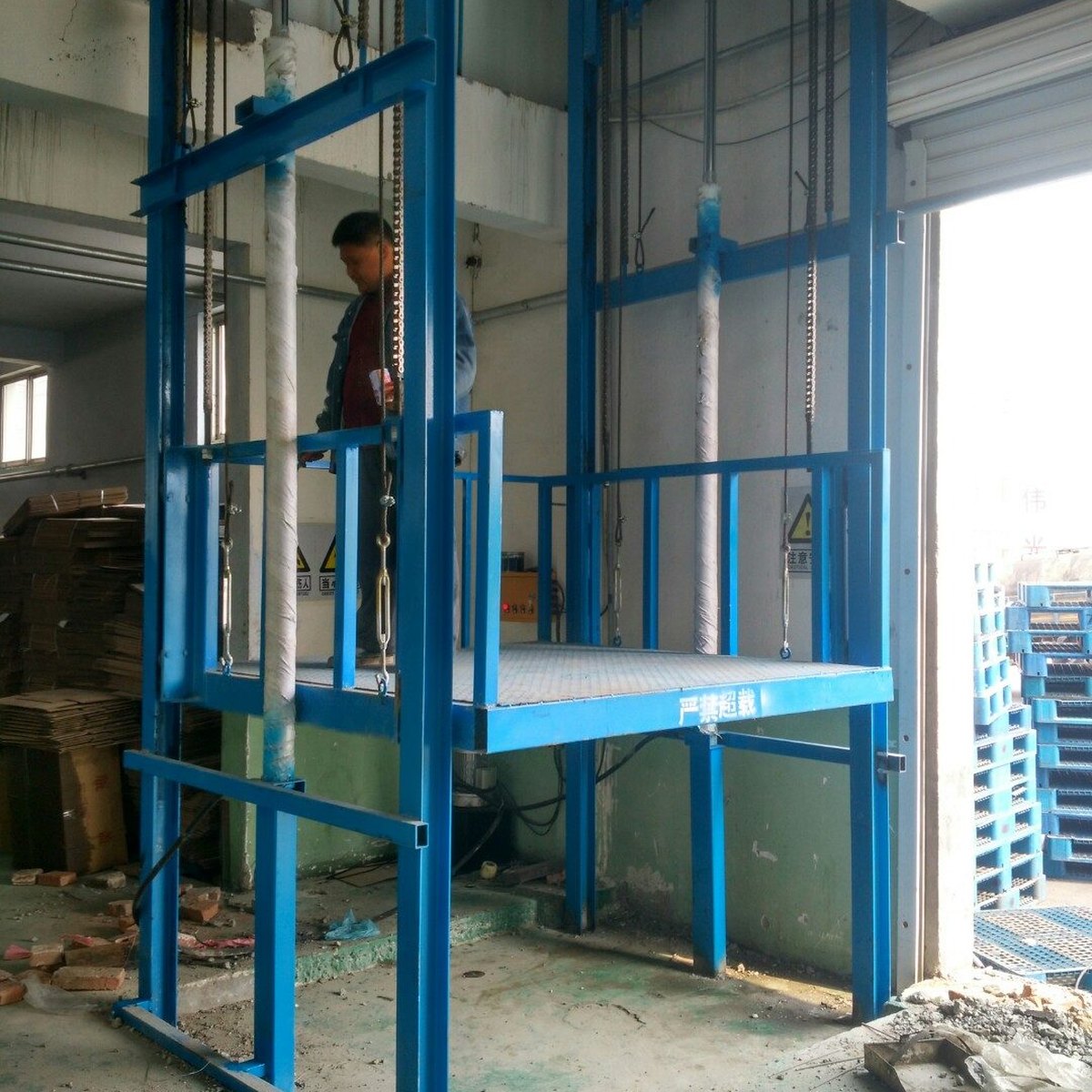
For the standard CL5-2.5, the quotation and assembly documentation describe a 2.5 t lift with 5 m of travel and a 1600 x 2200 mm platform. The platform frame is 120 x 60 x 4 mm with a 5 mm anti-skid plate. Two 90 x 60 hydraulic cylinders drive an LH1244 leaf chain, a 7.5 kW pump station supplies the hydraulic system, and a PLC panel provides hierarchy control at 24 V. The guardrail is 70 x 70 x 5 mm square pipe, 1000 mm high, and the platform is arranged for 180 degree through loading.
The standard packing information lists one wooden case measuring about 4000 x 2300 x 1800 mm and weighing about 1,800 kg. The documentation should include the assembly drawing and installation manual. Each unit also includes one hydraulic oil seal and seal ring set plus one travel switch. Check these against the packing list before the crate is cleared away.
When should the handover check begin?
The first check happens at delivery, while the carrier is still present. Match the number of packages to the delivery documents, note any crushed timber, torn wrapping or exposed steel, and compare the case dimensions and approximate weight with the packing information. A package around four metres long and 1,800 kg requires a proper lifting plan. Confirm the forklift or crane has the capacity and that the route to the unloading position is clear before the crate is moved.
Inspect the outside first: carrier documents, package count, crate condition and lifting points. Keep the packing list with the delivery paperwork. Record a missing component or document at that point rather than assuming it will be found later.
Delivery check or installation sign-off?
The shipment and the finished installation answer different questions. Delivery confirms that the right package arrived in usable condition. Installation sign-off confirms that the lift has been assembled to the approved arrangement and that its controls and safety functions have been tested. One signature should not replace the other.
| Check | At delivery | Before final sign-off |
|---|---|---|
| What is being confirmed | The correct packages, components and documents arrived | The lift is assembled and functions as intended |
| Main evidence | Packing list, delivery documents, visible condition | Approved drawing, commissioning record, tested controls and safety functions |
| Key dimensions | Case size and access for unloading | Platform, pit, openings, rail positions and landing arrangement |
| Moving parts | Protected and undamaged in the crate | Cylinders, chain, platform and travel operate through the full cycle |
| Spare parts | One oil seal and seal ring set plus one travel switch | Stored with the manual and recorded in the handover pack |
| Final record | Damage or shortage noted with the carrier | Signed test record and warranty start date |
What should you compare with the approved drawing?
Open the assembly drawing before the rails are anchored. Confirm the model, capacity, travel, platform size and lower-level arrangement against the order documents. The standard pit for the 1600 x 2200 mm platform is 2200 x 2250 x 300 mm. Check rail positions, base fixings, the upper opening, guards and gates as a set.
Measure the critical clear openings before drilling. Confirm that the platform and its 1000 mm guardrail can pass through the upper opening and that the 180 degree loading route is clear on both sides. Review the wall or free-standing frame that will carry the rails. If anything differs from the approved drawing, stop and resolve it with the drawing before modifying the machine or the building.
What visible components should be checked?
The crate should account for the rails, platform and lifting frame, two hydraulic cylinders, the LH1244 leaf chain, the 7.5 kW pump station, the PLC panel, landing protection and fasteners. Check that machined faces and hydraulic connections are protected and the control panel has not been damaged in transit.
Check the platform deck and guardrail before installation as well. The drawing specifies a 120 x 60 x 4 mm frame, a 5 mm anti-skid plate and a guardrail of 70 x 70 x 5 mm square pipe at 1000 mm high. A bent section should be recorded before assembly rather than discovered after the platform has been lifted into the rails. Keep the oil seal set and travel switch in a clean, labelled place until the installer needs them.
What should be tested after installation?
The final check belongs with the person commissioning the lift and should follow the manual. Run the platform through its travel with the route clear and confirm that both the upper and lower travel switches stop it at the intended positions. Test the 180 degree loading approach, the landing gates and their interlocks, and the controls from each operating position. Check that the platform arrives level and that the anti-skid deck and guardrail are secure.
The supplied system includes an explosion-proof valve on the hydraulic pipe, a relief valve for overload protection and an emergency descent valve for lowering when power is unavailable. The person accepting the lift should know where these devices are and the emergency procedure in the manual. Ask the installer to demonstrate the checks.
What records should the handover pack contain?
A practical handover pack contains the approved drawing, installation and operation manual, delivery and packing list, installed model and component details, and a signed commissioning record. Add every control and isolation point, the technical support route and the date the 12 month warranty began. The warranty excludes man-made faults, so record the machine’s condition at handover.
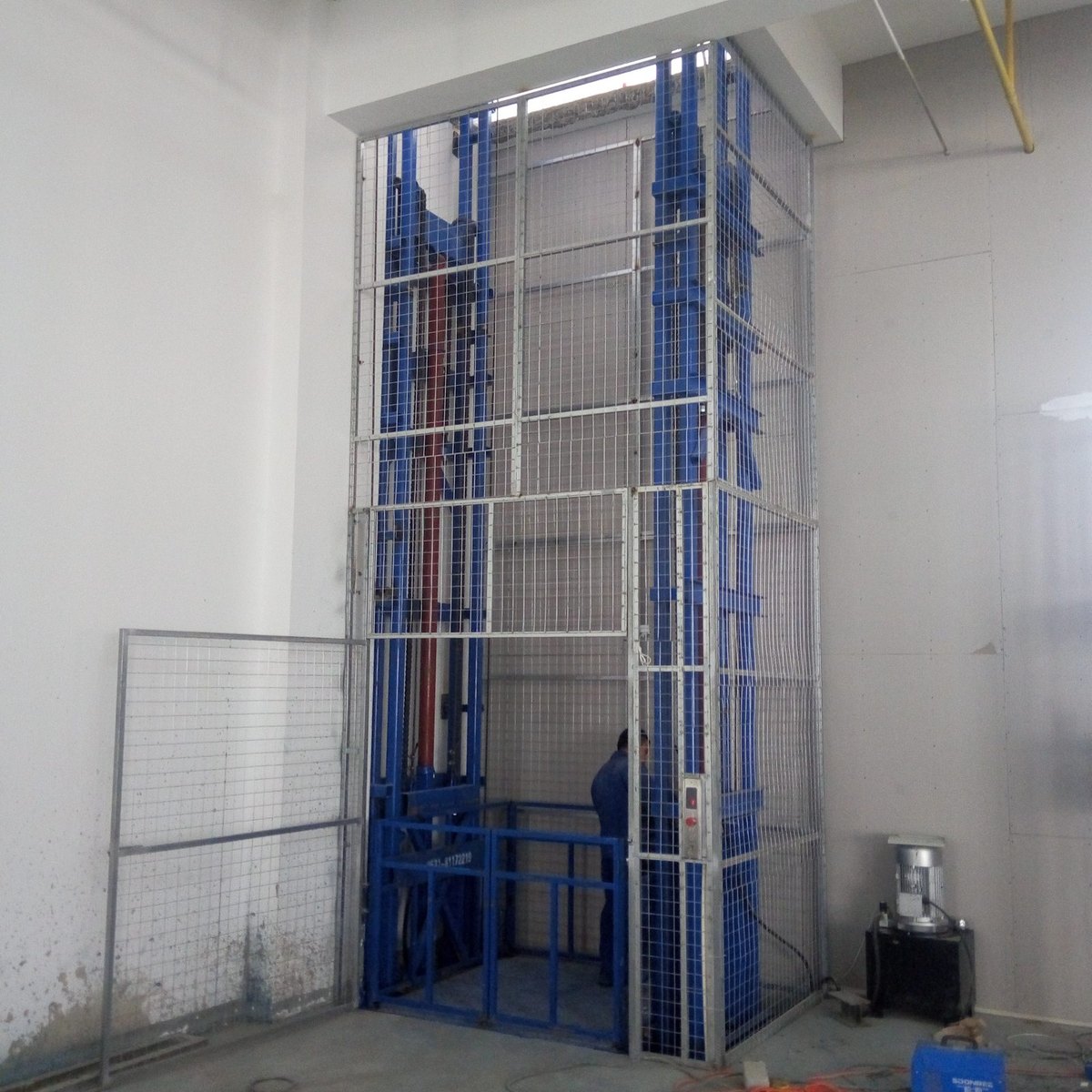
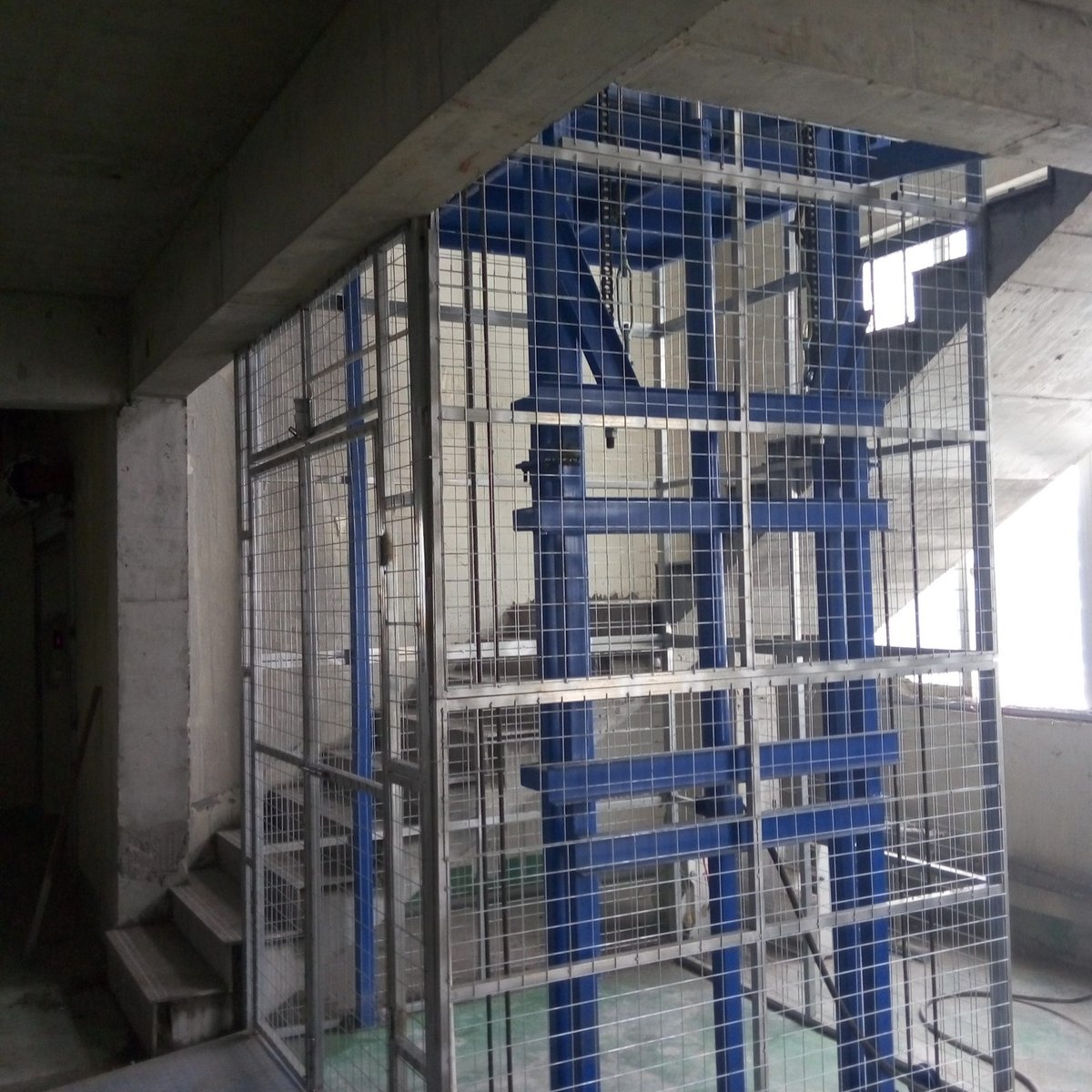
For a real two-level warehouse project in Bosnia, the customer’s own fitters installed a 2.5 t double guide rail cargo lift from the assembly drawing. The configuration combined 5 m of travel, a 1600 x 2200 mm platform, a 2200 x 2250 x 300 mm pit and through loading on two floors. That project shows why the documents belong in the crate and in the final handover pack: installation and later service both depend on the same approved arrangement.
Frequently asked questions
Should I sign the delivery receipt before opening the crate?
Inspect and record the external condition of every package while the carrier is present, because hidden transport damage is easier to resolve when it is documented promptly. Opening the crate is a separate unpacking check. Follow the carrier’s process and your contract, and photograph any visible damage before moving the goods.
Can our own fitters install the cargo lift?
Yes, the machine is supplied with an assembly drawing and an illustrated manual for the customer’s fitters. The Bosnia project was installed this way. The installation still has to follow the approved drawing and manual, and the person commissioning the lift should complete the function checks before it is put into service.
Which spare parts should be in the crate?
For every standard unit, the packing specification lists one hydraulic oil seal and seal ring set and one travel switch. Check both against the packing list at delivery and store them with the manual so they can be found when needed.
Next step
Before accepting delivery, compare the crate, drawing, manual and installed configuration against the order. Start from the cargo lift range or the double guide rail cargo lift, and use our guide to measuring a mezzanine for a cargo lift while the site is being prepared.