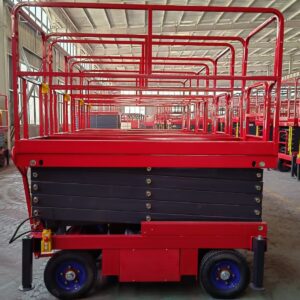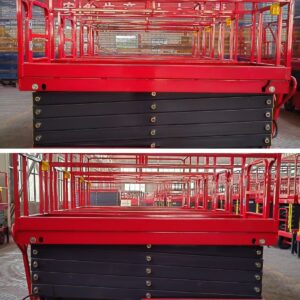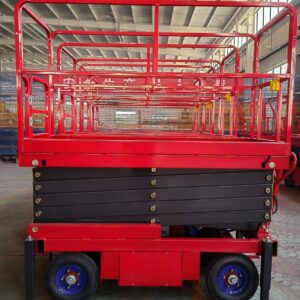
A scissor lift looks like a simple machine, and that is exactly why buyers are surprised by the spread in quotations. Two lifts that both reach ten metres can differ substantially in price, and the difference is not usually the brand. It follows the height, the deck, the load, the battery and the options, in that order. Here is what each of those actually changes.
What drives the price of an electric scissor lift?
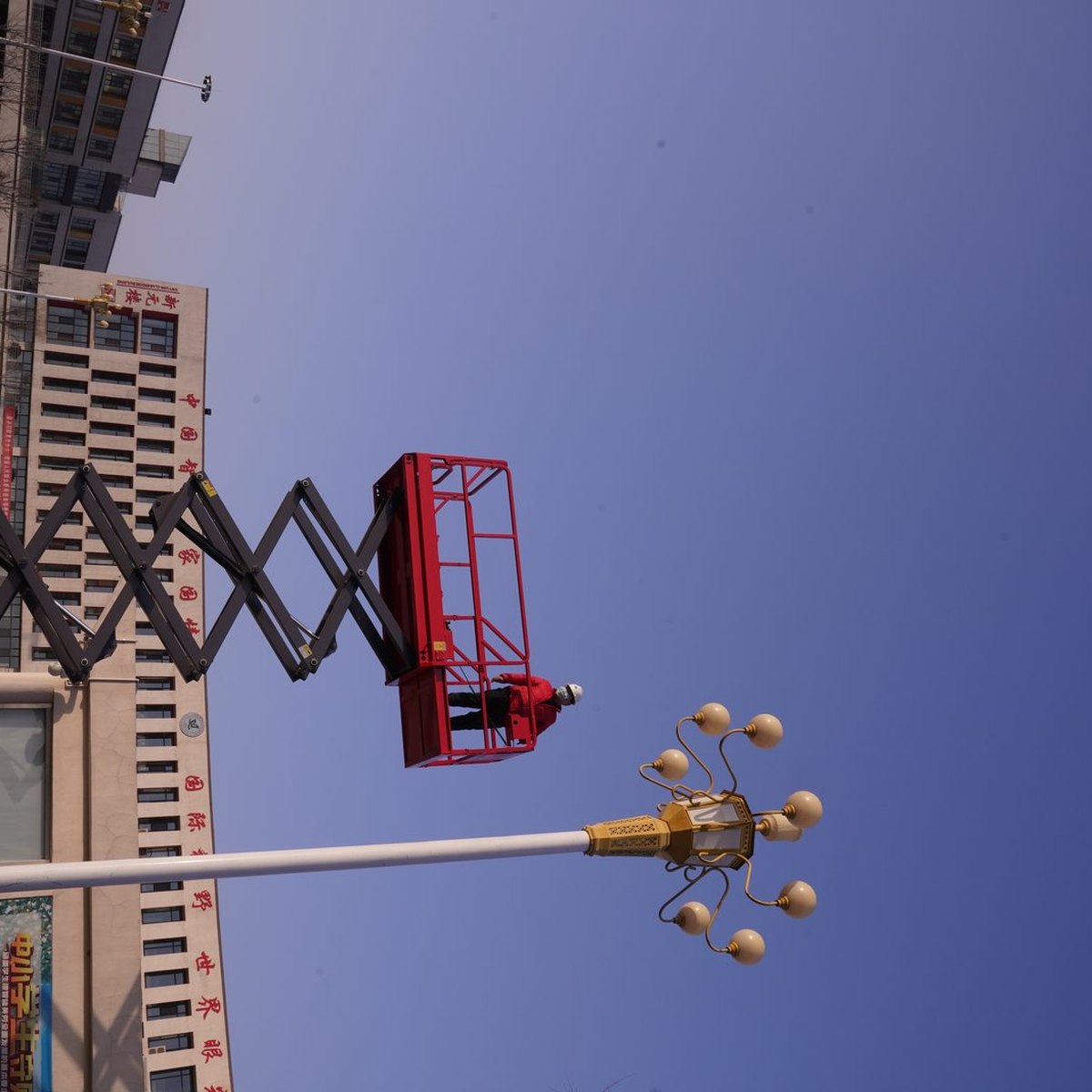
Six things decide almost the whole cost: working height, platform size, rated load, battery and motor, the safety and control package, and the options you add. Working height is the biggest single driver, because every extra metre of lift means more scissor structure, more steel in the base and more battery to carry it.
Height is the biggest cost driver, but not in a straight line
The table below is our own range, and it shows how the machine grows with height. Read the last column rather than the first: the step from a 4.6 m platform to an 8 m platform multiplies the machine weight by about two and a half, while the steps above 10 m are smaller.
| Model | Platform height | Rated load | Machine weight | Drive |
|---|---|---|---|---|
| GTJZ4.6 | 4.6 m | 200 kg | 870 kg | AC 16 V / 1.8 kW |
| GTJZ06 | 6 m | 450 kg | 2,060 kg | 24 V / 3.3 kW |
| GTJZ08 | 8 m | 450 kg | 2,208 kg | 24 V / 3.3 kW |
| GTJZ08B narrow | 8 m | 320 kg | 2,208 kg | 24 V / 3.3 kW |
| GTJZ10 | 10 m | 320 kg | 2,450 kg | 24 V / 3.3 kW |
| GTJZ12 | 12 m | 320 kg | 3,000 kg | 24 V / 4.5 kW |
| GTJZ14 | 13.8 m | 230 kg | 3,570 kg | 24 V / 4.5 kW |
The practical consequence is that buyers comparing a 6 m and an 8 m machine for occasional use are often comparing very different classes of equipment, not a small upgrade. It also means that if your work is at 12 m and you buy a 10 m machine to save money, you will not reach the job at all.
Deck size, extension deck and platform capacity
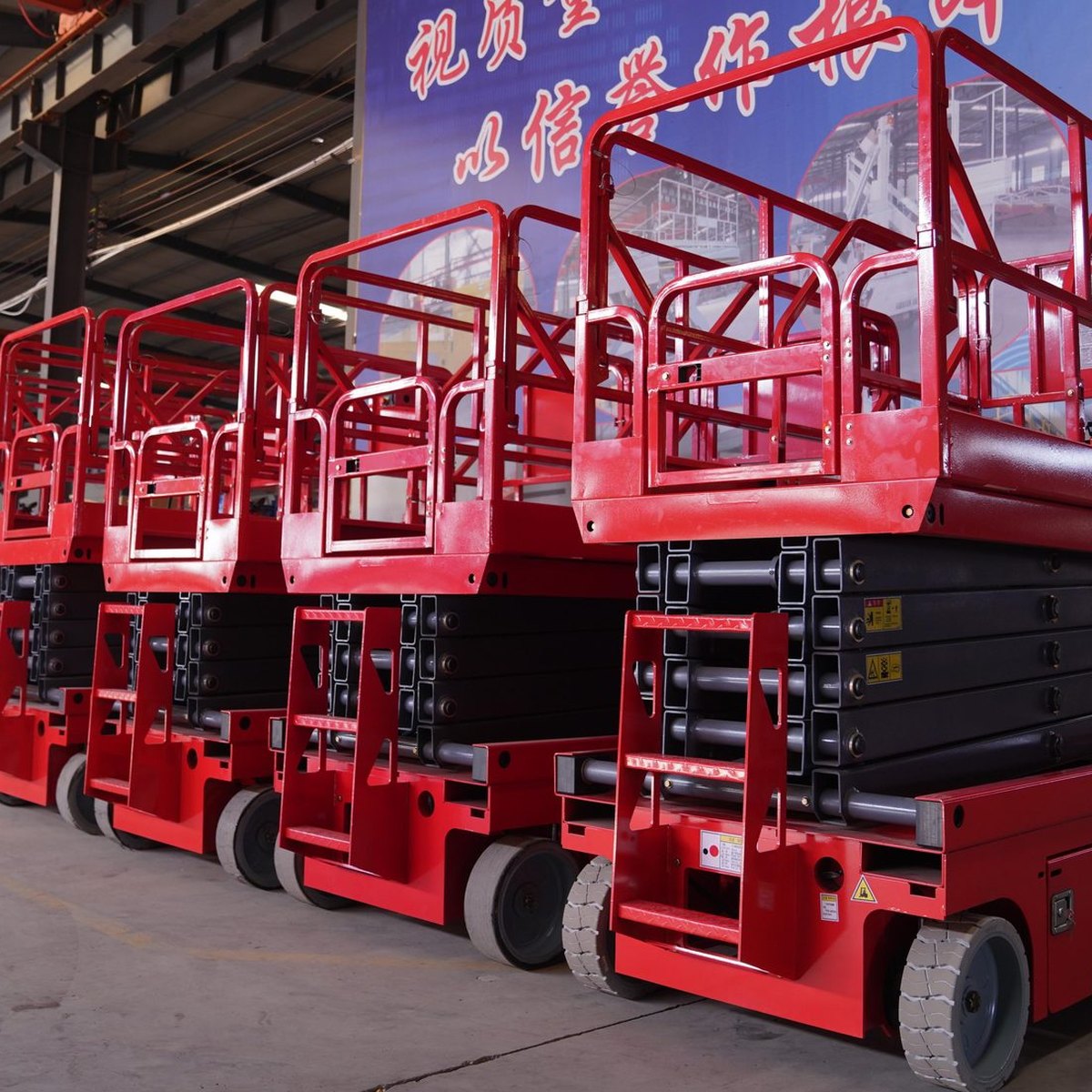
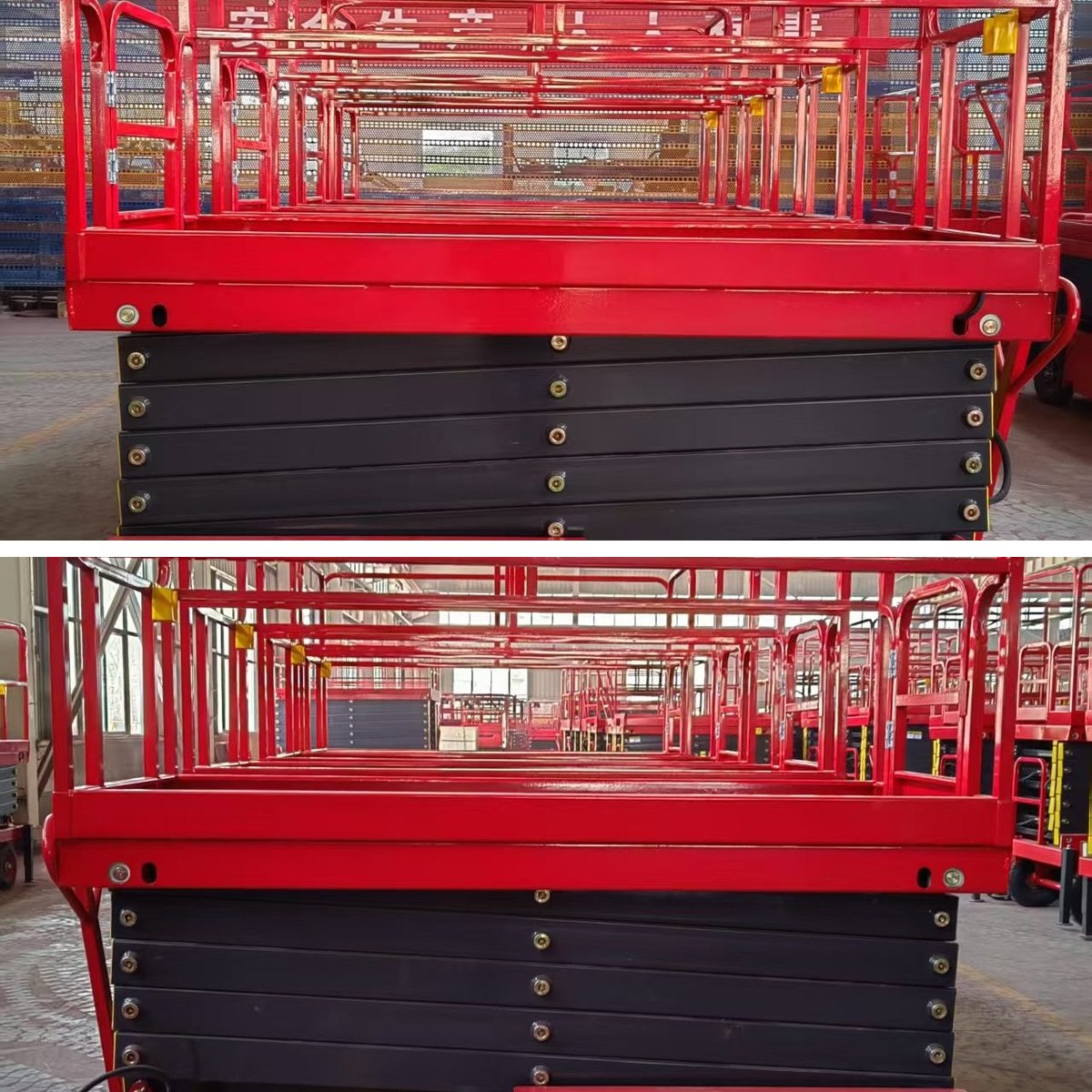
A wider deck costs more for two reasons: more material, and a heavier counterbalancing base to keep the machine stable at full height. Our platform is 2.27 m by 1.12 m on the main models, with a 0.9 m extension deck that slides out to reach over racking or a machine. The extension deck itself is rated at 113 kg, which is worth noting if you plan to stand out on it with tools.
Rated load matters in the same way. A 450 kg machine and a 320 kg machine of the same height carry different scissor sections and different hydraulics, and the heavier version is not simply a paperwork change.
Battery, motor and charging
Battery drive is what makes a scissor lift usable indoors, and it is also a visible cost line. The 6 m to 10 m models use a 24 V / 3.3 kW drive with a 24 V / 30 A charger, while the 12 m and 13.8 m models step up to 24 V / 4.5 kW and a 4 x 6 V / 260 Ah battery pack. The larger pack costs more up front and is the single largest replacement item later in the machine’s life, which matters when you compare five-year running costs rather than purchase prices.
The narrow 8 m model is a useful illustration of how specification and price interact: it is built on a 0.85 m chassis to pass through standard doorways, so the platform is narrower and the rated load drops to 320 kg. You are paying for access, not for size.
Safety, control and the options people forget to compare
Two machines of the same height can still differ in the control and safety package, and this is where the cheapest quotation usually gets cheap. Ours includes proportional joystick control, 4 x 2 drive, an automatic pothole protection system, automatic braking, tilt protection, a self-locking platform door, full travel, emergency stop, an emergency descent system, non-marking tyres and an oil pipe explosion-proof valve. Ask any supplier for that list in writing and put the two lists side by side.
Then there are the options that change the price after the base machine:
- Extension deck, single or dual.
- Non-marking tyres for finished floors, or rough-terrain tyres for yard work.
- An outdoor finish for machines that live outside.
- Work lights and a flashing beacon.
- Custom platform height, colour and branding.
What is not included in the price
- Freight, insurance, import duty and port charges, which depend on your port.
- Battery replacement in later years. The battery is a consumable, not a lifetime part.
- Operator training, unless you ask for it.
- Spare parts beyond the standard package.
- Local service labour, if you prefer a local technician to our remote support.
We quote EXW, FOB or CIF so that you can see exactly which of these are inside the number and which are yours to arrange.
How to compare two scissor lift quotations
| Check this | Why it changes the price |
|---|---|
| Rated load with the extension deck out | The most commonly omitted figure in a comparison |
| Battery pack and charger | 24 V / 30 A with a 4 x 6 V / 260 Ah pack on the larger models |
| Motor and drive power | 3.3 kW on 6 m to 10 m, 4.5 kW on 12 m and above |
| Deck size and extension | 2.27 x 1.12 m with a 0.9 m extension rated at 113 kg |
| Safety and control package | Proportional control, pothole protection, tilt protection, emergency descent |
| Tyres | Non-marking for finished floors, rough terrain for yards |
| What the price excludes | Freight, duty, training and later battery replacement |
Running cost matters more than purchase price
Over five years, the purchase price is only part of the total. Battery replacement, tyre wear, hydraulic oil and seals, and the cost of downtime decide the rest. A machine with a larger battery pack and a properly rated drive may cost more on day one and less per working hour, especially on a two-shift site where the lift is charged between shifts.
Ask two questions of any quotation: what is the rated load with the extension deck extended, and what is the duty cycle the machine is rated for. Both answers separate a machine built for daily work from one built to a price.
Frequently asked questions
Is a 10 m scissor lift much more expensive than an 8 m one?
Less than most buyers expect, and much less than the step from 4.6 m to 8 m. Our 8 m model weighs 2,208 kg and the 10 m model 2,450 kg, so the structure grows by about ten percent, while the jump from the 4.6 m model at 870 kg to the 8 m model is a completely different machine. Above 10 m the battery pack and drive power step up again.
Does a higher load rating cost much more?
It depends on the height. At low heights the difference is modest; at 12 m and above, carrying 450 kg instead of 320 kg changes the scissor sections, the hydraulics and the base, and the price follows. If your heaviest realistic load is two people and their tools, buy the rating you need rather than the biggest one available.
Why do quotations for the same height differ so much?
Usually because of the battery pack, the control and safety package, the deck size and the tyres rather than the lifting structure itself. Ask for the component list and the rated load with the deck extended, and compare those, not the headline height.
Next step
Tell us the height you need to reach, the load you will carry, whether you work indoors or outdoors, and the narrowest doorway or goods lift the machine has to pass. We will recommend the model that fits and quote it with the full component list, so you can compare it line by line. See the electric scissor lift range for the full specifications, or the mobile scissor lift if your work is single-phase indoor maintenance.