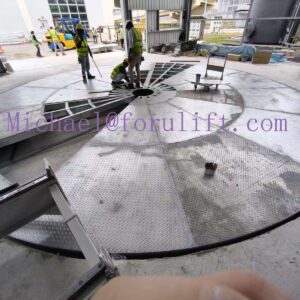
A 20 t fixed scissor lift table is not simply a standard lift table enlarged. The Dezhou project uses a 13,000 x 3,000 mm platform but a useful lift range of only 1,250 to 1,550 mm. The table moves through a 300 mm band while supporting 20 t, so platform stiffness and load distribution matter more than a long vertical stroke.
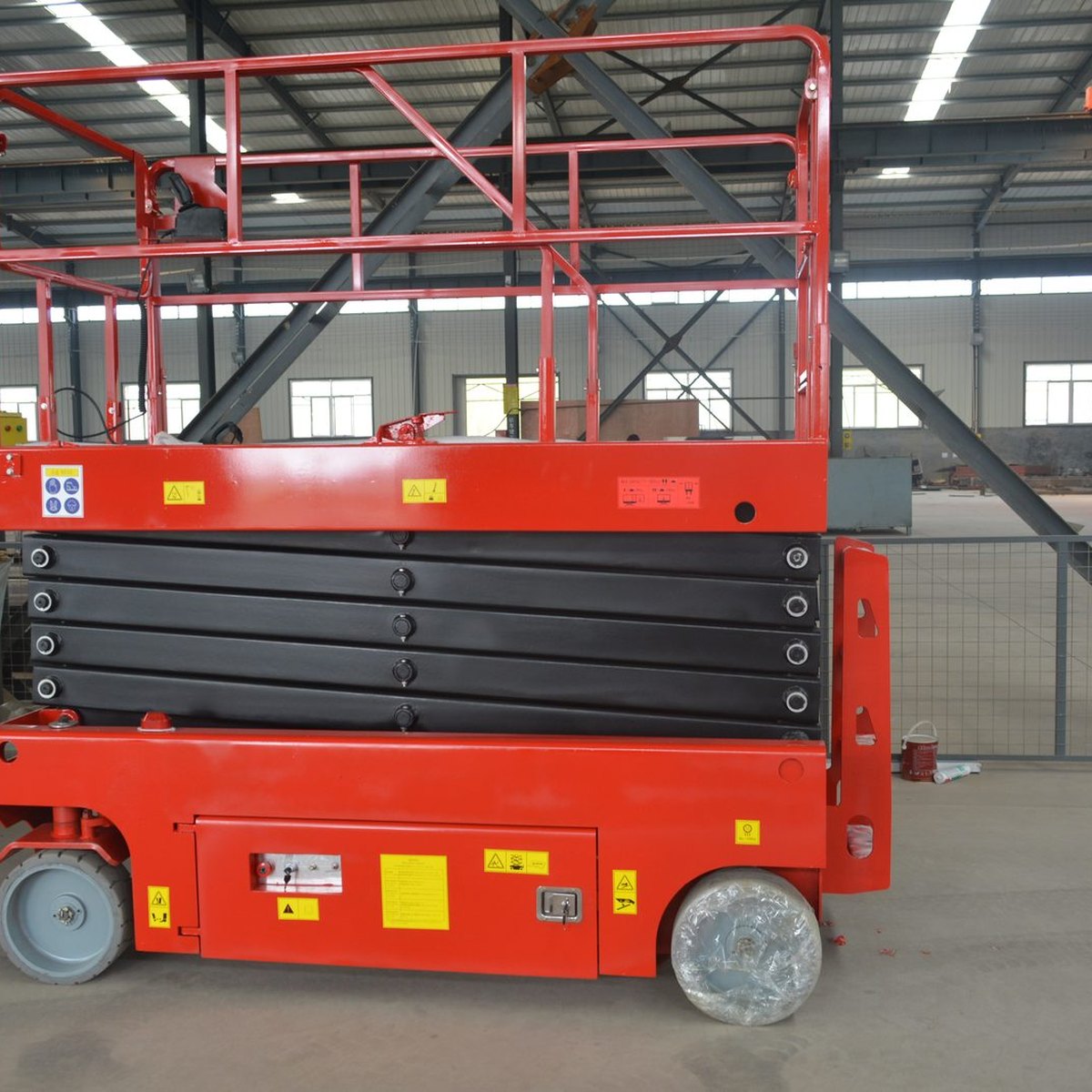
What is a 20 t fixed scissor lift table?
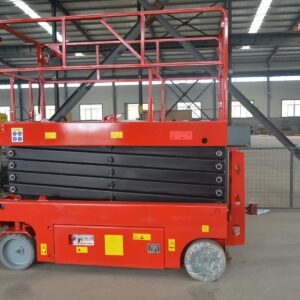
A fixed scissor lift table is installed at a working position and raises a platform through a relatively short vertical range. It does not travel between floors like a cargo lift and it does not carry an operator to overhead work like a mobile aerial platform. In the Dezhou project, the task called for a 20 t capacity table on a very large 13,000 x 3,000 mm deck, with a 5 mm top plate.
The specification depends on the load footprint as well as its mass. A heavy load can be concentrated on a small part of a 13 m platform or spread across it. The frame has to support the intended arrangement, not a single 20 t number on a drawing.
How does the 20 t project compare with a standard range?
Our published fixed scissor table range from 0.5 t to 4 t gives a useful reference for the smaller products. The Dezhou project is a custom configuration outside that table, so its dimensions should be read from its own project record rather than assumed from the BD series.
| Specification | Published BD range example | 20 t Dezhou project |
|---|---|---|
| Rated capacity | 0.5 t to 4 t across the published range | 20 t |
| Platform | Model-dependent within the compact fixed-table range | 13,000 x 3,000 mm |
| Raised-height range | 1,000 mm to 1,700 mm across the published range | 1,250 mm to 1,550 mm |
| Lift travel | Varies by model; 1,000 mm down to 1,700 mm up | 300 mm |
| Deck plate | 4 mm, 5 mm, 6 mm or 8 mm depending on model | 5 mm |
| Project status | Published modular series | Custom wide-platform project configuration |
Why does a 13 m platform need a different structural review?
A long platform can flex or twist if the lifting force is not matched to its geometry. The design has to support the deck between lifting points and carry the bending loads created by a 20 t load. That means reviewing the position of the scissor packs, the frame beams beneath the top plate and the connection between adjacent sections. Those details are engineering decisions, not features that should be guessed from the overall capacity.
The 5 mm top plate is the wear surface shown in the project record. It works with the supporting frame below. It should not be treated as a stand-alone 20 t plate over unsupported spans. Ask for the platform layout and the support arrangement under the working area when the load can be concentrated near the middle or one end.
Why can a 300 mm lift range be useful?
The Dezhou table rises from 1,250 to 1,550 mm, a range of 300 mm. For a fixed production or handling position, that can be enough to transfer a load between supports or bring a large item to a working height without building a long-travel machine. The shorter range does not lower the need for structural capacity; the table can still carry 20 t at any position in its operating band.
A short travel makes the surrounding process important. Measure the delivery surface, receiving support and load at both ends of the cycle. The table should create a usable transition without interference from the frame, floor or adjacent equipment. Confirm those dimensions on the arrangement drawing.
How should the load be positioned on the table?
Record the largest load and its actual footprint, centre of gravity and support points. A long machine or skid may contact the table at a few feet rather than across its full area, and those contact locations affect the local structure. Strong points, packing timbers, spreader beams or other supports may be needed to transfer the load into the deck as designed.
The operating position should be marked on the drawing. If the load changes from project to project, explain that before construction so the table is not designed around one assumed centred block. Keep the rated capacity and load arrangement visible to the operators, and stop if the load or support condition differs from the approved method.
Should the table be surface mounted or installed in a pit?
The project record gives the platform and lift range but does not state the selected installation method. A fixed table can be integrated with the floor or arranged at an existing opening, and that decision belongs with the final installation drawing. Surface mounting is easier to add to an existing area, while a recessed arrangement can place the platform closer to the surrounding working level.
Either method needs a foundation and fixing design appropriate to the table. Confirm the floor strength, anchor positions, clearance for the scissor mechanism and the route for maintenance access. Keep the table’s frame and moving parts from fouling the surrounding floor or equipment through the complete 300 mm movement.
What should a 20 t project drawing include?
The drawing should identify the 13,000 x 3,000 mm platform, the 1,250 to 1,550 mm operating range and the 20 t rated load. It should also show the frame below the platform, the lifting mechanism, the mounting points, the approach at both ends, and the load positions or support instructions used for the structural calculation.
Ask for the required floor and foundation loads before civil work begins. Those figures are not in the short case summary, so they have to come from the final approved drawing. Check the fully lowered and fully raised states against the surrounding equipment, and record how the table will be isolated and supported during maintenance.
What happens during commissioning?
Commission the table against the approved operating method: confirm the platform movement, inspect the deck and surrounding clearances, and use the load arrangement specified for the test. A 20 t capacity is not a reason to skip load control. Check that the table reaches both ends of its 1,250 to 1,550 mm range without interference and that the top plate and supporting structure show no unexpected movement.
Frequently asked questions
Can a 20 t table use a thinner top plate than a 4 t model?
The Dezhou project uses a 5 mm top plate even though its capacity is much higher than the published 4 t range. That does not mean the plate alone carries the load. The supporting frame and structural arrangement are part of the design, and the complete assembly should be assessed from the project drawing.
Is a 300 mm lift range too small for practical use?
It depends on the transfer task. The Dezhou project uses a 1,250 to 1,550 mm range for its own application. Measure the heights of the incoming load, receiving surface and working position to confirm whether that band is sufficient rather than choosing a longer travel by assumption.
Can a forklift drive onto the platform?
Only if the approved operating method and platform arrangement allow it and the combined live load remains within the design. The case summary does not establish a drive-on procedure. Ask for the project drawing and operating instructions, and plan loading so the weight, wheel or support points match the approved load case.
Next step
Send the load footprint, weight, centre of gravity, required working heights and a drawing of the installation area. Start from the fixed scissor lift table range, compare how capacity changes the table, and read pit-mounted or surface-mounted fixed tables.