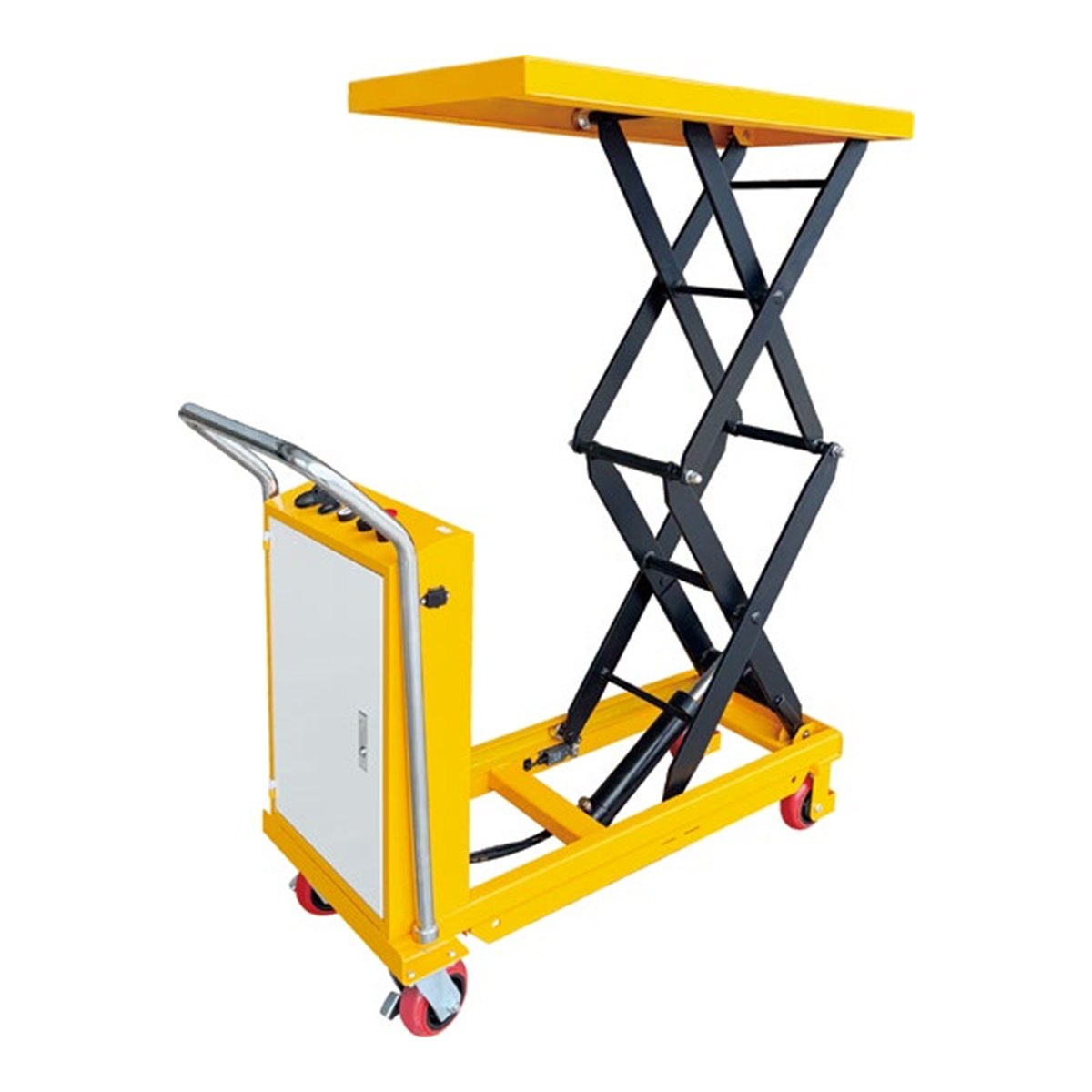
A semi-electric lift table is useful when a workstation needs a powered change of working height but does not need a self-propelled truck. The ETA and ETAS models combine battery-powered lifting with a wheeled frame that the operator positions by hand. That makes them relevant to assembly benches, packing stations and light production cells where parts must be raised, held at a work level and then moved a short distance.
What does semi-electric mean in this lift-table range?
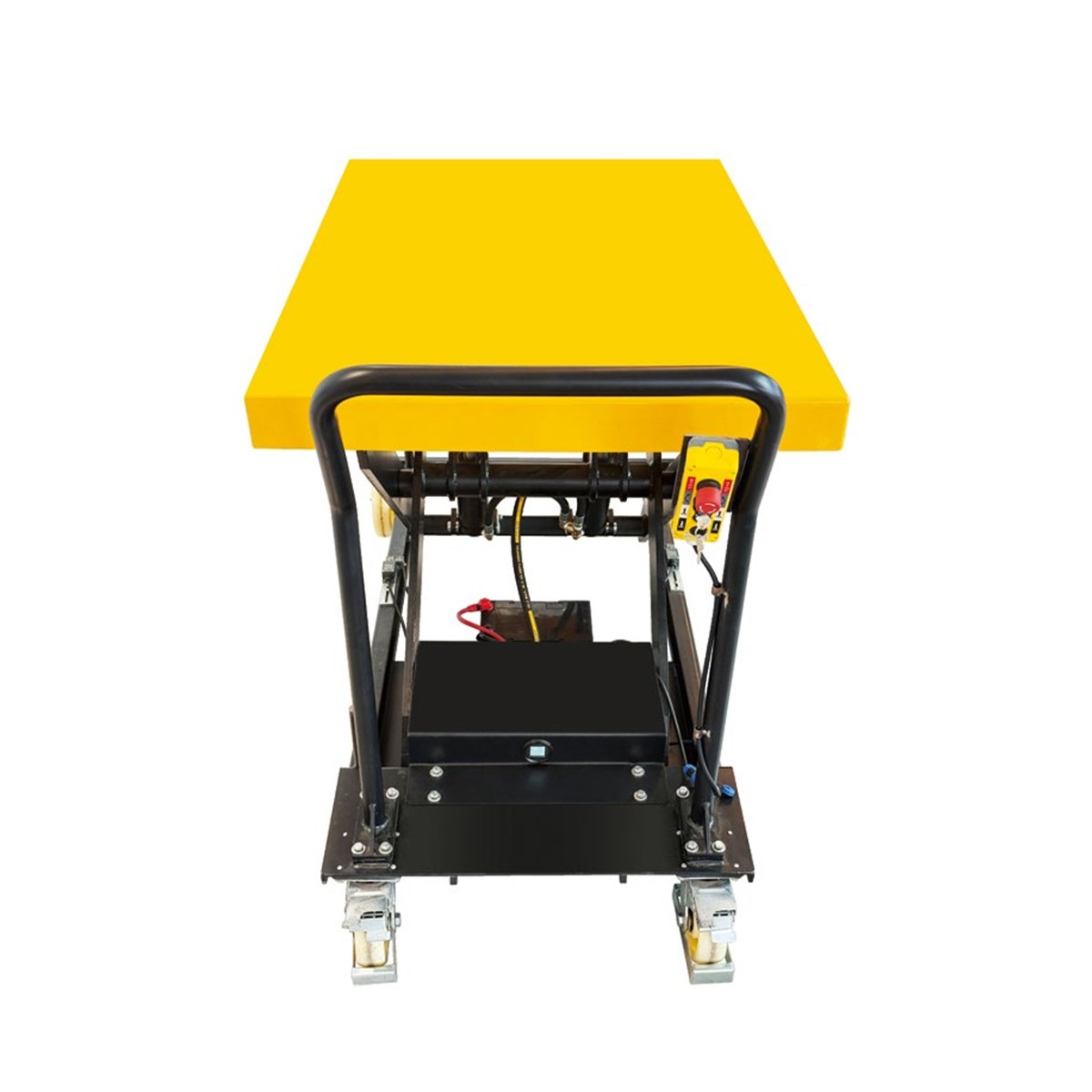
For the ETA and ETAS lift-table range, semi-electric describes the division of work: the scissor platform lifts under battery power, while the machine is pushed or steered manually. There is no powered travel in the listed data. The operator therefore needs a clear floor route and a safe position for loading the platform before raising it.
The 12 V / 0.8 kW lifting motor and 60 Ah battery reduce the manual pumping needed to change table height. They do not remove the need to check the load, its position on the deck and the stability of the machine at the work position.
Which ETA and ETAS models are available?
| Specification | ETA30 | ETA50 | ETAS30 | ETAS50 | ETA80 |
|---|---|---|---|---|---|
| Rated load | 300 kg | 500 kg | 300 kg | 500 kg | 800 kg |
| Minimum table height | 500 mm | 500 mm | 450 mm | 450 mm | 460 mm |
| Maximum table height | 1,600 mm | 1,600 mm | 950 mm | 950 mm | 1,100 mm |
| Table size | 1010 x 520 x 55 mm | 1010 x 520 x 55 mm | 1010 x 520 x 55 mm | 1010 x 520 x 55 mm | 1100 x 610 x 55 mm |
| Wheel diameter | 150 mm | 150 mm | 150 mm | 150 mm | 150 mm |
| Lifting motor | 12 V / 0.8 kW | 12 V / 0.8 kW | 12 V / 0.8 kW | 12 V / 0.8 kW | 12 V / 0.8 kW |
| Battery | 60 Ah | 60 Ah | 60 Ah | 60 Ah | 60 Ah |
| Charger input | 220 / 110 V | 220 / 110 V | 220 / 110 V | 220 / 110 V | 220 / 110 V |
Is the 1,600 mm table height needed for light production?
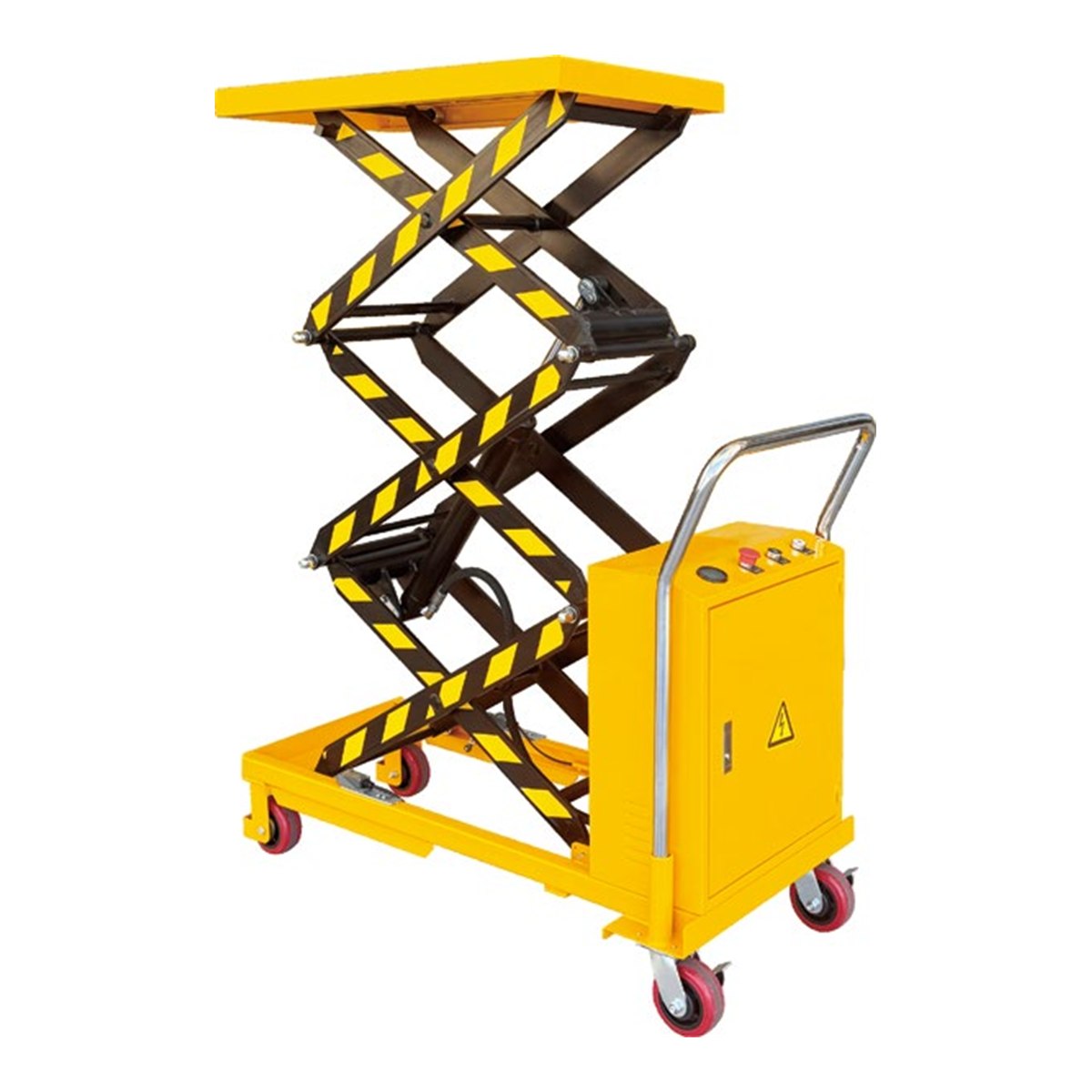
The highest position matters when a component must be presented at chest height, connected to a fixture or inspected from the side. ETA30 and ETA50 reach 1,600 mm and start from 500 mm. That range can support a workstation where the same deck is loaded low and then raised to the operator.
A high maximum is not automatically useful. Check the height of the actual work point, the need to reach across the table and the room available for the scissor stack. A 1,600 mm table can be the right answer for one workstation and excessive for another. The useful figure is the range between loading height and working height.
When are the lower ETAS30 and ETAS50 positions sufficient?
ETAS30 and ETAS50 travel from 450 to 950 mm. The lower maximum suits tasks that need a modest lift from pallet or floor height to a convenient assembly or packing position. Their minimum height is 50 mm lower than the ETA30 and ETA50, which may matter when parts arrive in a low container or trolley.
The ETAS models use the same 1010 x 520 mm table and 12 V lifting system as the matching ETA capacities. The main choice between ETA30 and ETAS30, or ETA50 and ETAS50, is height range rather than table width or headline capacity.
When does the 800 kg ETA80 fit the job?
ETA80 increases the rated load to 800 kg and the deck to 1100 x 610 mm, with a 460 to 1,100 mm height range. It is the choice to investigate when the load is heavier or wider than the 300 kg and 500 kg models allow. A larger table can also suit a fixture, machine component or group of parts that would overhang a 1010 x 520 mm platform.
Do not compare only the load rating. The load has to fit the table, sit in a stable position and remain within the rating through the complete lift. If the centre of gravity sits near an edge, the physical size of the part matters alongside its weight.
What should a light-production workstation measure?
- The weight of the heaviest part, fixture and container combination.
- The footprint and centre of gravity of the load on the table.
- The loading height and the highest working position.
- The free space needed around the scissor mechanism through the lift.
- The route and floor condition when the table is moved by hand.
- The available charging position and supply voltage.
These figures decide both model size and task layout. A table that fits the load but cannot reach the fixture is as unsuitable as one that reaches the height but leaves no room for the operator’s hands.
Which options should be considered for assembly work?
The catalogue lists dust covers, rotary tables, stainless tops, roller tables, tilting platforms, galvanised finishes and additional scissor stages as options. Each changes the interface with the work rather than merely changing appearance. Roller tables can assist movement on and off the deck; a rotary platform can change access direction; stainless tops and galvanised finishes may suit particular working environments.
These are listed options, so they should be specified in the quotation rather than assumed to be fitted. The extra scissor stage and platform attachments also need to be assessed with the load and required height, because the base table figures describe the standard models.
When should you choose a manual lift table instead?
A semi-electric table is most useful when height has to change frequently or when an operator would otherwise pump the platform repeatedly during a shift. A manual lift-table range can still be appropriate when changes are infrequent, the load is lighter and powered lifting is not part of the production routine.
The decision should follow task frequency. If the table is set once and left in place for a long run, manual lifting may be sufficient. If the same deck moves between low loading and a raised assembly position throughout the shift, the powered lift removes repetitive effort and gives the operator a repeatable working height.
What does a real warehouse review show?
In a smart-warehouse project review in Brazil, our team began with the material flow and the positions where people handle and assemble goods. That approach applies to semi-electric tables: identify the loading point, the raised work point and the operator’s access before choosing between the 950 mm ETAS range and the 1,600 mm ETA range.
Frequently asked questions
Does a semi-electric lift table drive itself?
No. The ETA and ETAS models listed here have battery-powered lifting but are positioned manually. The machine needs a suitable floor, route and work position before it is raised.
Which models reach 1,600 mm?
ETA30 and ETA50 reach 1,600 mm. Their minimum height is 500 mm. ETAS30 and ETAS50 reach 950 mm from a 450 mm minimum, while ETA80 covers 460 to 1,100 mm.
Can the platform be fitted with rollers or a rotary top?
The catalogue lists roller tables and rotary tables among the available options. Specify the load, attachment and required geometry in the request so the complete configuration can be confirmed.
Next step
Send the maximum load, deck footprint, loading height, working height, floor route and available charging supply. We will compare the ETA and ETAS semi-electric models against the task, and confirm which listed options are required for the workstation.